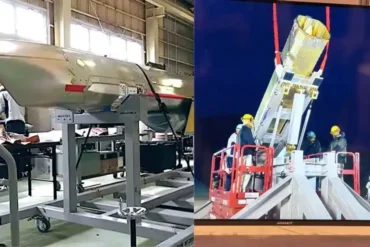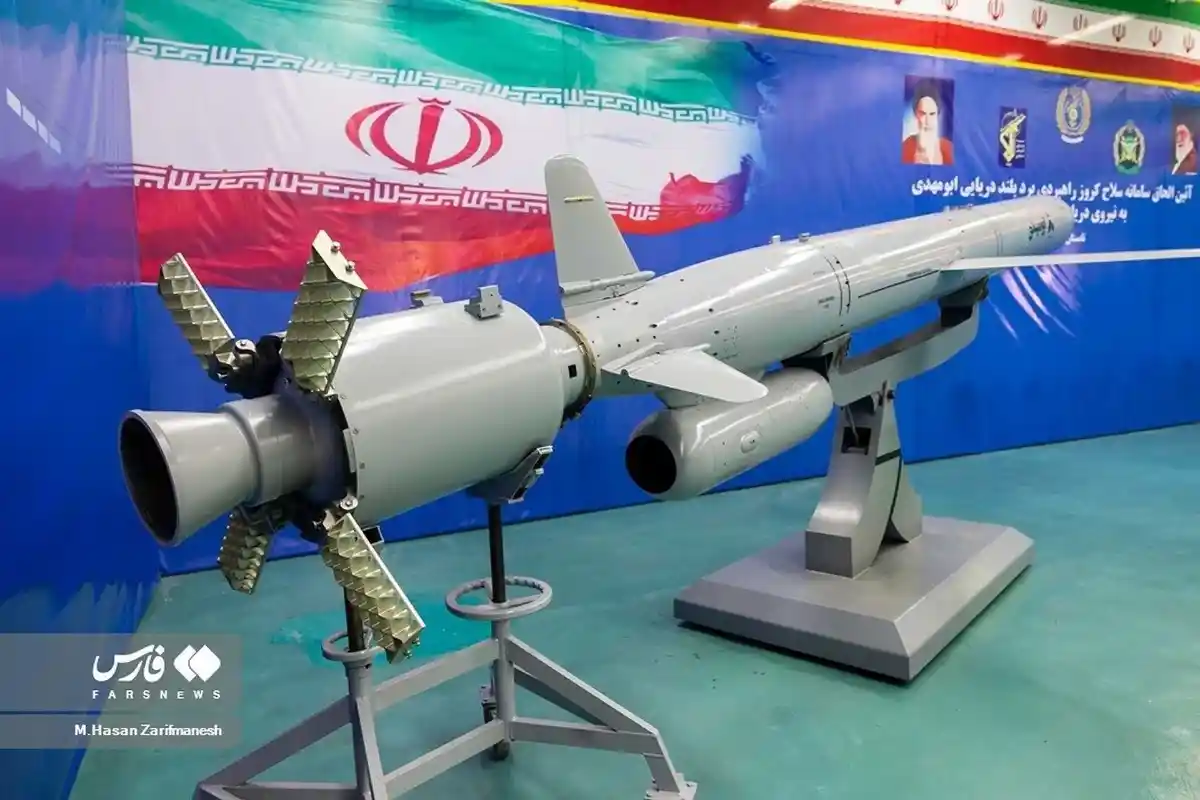
Iran’s steady advance in long-range maritime strike technology is reshaping how risk is calculated across the Arabian Sea. The unveiling and operational signaling surrounding the Abu Mahdi anti-ship cruise missile has forced a rethink inside naval planning circles, not because it introduces a radically new concept, but because it extends familiar dangers into waters once considered relatively permissive for U.S. surface forces. Distance, long treated as a buffer for carrier strike groups and high-value escorts, is no longer the reliable shield it once was.
For decades, the operational geometry of the Arabian Sea favored the U.S. Navy. American warships could remain well beyond the Persian Gulf choke points while still projecting power inland and maintaining maritime security. That balance begins to wobble when a shore-based missile claims the reach to threaten vessels operating hundreds of kilometers from hostile coastlines. Abu Mahdi’s reported range of over 1,000 kilometers stretches the engagement envelope far into open ocean, introducing a psychological and operational weight that commanders cannot ignore.
The missile represents a deliberate Iranian pivot away from narrow coastal defense toward broader sea denial. Rather than focusing solely on saturating the Strait of Hormuz, Tehran is signaling its intent to contest maritime space across the wider Arabian Sea. This is less about sinking ships in dramatic fashion and more about shaping behavior—nudging U.S. forces to operate farther away, disperse assets, and devote increasing attention to defense rather than initiative.
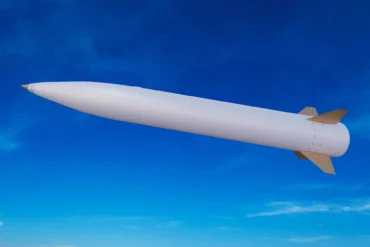
Technically, Abu Mahdi reflects a familiar but refined design philosophy. It is a subsonic, turbojet-powered cruise missile, built for endurance and stealth rather than raw speed. Its flight profile is designed to conserve fuel during the midcourse phase before dropping to a sea-skimming trajectory in the terminal approach. By hugging the surface, the missile exploits radar horizon limits and the chaotic clutter of the maritime environment, compressing the reaction window for shipboard sensors and interceptors.
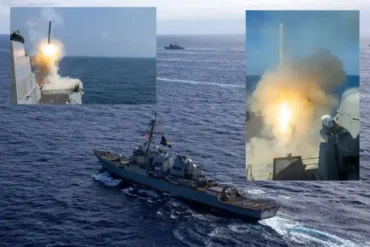
From a defender’s perspective, that reduced detection time matters. Modern U.S. destroyers and cruisers equipped with the Aegis combat system and advanced surface-to-air missiles are formidable, but even the best systems rely on early warning and layered engagement opportunities. A missile that appears late on radar, possibly masked by civilian shipping or sea state effects, complicates threat evaluation and engagement sequencing, especially if multiple tracks demand attention at once.
Guidance architecture further elevates Abu Mahdi’s credibility. Iranian sources describe a dual-mode seeker, combining active radar homing with an electro-optical or infrared channel. This combination is not exotic by global standards, but it is significant in regional context. Dual-mode guidance increases resilience against electronic warfare, forcing defenders to split attention between jamming, decoy deployment, and kinetic interception. In dense maritime traffic zones, the missile’s ability to refine target selection during its final approach becomes a force multiplier rather than a mere technical detail.
The warhead, while not officially specified, is widely assessed to be sized for mission-kill effects against large surface combatants. In modern naval warfare, disabling a ship’s radar arrays, propulsion, or flight deck can be strategically decisive even if the hull remains afloat. A damaged cruiser or amphibious ship withdrawn for repairs represents lost presence, lost momentum, and a visible reminder of vulnerability. That reputational impact is precisely the lever Iran seeks to pull.
Abu Mahdi’s reach also shifts the risk profile for U.S. naval support assets. Logistics vessels, oilers, and transport ships are the circulatory system of sustained naval operations, yet they are typically less well defended than frontline combatants. A long-range anti-ship missile capable of targeting these enablers introduces a subtle but serious complication. Protecting the fleet now means extending defensive umbrellas over ships that were once considered relatively safe in open waters.
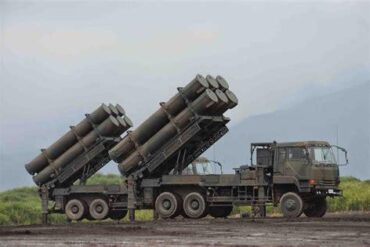
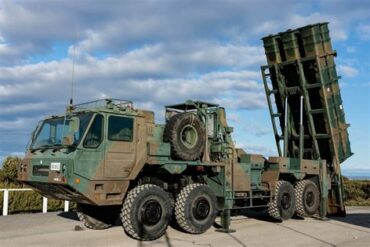
Mobility and deployment concepts further enhance the missile’s deterrent value. Abu Mahdi is designed for launch from mobile land-based platforms, which can be dispersed, concealed, and repositioned along Iran’s coastline or deeper inland. This mobility complicates preemptive targeting and stretches intelligence, surveillance, and reconnaissance resources. When paired with maritime patrol aircraft, unmanned aerial systems, and over-the-horizon sensors, the missile becomes part of a broader targeting ecosystem rather than a standalone weapon.
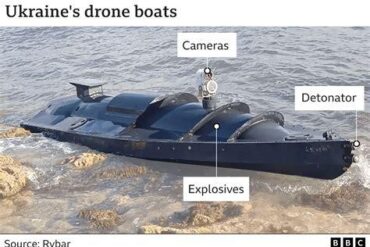
Within Iran’s layered maritime strategy, Abu Mahdi occupies the outer ring. Long-range missiles impose risk at distance, while shorter-range cruise missiles, ballistic anti-ship weapons, naval mines, fast attack craft, and unmanned systems add density closer to key waterways. The intent is not to defeat the U.S. Navy in a decisive fleet action, but to raise the cost of access, slow operational timelines, and complicate escalation control during crises.
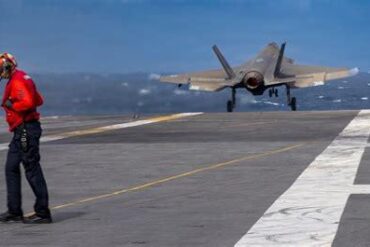
For U.S. planners, this means the Arabian Sea can no longer be treated as a low-threat maneuver space adjacent to a high-threat Gulf. The threat gradient has flattened, demanding persistent missile defense readiness, greater emphasis on distributed operations, and enhanced protection for logistics chains. Carrier strike groups may still operate effectively, but the assumptions underpinning their positioning and escort requirements are shifting.
The broader strategic implication is one of signaling. By fielding a missile like Abu Mahdi, Iran communicates that it can impose consequences beyond its immediate coastline. This capability strengthens Tehran’s hand in deterrence messaging, suggesting that any large U.S. naval presence in the region will operate under a constant, if ambiguous, shadow of long-range attack. Ambiguity itself becomes a tool, forcing adversaries to plan for worst-case scenarios.
In practical terms, the U.S. Navy retains overwhelming advantages in sensing, interception, and coordinated defense. Yet superiority does not erase friction. Every additional threat axis consumes attention, resources, and time. Abu Mahdi’s true impact lies not in a single hypothetical strike, but in the cumulative pressure it exerts on operational planning and political decision-making.
As the Arabian Sea grows more contested, the calculus of presence evolves. Ships still sail, deterrence still holds, but the comfort of distance has eroded. Abu Mahdi is less a game-changer than a reminder: modern naval power operates in an era where shore-based systems can reach far beyond the shoreline, and where the open ocean is no longer synonymous with safety.