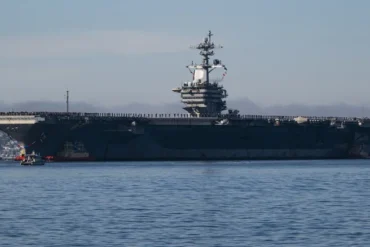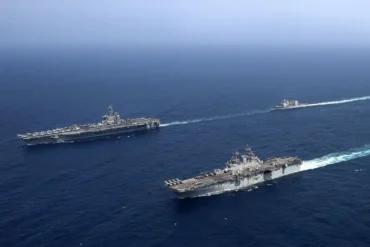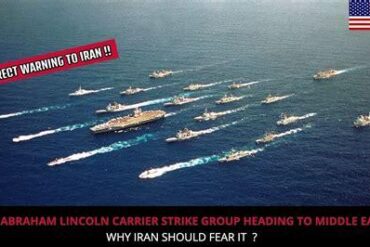
The interception of an Iranian unmanned aircraft by U.S. Navy fighters in the Arabian Sea on February 4, 2026, marked a sharp and highly visible moment in the simmering maritime contest between Washington and Tehran. According to U.S. Central Command, an Iranian drone was destroyed after approaching the aircraft carrier USS Abraham Lincoln while the carrier strike group was conducting operations in international waters. The incident unfolded against a backdrop of fragile nuclear diplomacy, intensified naval deployments, and persistent low-level confrontations designed to test resolve without triggering open conflict.
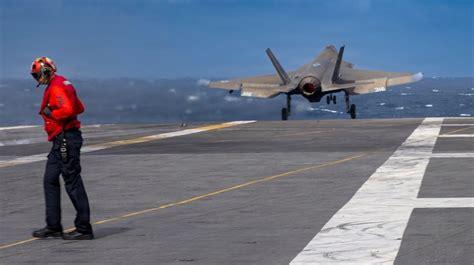
CENTCOM described the engagement as a self-defense action, emphasizing that the unmanned aircraft ignored repeated de-escalatory measures as it closed on the carrier. With intent unclear and distance shrinking, commanders authorized a kinetic response. A carrier-based F-35C Lightning II launched from USS Abraham Lincoln intercepted and shot down the drone before it could threaten the ship or its embarked air wing. No U.S. personnel were injured, and no damage to American equipment was reported, underscoring the clinical precision of the engagement.
From a strategic perspective, the episode reflects a familiar pattern in U.S.–Iran interactions at sea: probing activity by Iranian platforms, rapid American response, and carefully calibrated messaging on both sides. Drones, rather than manned aircraft, have become the preferred tool for these encounters because they compress risk while maximizing signaling value. In this case, the drone’s approach to one of the U.S. Navy’s most valuable assets crossed a line that demanded immediate action.
The Iranian platform was identified by U.S. officials as a Shahed-139, a long-endurance unmanned aircraft associated with Iran’s expanding drone portfolio. CENTCOM stated that the aircraft “aggressively approached” the carrier with no clear explanation for its flight profile. Even after warnings and maneuvers intended to reduce tension, the drone continued inbound, leaving little ambiguity for the defenders responsible for protecting a nuclear-powered carrier and its crew of thousands.
Iranian state-linked media offered a more ambiguous account, reporting a loss of contact with a drone operating over international waters and describing the mission as routine reconnaissance. That framing aligns with Tehran’s longstanding approach to maritime surveillance, where unmanned aircraft are used to observe foreign naval movements and assert presence without incurring the political costs of placing pilots at risk. The difference between the two narratives is less about facts than about emphasis: the United States highlights defensive necessity, while Iran leans on plausible deniability.
Shahed-139 Drone Capabilities and Strategic Role
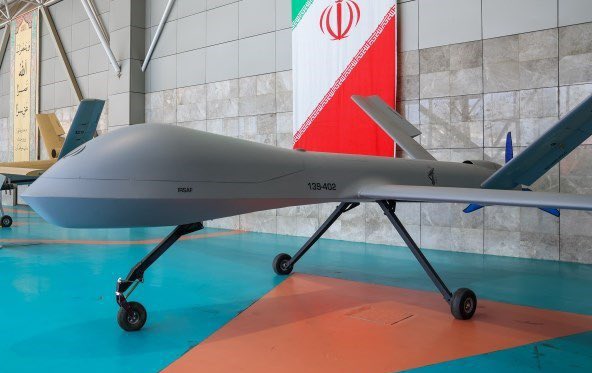
Technical data displayed by Iranian sources at defense exhibitions suggests the Shahed-139 is optimized for persistent maritime surveillance rather than high-speed penetration. The drone is credited with a claimed operational radius of up to 1,800 kilometers and an endurance approaching 28 hours, allowing it to loiter along shipping lanes and carrier transit routes for extended periods. An advertised service ceiling of 25,000 feet and a top speed of roughly 220 kilometers per hour place it well below modern fighter performance, but that limitation is offset by endurance and low operating cost.
With a stated maximum takeoff weight of about 1,200 kilograms and a combined fuel-and-payload capacity of roughly 400 kilograms, the Shahed-139 is designed to carry electro-optical sensors and communications equipment rather than heavy weapons. Features such as SATCOM connectivity, automated takeoff and landing, and an emergency parachute recovery system point to a design philosophy centered on reliability and reduced operator workload. In practice, this makes the platform well suited for long-duration surveillance missions where persistence matters more than speed or stealth.
In the maritime domain, such drones function as both eyes and signals. They gather intelligence on ship movements while simultaneously demonstrating Iran’s ability to operate near high-value Western naval units. Losing one aircraft carries limited material cost, but forcing an adversary to respond sends a message that resonates well beyond the immediate tactical encounter.
USS Abraham Lincoln as a High-Value Target
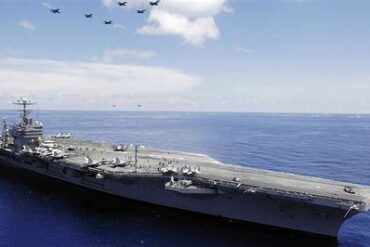
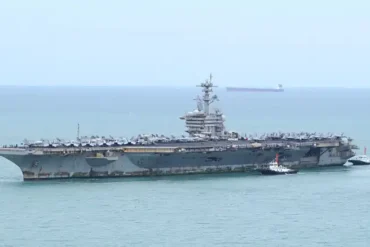
The USS Abraham Lincoln occupies a unique position in this equation. As a Nimitz-class nuclear-powered aircraft carrier, it represents the concentrated expression of American naval power. Two onboard nuclear reactors provide essentially unlimited range, constrained mainly by logistics and crew endurance, enabling sustained high-tempo operations far from U.S. shores. More than a floating runway, the carrier acts as a command-and-control node that fuses air power, surface escorts, and intelligence assets into a single operational system.
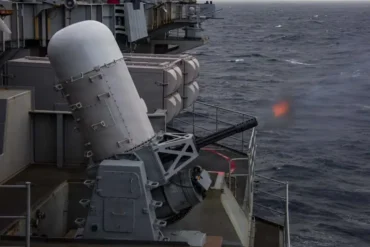
Any unidentified or uncooperative aircraft approaching such a platform is treated with extreme caution. The defensive perimeter around a carrier strike group is layered, extending from distant sensors to fighter patrols and ship-based air defenses. The shootdown of the Shahed-139 demonstrates how quickly that system can transition from monitoring to engagement when commanders judge a threat to be imminent.
Why the F-35C Was the Right Tool
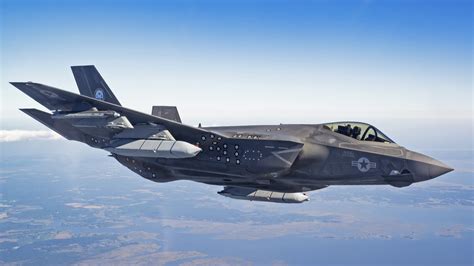
The decision to employ an F-35C Lightning II highlights the aircraft’s growing role in maritime air defense. While often associated with stealth strike missions, the F-35C’s true advantage lies in sensor fusion. Its AN/APG-81 AESA radar can detect and track small airborne targets across multiple modes, while the Distributed Aperture System provides near-spherical infrared coverage, allowing passive detection without emitting radar energy.
With a maximum speed of roughly 1,600 kilometers per hour and a combat radius well suited to carrier operations, the F-35C can rapidly intercept slow-moving drones while maintaining full situational awareness. Secure data links allow it to share target information with other aircraft and ships, turning the interceptor into both a shooter and a sensor node. In this engagement, that capability ensured the drone was identified, tracked, and neutralized well before it could approach a dangerous distance.
A Pattern of Maritime Pressure
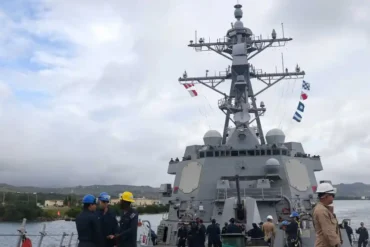
The drone incident did not occur in isolation. On the same day, CENTCOM reported a separate confrontation in the Strait of Hormuz, where vessels associated with Iran’s Islamic Revolutionary Guard Corps allegedly harassed the U.S.-flagged merchant ship M/V Stena Imperative. According to U.S. accounts, two fast-moving IRGC boats threatened to board the vessel while an Iranian Mohajer drone orbited overhead. The guided-missile destroyer USS McFaul intervened, escorting the tanker away under the cover of defensive air assets until the situation de-escalated.
This combination of small boats and unmanned aerial surveillance fits a well-established Iranian playbook. By operating just below the threshold of open conflict, Tehran can challenge freedom of navigation, gather intelligence, and project resolve without triggering a decisive military response. For the United States, each encounter becomes a test of restraint balanced against the obligation to protect forces and commercial shipping.
Strategic Signaling Amid Fragile Diplomacy
The timing of the shootdown adds another layer of significance. Diplomatic channels between Washington and Tehran have shown tentative movement, with discussions reportedly being arranged over the future of Iran’s nuclear program. In that environment, military actions are rarely isolated from political calculations. By decisively defending a carrier in international waters, the United States reinforces the message that diplomacy does not imply reduced vigilance.
Iran, for its part, can absorb the loss of a drone while maintaining that it was conducting lawful surveillance. This duality allows both sides to step back from escalation while still communicating resolve to domestic and international audiences. The result is a tense equilibrium, maintained through calibrated actions rather than sweeping gestures.
Implications for Future Naval Encounters
The shootdown of the Shahed-139 near USS Abraham Lincoln illustrates how modern naval confrontations are increasingly shaped by unmanned systems and fifth-generation fighters. Drones extend reach and persistence, while aircraft like the F-35C compress decision cycles and expand defensive bubbles. As these technologies proliferate, encounters at sea are likely to become more frequent, more compressed in time, and more dependent on command judgment.
For now, the balance holds. A drone was lost, a carrier remained secure, and neither side escalated further. Yet each incident adds to a growing ledger of encounters that define the operational reality of the Arabian Sea and the broader Gulf region. In that crowded maritime space, the margin for error remains thin, and the next approach may test it again.