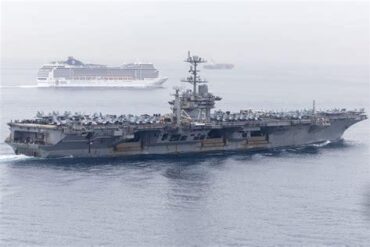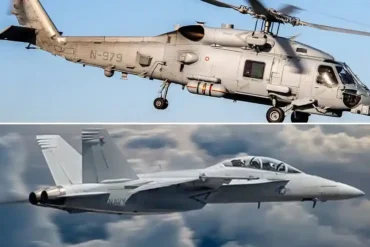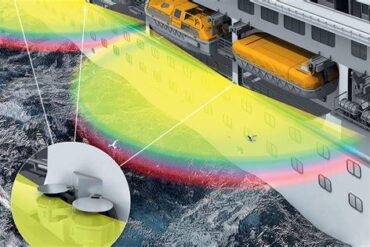
When a U.S. Navy vessel loses power at sea, the consequences can range from inconvenient to catastrophic. These vessels are not merely transport machines—they are mobile command centers, combat platforms, and homes for hundreds, sometimes thousands, of sailors. A sudden power failure affects navigation, communication, weapon systems, and life support mechanisms. As such, the Navy’s response protocols are swift, rehearsed, and mission-critical, though most operational details remain classified.
Immediate Impact of Power Loss at Sea
A complete loss of power—commonly referred to as a blackout—renders a ship dead in the water. Without propulsion or steering capabilities, the vessel drifts with the current, a sitting target vulnerable to collisions or hostile action. But the Navy doesn’t rely on single points of failure. Multiple redundant systems and emergency backups are in place to ensure survivability.
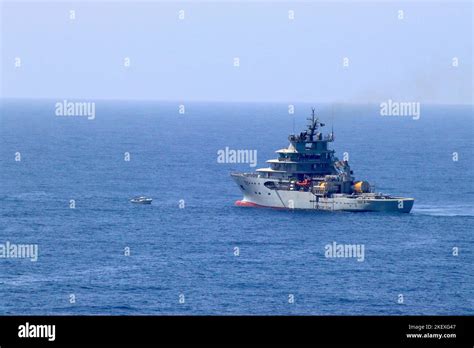
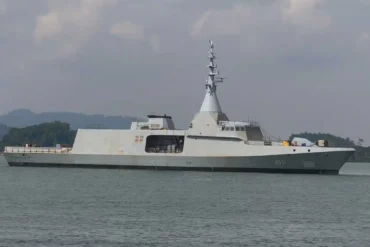
One illustrative incident occurred in 2020, when the USS Detroit, part of the Navy’s fast and agile littoral combat ship class, lost power during its return from Latin America to Florida. The crew executed immediate damage assessments but found that repairs could not be completed underway. Ultimately, the ship had to be towed to port. Though non-life-threatening, the episode underscored how even modern naval engineering isn’t immune to mechanical failure.
Historical Examples of Power Loss
The stakes rise exponentially when a blackout follows a critical event. In 2017, the USS Fitzgerald collided violently with a merchant vessel off the coast of Japan. The crash caused a rapid shutdown of power systems, creating chaos amid flooding and structural damage. The crew, trained for such contingencies, performed emergency damage control and heroic rescue operations. Though the ship suffered irreparable damage, sailors managed to stabilize it and steer it back to Yokosuka Naval Base.
A similar case in 2013 involved the USS Freedom, which experienced a propulsion issue after its diesel generators overheated. Though not a total blackout, its ability to maneuver was compromised. Emergency systems activated autonomously, and the crew, alongside naval technicians, identified the fault and safely returned the ship to port.
Redundancy: The Navy’s Power Safeguard
To reduce the likelihood of such scenarios, Navy engineering standards are built around redundancy. Most modern ships are equipped with multiple power generators that operate in parallel. If one fails, another can automatically activate, ensuring that essential systems—from communications to radar—remain operational. This layered power architecture enables ships to survive isolated faults without compromising their missions.
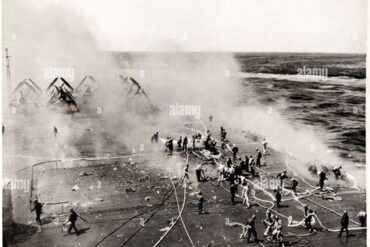
However, the complexity of these systems introduces risks of their own. In 2013, the USS Nimitz, one of the Navy’s longest-serving aircraft carriers, suffered an electrical fire while in the Indian Ocean. The incident tested the ship’s firefighting team and power management systems. Though the fire was extinguished and operations resumed, the event highlighted how even iconic vessels are susceptible to internal faults.
More recently, in 2024, turbine generator issues were discovered aboard the aging carriers USS George Washington and USS John C. Stennis. These generators are vital, powering everything from radar systems to crew support infrastructure. Fortunately, the malfunctions were identified during scheduled overhauls while docked—preventing potential disaster at sea.
Emergency Procedures and Crew Readiness
The Navy’s ability to respond effectively to a power loss stems from rigorous training and adherence to procedural frameworks, such as the Engineering Operational Sequencing System (EOSS). While the specific protocols remain classified, they include comprehensive response sequences that prioritize:
- Crew safety
- System diagnostics and containment
- Power redistribution
- Coordination with support vessels or tugs if necessary
Crews regularly drill these procedures to ensure that response times are minimized and that coordination under stress becomes second nature.
Final Thoughts: Mitigating Power Risk at Sea
Power loss aboard a Navy ship is more than an inconvenience—it is a multi-layered crisis that affects survivability, mission capability, and operational security. Through a mix of engineering foresight, crew training, and historical lessons, the U.S. Navy continues to fortify its readiness. Yet, as complex systems age and global deployments increase, the challenge of maintaining power resilience at sea remains ever-present.
In the silent expanse of the ocean, where the line between control and chaos is thin, power is not just electricity—it is the very pulse of survival.