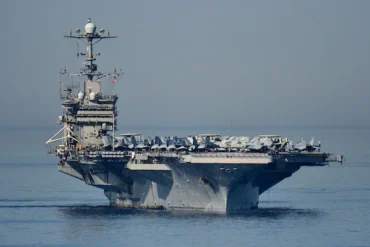
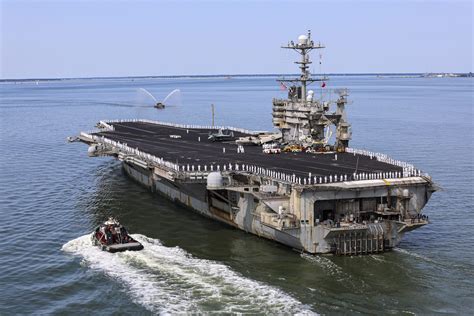
The deployment of the USS Harry S. Truman (CVN-75) from late 2024 to mid-2025 stands as one of the most disruptive and accident-filled periods a modern U.S. carrier strike group has endured. Across five months of high-tempo operations, the strike group suffered the loss of three F/A-18 Super Hornets, a collision with a merchant vessel, and cascading equipment failures triggered by sustained combat operations in the Red Sea and Mediterranean. The Navy’s newly released summary of four major investigations reveals a pattern of overextension, miscommunication, human error, and strained maintenance capacity at a scale rarely presented so transparently.
The result is a cautionary account of how even the most advanced carrier strike group can stumble under relentless pressure—and how the consequences ripple through every ship and squadron attached to the deployment.
How Intense Combat Operations Set the Stage for Failure
The Truman Carrier Strike Group (CSG) entered the Red Sea amid escalating Houthi attacks involving cruise missiles, drones, and ballistic systems. The strike group was actively defending commercial shipping, conducting air patrols, and responding to successive missile volleys. Crews faced continually shifting rules of engagement, rapid target identification demands, and heavily compressed decision cycles.
Against this backdrop, the chain of accidents did not occur in isolation. Events unfolded in a climate where training gaps, equipment fatigue, and communication shortfalls were magnified by constant threat alerts. The Navy’s report reinforces that high-tempo wartime operations—even without an official declaration of war—carry strategic and human costs that accumulate beneath the surface until incidents erupt.
The Friendly-Fire Shootdown: USS Gettysburg’s Fatal Identification Failure
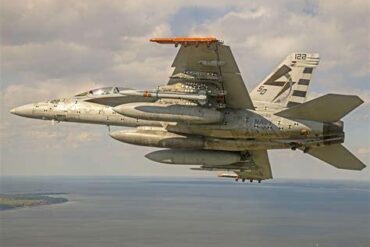
The most alarming of the four investigations centers on the 22 December 2024 shootdown of an F/A-18F Super Hornet from VFA-11, struck by a missile fired from the USS Gettysburg (CG-64). The Truman CSG had just intercepted several Houthi drones and missiles, leaving the air-defense picture chaotic and fluid. Amid this confusion, the cruiser misidentified the returning Super Hornet as an inbound threat.
The Gettysburg reportedly fired an SM-2 missile that destroyed the jet. Both aircrew survived with minor injuries after ejecting and were recovered swiftly, but the aircraft’s wreckage was never located.
The investigation pinpointed several systemic failures: inadequate integrated training between the cruiser and carrier, weak forceful backup procedures, and a lack of cohesive situational awareness across the strike group. Compounding the gravity of the error, investigators disclosed that a second friendly aircraft was nearly hit moments later—a chilling indication of how close the incident came to spiraling further.
Collision in the Mediterranean: A Navigational Breakdown
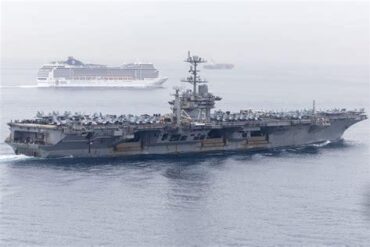
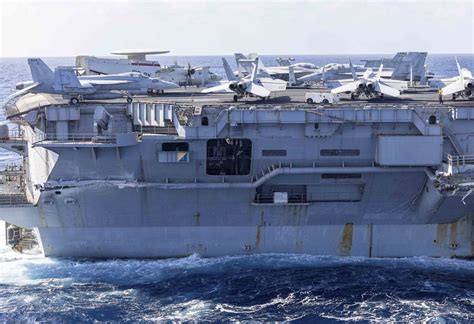
Just weeks after the friendly-fire disaster, the Truman suffered a second major blow. During nighttime transit near Port Said on 12 February 2025, the 100,000-ton carrier collided with the merchant ship Besiktas-M. Though the collision produced no flooding or injuries, it ripped open sections of the starboard sponson near the stern aircraft elevator—structural scars that required emergency repairs in Greece.
The Navy’s investigators labeled the event entirely avoidable, citing failures by the carrier’s bridge team to maintain situational awareness and adhere to proper navigation protocols. The fallout was swift: the Truman’s commanding officer, Capt. Dave Snowden, was relieved of command on 20 February, replaced temporarily by Capt. Christopher Hill, formerly the commanding officer of the USS Eisenhower.
Evasive Maneuvers Trigger Another Loss: The Jet and Tow Tractor Overboard
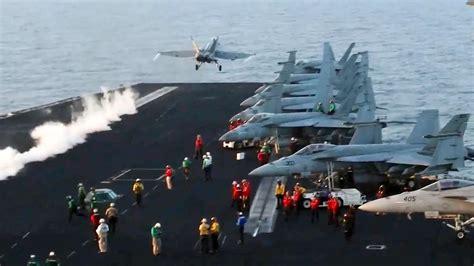
As threats intensified in the Red Sea, evasive turns became routine. During one such maneuver on 28 April 2025, disaster struck inside the hangar bay. A VFA-136 F/A-18E—already being towed when its brakes failed—broke loose, sliding across the deck before pitching overboard along with its tow tractor.
One sailor suffered minor injuries, while the aircraft and tractor were lost to the sea. Investigators cited the immediate cause as aircraft brake failure but emphasized deeper issues: insufficient real-time coordination between the bridge, flight deck control, and hangar bay supervisors, particularly during combat maneuvers.
The event underscored how even internal ship movements become high-risk when the carrier is conducting abrupt defensive maneuvers.
The Fourth Aircraft Loss: Arresting Gear Failure During Night Recovery
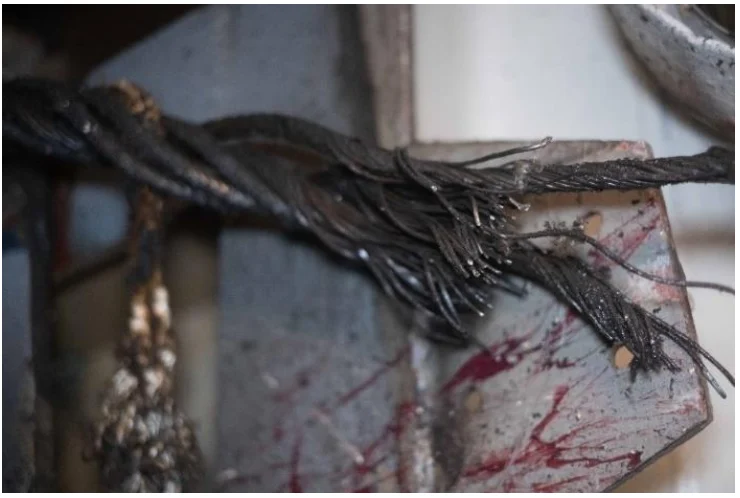
The final major incident occurred on 6 May 2025, when another VFA-11 aircraft—a two-seat F/A-18F—attempted a night landing. The jet caught the #4 arresting wire, but a malfunction in the starboard sheave damper caused the wire system to fail, sending the aircraft skidding off the angled deck into the sea.
Both crew members ejected safely and were recovered by helicopter. The investigation concluded that the damper failure stemmed from poor maintenance practices, low manning, and insufficient technical training, issues amplified by the relentless operational tempo.
Leadership Response and the Navy’s Broader Assessment
Vice Chief of Naval Operations Adm. Jim Kilby emphasized that while the incidents are serious, the Truman Strike Group’s combat performance demonstrated resilience and effectiveness during one of the Navy’s most demanding operational years. He stressed the importance of additional investment in personnel readiness, training, and maintenance capacity.
Kilby’s remarks reflect a larger truth: the Navy’s global commitments have outpaced the rhythm of maintenance cycles, compromising long-term readiness. The Truman’s ordeal is part of a broader pattern in which Super Hornets, AEGIS cruisers, and carrier flight decks are all operating under heightened strain.
Additional Crashes Cast a Longer Shadow
The Truman CSG’s accidents were not isolated. In October 2025, two more U.S. Navy aircraft operating from the USS Nimitz crashed into the South China Sea within just 30 minutes. An MH-60R Sea Hawk from HSM-73 went down during routine operations, followed shortly by the loss of an F/A-18F Super Hornet from VFA-22. Safely recovered crews were a reminder of training effectiveness, yet the timing—during President Trump’s Asia tour and just ahead of Defense Secretary Pete Hegseth’s regional visits—highlighted how operational hazards persist even during peacetime flight routines.
These parallel mishaps frame the Truman deployment not as an isolated outlier but as part of a Navy grappling with the cumulative impact of decades of high operational demands.
The Strike Group Returns Home: A Deployment with Lasting Implications
The Truman Strike Group has now returned home, concluding a deployment marked not only by combat success but also by hard lessons. The accidents forced leadership changes, exposed readiness vulnerabilities, and generated new pressure for reforms in maintenance, training, and integrated air-defense operations.
The Navy’s transparent release of these investigation summaries offers a rare view into the chain of errors that can strike even the most capable fleets. The story of Truman’s deployment is ultimately one of endurance under strain, and the institutional will to confront uncomfortable truths so the next carrier strike group faces fewer risks—and carries greater confidence—into contested waters ahead.