Air France is undergoing a transformational shift in its fleet strategy, redefining the passenger experience as it retires its iconic Airbus A380 and invests in new-generation aircraft. This pivotal move is not just a technical upgrade—it’s a recalibration of the airline’s identity in a hyper-competitive, environmentally-conscious era. With sustainability, comfort, and efficiency at the heart of its evolution, Air France is writing a new chapter that prioritizes seamless travel, operational excellence, and luxury reimagined.
The retirement of the A380, once the crown jewel of long-haul air travel, marks the end of an era for the French flag carrier. But far from a setback, this decision has unlocked opportunities for Air France to innovate across the board—from cabin design to inflight service, from sustainability initiatives to digital innovation.
Why Air France Said Goodbye to the A380
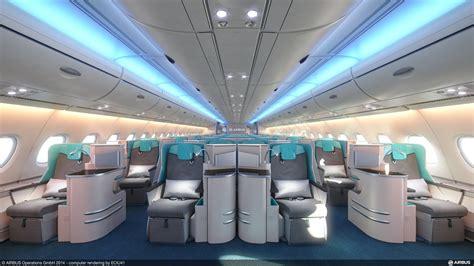
The Airbus A380 was a marvel of engineering, and for years, it represented luxury and capacity at scale. Air France began operating the A380 in 2009, deploying it on flagship routes such as Paris–New York and Paris–Tokyo. However, despite its grandeur, the superjumbo became a symbol of inefficiency in a fast-changing aviation landscape.
With four engines consuming enormous fuel, high operating costs, and inflexible deployment on only high-demand routes, the A380 quickly fell out of favor. The COVID-19 pandemic accelerated its demise, highlighting the importance of flexible, right-sized fleets. In 2020, Air France officially announced the permanent retirement of all A380s, citing financial and environmental reasons.
A Leaner, Greener Future: The Aircraft Taking Over
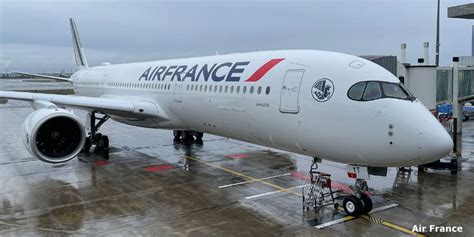
The departure of the A380 has made way for a fleet centered on next-generation aircraft, especially the Airbus A350-900 and Boeing 787 Dreamliner. These aircraft are the cornerstone of Air France’s strategy to deliver lower emissions, enhanced passenger comfort, and operational efficiency.
The Airbus A350-900, in particular, has become the airline’s flagship model. Compared to the A380, the A350 delivers a 25% reduction in fuel consumption and CO2 emissions. Its state-of-the-art design includes:
- A wider cabin with larger panoramic windows
- Optimized air quality with cabin pressurization at 6,000 feet
- Quieter engines that reduce noise by up to 40%
- Advanced composite materials that make the aircraft lighter and more efficient
Cabin Experience: From Functional to Luxurious
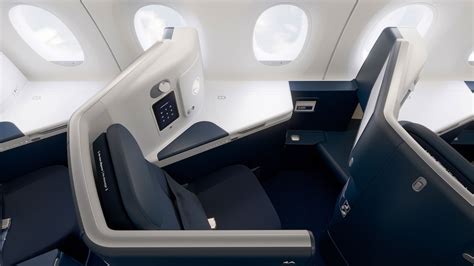
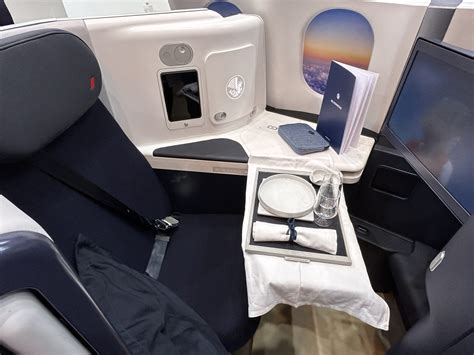
A central element in Air France’s reinvention is its premium cabin experience, aimed at creating a new benchmark for elegance in the sky. The new long-haul cabins on the A350 and Boeing 787 have been designed by French design houses in collaboration with Safran Seats, reflecting French savoir-faire in every detail.
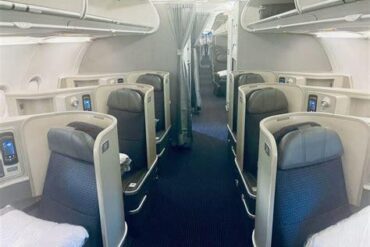
In Business Class, passengers enjoy lie-flat beds up to 2 meters long, direct aisle access for every seat, and do-not-disturb privacy doors. Mood lighting, soft-touch finishes, and curated amenities from luxury brands like Clarins elevate the experience.
Premium Economy has also undergone significant upgrades. Air France introduced the latest generation of recliner seats with 96 cm of legroom, wider armrests, noise-reducing headrests, and upgraded IFE screens.
Economy Class, though more compact, benefits from ergonomic seats with enhanced lumbar support, USB-C ports, and high-definition entertainment systems.
Inflight Connectivity and Digital Services
A key innovation that differentiates Air France’s new fleet is its focus on digital integration and inflight connectivity. All newly delivered aircraft are equipped with high-speed Wi-Fi through the “Air France Connect” portal, offering three tiers of connectivity:
- Message Pass (free for all): unlimited messaging via WhatsApp, iMessage, and Messenger
- Surf Pass: for browsing and email
- Stream Pass: for high-bandwidth video streaming
Through Air France Connect, passengers can also:
- Access real-time flight information
- Stream curated content and playlists
- Order meals or upgrades
- Browse destination guides
This level of interactivity represents a significant leap from the relatively static entertainment systems on the A380.
Sustainability as a Strategic Imperative
Air France’s new fleet doesn’t just reduce carbon emissions—it signals the airline’s ambition to be a leader in environmentally responsible aviation. The carrier has pledged to cut CO2 emissions per passenger-kilometer by 30% by 2030 compared to 2019 levels.
Key strategies include:
- Investing in Sustainable Aviation Fuel (SAF), with a goal of 10% usage by 2030
- Retiring older aircraft ahead of schedule
- Adopting lighter materials onboard to reduce weight
- Optimizing flight paths with AI to reduce fuel burn
The A350’s eco-efficiency contributes directly to this mission, consuming 2.5 liters of fuel per 100 passenger-kilometers, significantly less than the A380’s 4 liters.
Ground-to-Air Experience: A Unified Vision
Air France’s transformation is not confined to the air. On the ground, the airline has reimagined its airport lounges, boarding processes, and customer service platforms to deliver a cohesive, upscale experience.
At Paris-Charles de Gaulle, the airline’s flagship lounge in Terminal 2E features fine dining by Michelin-star chefs, Clarins spa treatments, and dedicated quiet zones. New biometric boarding gates, automated check-ins, and smart luggage tracking are being rolled out across major hubs.
A redesigned mobile app and website offer intuitive trip management, from ticket purchase to post-flight feedback. Real-time updates, integrated loyalty services, and 24/7 customer chat elevate the digital ecosystem.
Cultural Identity and French Elegance at 30,000 Feet
Even amid modernization, Air France has not compromised on its cultural identity. The airline continues to deliver a uniquely French travel experience, blending efficiency with understated elegance.
From the champagne served in all long-haul cabins to partnerships with French designers, perfumers, and chefs, Air France’s commitment to showcasing national excellence remains steadfast.
New uniforms are being designed by top French fashion houses, while onboard dining now emphasizes regional specialties, seasonal ingredients, and wine curated by leading sommeliers.

The Competitive Landscape: How Air France Stands Out
Air France’s shift toward a smaller, more efficient fleet aligns with broader industry trends, but the airline differentiates itself in several crucial ways:
- Design-forward cabins with an emphasis on privacy, comfort, and aesthetic appeal
- A deep integration of sustainability into its brand narrative
- High-end gastronomy and service reflecting French heritage
- Robust alliances through SkyTeam, enhancing network connectivity and customer benefits
Its main European competitors—Lufthansa, British Airways, and KLM—are also phasing out the A380 or avoiding superjumbos altogether. However, Air France’s uniquely French branding and aggressive reinvestment in technology and design offer a distinct competitive advantage.
Challenges and What Lies Ahead
While the transition to a leaner, greener fleet is promising, it comes with challenges. Supply chain issues in aircraft production, fluctuating oil prices, and evolving regulatory pressures on carbon emissions pose risks. Additionally, maintaining consistency in passenger experience across a diverse fleet requires rigorous quality control.
Yet, Air France’s strong recovery post-COVID, combined with ambitious investment plans and an agile leadership team, positions the airline to meet these headwinds. The commitment to sustainability, premium service, and digital evolution suggests that Air France is not merely reacting to global pressures but proactively shaping the future of air travel.
Conclusion: An Airline Reinvented
Air France’s decision to retire the A380 was not just about shedding old weight—it was about embracing a bold new vision. With the A350 and 787 leading its long-haul ambitions, the airline is setting new standards in fuel efficiency, comfort, and passenger-centric innovation. The convergence of technological advancement, sustainable practices, and French elegance makes Air France’s transformation not just noteworthy but industry-defining.
In a world where air travel is being redefined, Air France is proving that luxury and responsibility can coexist. As it soars into a new era, it does so not with nostalgia for the past, but with a clear-eyed commitment to a smarter, sleeker, and more sustainable future.