The removal of a familiar inflight ritual often says more about an airline’s strategy than any glossy investor presentation. When British Airways began quietly withdrawing the full English breakfast from some of its shortest business-class routes, the decision landed with far more symbolic weight than the modest tray it replaced. For decades, that compact arrangement of eggs, bacon, and sausage at 35,000 feet was not just sustenance—it was a reaffirmation of national identity, service tradition, and the promise of premium travel, even on flights barely longer than a commuter train journey.
British Airways, as the UK’s flag carrier, has long relied on these small but culturally loaded touches to differentiate itself in a fiercely competitive European short-haul market. The airline’s decision to replace a cooked breakfast with a continental alternative—fruit, yogurt, and pastries—on select routes marks a subtle but telling shift in priorities. It also reflects a broader recalibration underway across legacy airlines as they balance passenger expectations, operational realities, and the evolving economics of short-distance flying.
To understand why this particular meal matters so much, and why British Airways believes it no longer belongs on its shortest routes, requires looking beyond the tray table and into how airlines now define value in the premium cabin.
British Airways operates from an island nation, and geography alone makes short-haul flying central to its business model. Routes between London and cities such as Manchester, Dublin, Paris, or Amsterdam are among the airline’s most frequent and operationally complex. These flights, often around an hour in duration, must compress boarding, service, and landing into a narrow window where every minute counts. Yet for years, British Airways persisted in serving a hot breakfast on many of these routes, reinforcing its reputation for offering a full-service experience even when flight times barely allowed it.
That persistence is now giving way to pragmatism.
The Cultural Weight of the Full English Breakfast at 35,000 Feet
Few meals are as culturally distinctive as the full English breakfast. It is hearty, unapologetically indulgent, and deeply rooted in British daily life. When British Airways offered it onboard, especially in Club Europe, the airline wasn’t merely feeding passengers—it was exporting a national tradition.
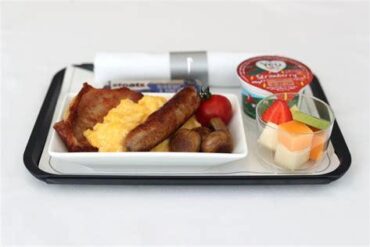
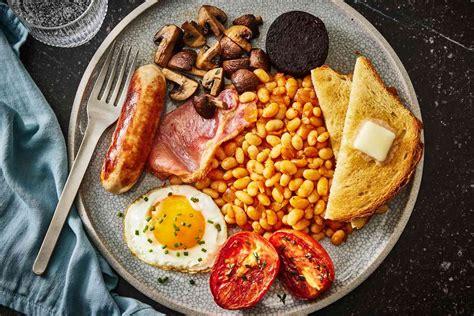
Unlike continental breakfasts common across mainland Europe, the British version is built around warmth and substance. Fried or scrambled eggs, bacon, sausage, mushrooms, tomatoes, and occasionally baked beans formed the backbone of the inflight version. Even when simplified for aviation constraints, it remained recognizably British, setting BA apart from competitors such as Air France or Lufthansa, whose business-class breakfasts often lean toward cold cuts and cheese.
For frequent flyers, this mattered. A morning flight from London to Amsterdam or Belfast felt anchored in familiarity, reinforcing the idea that choosing British Airways meant choosing a distinctly British experience from the first sip of tea to the final descent.
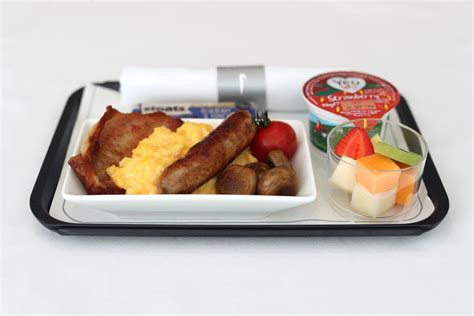
The decision to remove this meal from certain routes therefore resonates beyond nutrition. It challenges assumptions about what passengers should expect when paying a premium fare, even on the shortest sectors.
Which Routes Are Losing the Full English Breakfast—and Why
The changes affect eight of British Airways’ shortest routes, primarily from its London hubs. These include flights to Amsterdam, Paris, Dublin, Belfast, Jersey, Manchester, and Newcastle. Each of these sectors averages roughly an hour in the air, leaving little margin for a traditional hot meal service.
Crucially, not all short-haul routes are treated equally. Flights to Scotland, including Edinburgh and Glasgow, retain the full English breakfast despite having similar flight times to some Irish routes. This inconsistency has fueled debate among passengers, particularly given that Dublin and Belfast flights are effectively domestic in nature due to the Common Travel Area between the UK and Ireland.
From a purely operational standpoint, British Airways argues that the shortest routes simply do not allow enough time for passengers to comfortably receive and enjoy a hot breakfast. Cabin crew must manage safety demonstrations, beverage service, meal distribution, collection, and preparation for landing in a compressed timeframe. Any delay—weather, air traffic control, late boarding—can disrupt the entire sequence.
By switching to a continental breakfast, BA claims it can streamline service while improving overall comfort.
The Airline’s Official Explanation Versus Passenger Skepticism
British Airways has been careful in how it frames the change. Rather than positioning it as a cost-cutting exercise, the airline emphasizes passenger experience and crew efficiency. According to company statements, the continental breakfast allows cabin crew to spend more time engaging with passengers instead of rushing through a hot meal service.
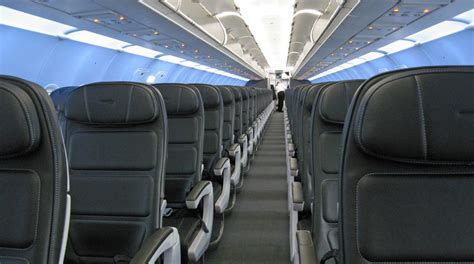
This explanation has been met with skepticism from seasoned travelers. Industry commentators point out that British Airways successfully served cooked breakfasts on similarly short routes decades ago, even on high-density aircraft such as the Boeing 757 and 767. From this perspective, the issue is less about time and more about evolving priorities.
Rob Burgess of the frequent-flyer site Head for Points has noted that the removal reflects a broader trend across legacy carriers to reduce complexity and cost on short-haul operations. While British Airways insists that hot breakfasts remain available on the majority of its network, the selective nature of the cuts suggests a calculated effort to trim offerings where resistance might be weakest.
The Economics of Short-Haul Catering in 2026
Serving a hot breakfast onboard is more expensive than it appears. Beyond the cost of ingredients, airlines must account for catering logistics, oven usage, cleaning, waste disposal, and additional crew workload. On a flight lasting barely an hour, these costs are spread over minimal service time, making the cost-per-minute of a hot meal disproportionately high.
Short-haul flying in Europe has also become intensely competitive. Low-cost carriers such as Ryanair and easyJet have conditioned passengers to expect minimal inclusions, even on routes once dominated by full-service airlines. While British Airways still targets a more premium clientele, particularly in Club Europe, it must now justify every element of service against its impact on margins.
The continental breakfast—lighter, faster to serve, and easier to manage—represents a compromise. It preserves a sense of inclusivity without the operational burden of a cooked meal.
How British Airways Compares to European Rivals
In the broader European context, British Airways’ breakfast offerings remain comparatively generous. Air France and Lufthansa, two of the continent’s most prominent flag carriers, typically serve cold breakfasts in business class on short-haul flights. These often consist of bread, cheese, cold cuts, yogurt, and fruit, reflecting culinary traditions in France and Germany where breakfast is lighter and rarely hot.
From this perspective, BA’s continued provision of hot British-style breakfasts on most routes can be seen as an exception rather than the norm. The airline’s decision to align its shortest flights more closely with continental standards may reflect an acknowledgment that cultural expectations shift with flight duration.
Passengers flying from Paris or Frankfurt seldom expect a hot breakfast on a one-hour flight. British Airways is effectively betting that its customers will adapt to a similar mindset.
What Exactly Is Being Replaced—and What Isn’t
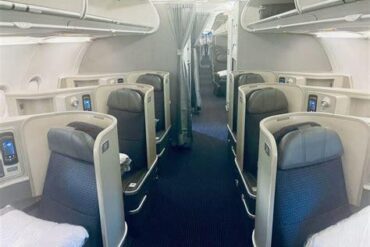
On affected routes, Club Europe passengers now receive a continental breakfast featuring fresh fruit, yogurt, and a pastry. The presentation is designed to feel lighter and more refined, aligning with modern preferences for simplicity and speed.
Economy-class passengers, meanwhile, receive a bottle of water and a small snack, such as a biscuit or pretzels. Importantly, British Airways still offers the option to pre-order selected hot dishes on short-haul flights for an additional fee, ensuring that passengers who value a cooked breakfast can still access one.
This tiered approach reflects a broader shift toward personalization and ancillary revenue, allowing passengers to tailor their experience while reducing baseline costs for the airline.

The Symbolism of Food in Airline Branding
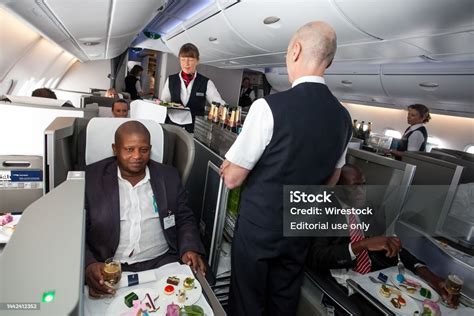
Food has always played an outsized role in airline branding. For flag carriers in particular, inflight meals serve as edible ambassadors of national identity. British Airways has historically leaned into this, offering traditional afternoon tea, British cheeses, and full breakfasts that reinforce its heritage.
Removing the full English breakfast from any route therefore carries symbolic risk. It invites questions about whether BA is gradually diluting the very characteristics that once distinguished it from competitors.
Yet the airline appears confident that its brand equity is strong enough to absorb these changes. By retaining cooked breakfasts on longer short-haul and long-haul routes, British Airways preserves the ritual where it arguably matters most—on flights where passengers have time to appreciate it.
Passenger Expectations in a Changing Premium Cabin
The definition of “premium” in short-haul travel has evolved. Many business travelers today prioritize punctuality, workspace, and connectivity over elaborate meals. For them, a lighter breakfast may even be preferable, reducing post-flight sluggishness before a day of meetings.
Leisure travelers, however, often view Club Europe as part of the holiday experience. For these passengers, the full English breakfast represents value and indulgence, particularly when traveling early in the morning.
British Airways’ challenge lies in balancing these competing expectations without fragmenting its product identity. The selective removal of the cooked breakfast suggests a data-driven approach, targeting routes where business travelers dominate and where service time is most constrained.
Why Scotland Is an Exception
The decision to retain full breakfasts on flights to Scotland highlights the nuanced nature of BA’s strategy. Scottish routes, despite similar flight times, carry a different mix of passengers and cultural expectations. Breakfast traditions north of the border are often even heartier than their English counterparts, featuring items such as black pudding, tattie scones, and lorne sausage.
Maintaining a cooked breakfast on these flights reinforces regional sensitivity and acknowledges the distinct culinary identity within the UK itself. It also reflects the importance of these routes to British Airways’ domestic network.
The Broader Trend: Simplification Without Full Retreat
British Airways’ move is not an isolated decision but part of a broader trend toward service simplification across the airline industry. Legacy carriers worldwide are reassessing which traditional perks genuinely influence passenger choice and which have become costly relics.
Despite the changes, BA’s catering still outperforms many competitors. The airline continues to offer hot breakfasts on most routes and maintains a stronger food identity than many European peers. Yet its absence from the top tier of global catering rankings, such as Skytrax’s Best Business Class Onboard Catering list, suggests that incremental changes may not be enough to elevate its reputation.
What This Change Signals for the Future of British Airways
The quiet removal of the full English breakfast from select short-haul routes is less about the meal itself and more about what it signals. British Airways is recalibrating its product to reflect modern travel realities, where efficiency, consistency, and profitability increasingly shape service decisions.
For passengers, the change may feel like the loss of a small but cherished tradition. For the airline, it represents a calculated trade-off—one that preserves core elements of its brand while adapting to a market that no longer rewards excess on the shortest flights.
British Airways is not abandoning its culinary heritage. Instead, it is redefining where and when that heritage is most effectively expressed. The full English breakfast remains onboard, just not everywhere—and that distinction speaks volumes about how the airline now views value in the skies.