For decades, first class cabins symbolized the pinnacle of commercial aviation. Airlines competed fiercely to offer the most luxurious seats, the most attentive service, and the most exclusive airport experiences. From private suites to multi-course gourmet dining, the first-class cabin served as the industry’s ultimate prestige product.
However, the economics and expectations of premium air travel have evolved dramatically. Today, business class products have become so advanced that the traditional distinction between first class and business class has nearly disappeared. As a result, airlines across the world have begun eliminating first class cabins altogether.
American Airlines, historically one of the few U.S. carriers still selling international first-class tickets, has now joined this industry shift. The airline is gradually retiring its Flagship First Class, replacing it with a new generation of business-class suites designed to deliver similar comfort while maximizing revenue potential.
This transformation reflects a broader change in airline strategy—one where premium business class has effectively become the new flagship product.
The Decline of First Class Across the Airline Industry
For much of aviation history, first class was a defining feature of global airlines. It represented luxury in the skies and often included exclusive amenities such as:
- Fully enclosed suites
- Personalized dining services
- Dedicated cabin crew
- Private airport lounges
- Chauffeur transfers in some markets
Yet despite its prestige, first class has become increasingly difficult for airlines to justify financially.
By 2024, the number of scheduled first-class seats worldwide had fallen more than 40% compared to 2019 levels. Many airlines realized that the space required for first class could be better used for additional business-class or premium economy seats—both of which generate higher overall revenue.
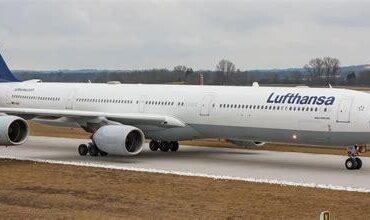
Several major carriers have already eliminated first class entirely, including:
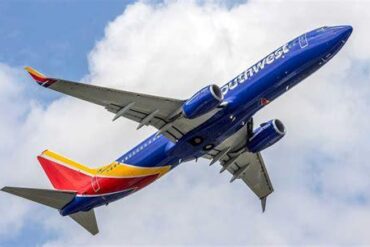
- Delta Air Lines
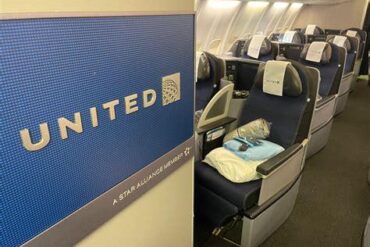
- United Airlines
- Turkish Airlines
- LATAM
- Malaysia Airlines
- China Southern Airlines
These airlines have shifted their focus toward highly sophisticated business-class products instead. In many cases, these new seats now include privacy doors, fully flat beds, large entertainment screens, and high-end dining, features that once belonged exclusively to first class.
American Airlines held onto its premium flagship cabin longer than most U.S. competitors, but the economic reality eventually became impossible to ignore.
American Airlines’ Flagship First Class: The Last of Its Kind in the U.S.
Until recently, American Airlines remained the only U.S. airline selling international first-class tickets.
Its premium Flagship First cabin existed on just two aircraft types:
- Boeing 777-300ER
- Airbus A321T used on premium transcontinental routes
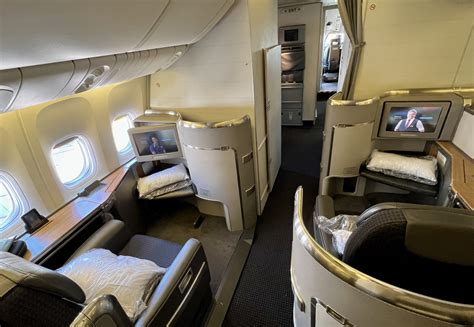
The Boeing 777-300ER featured eight first-class seats in a 1-2-1 configuration, offering direct aisle access and lie-flat beds. Meanwhile, the Airbus A321T operated with ten first-class seats arranged in a 1-1 layout, providing a highly exclusive experience on select coast-to-coast flights.
These aircraft served major long-haul destinations across:
- Asia
- Europe
- Australia
- South America
Domestically, the Flagship First product also appeared on premium routes such as:
- Los Angeles – New York JFK
- San Francisco – JFK
- Los Angeles – Boston
- Los Angeles – Miami
Despite its prestige, the cabin represented a very small portion of American’s overall fleet. As the airline modernized its aircraft and redesigned interiors, the decision to eliminate first class gradually became inevitable.
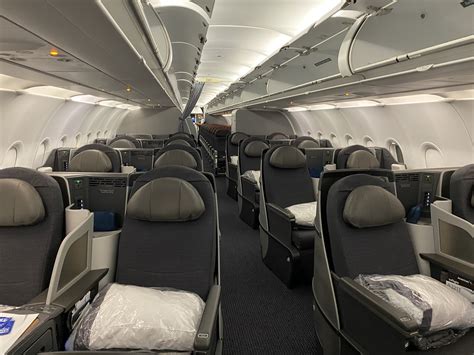
The Financial Reality: Empty Seats and Lost Revenue
Airlines operate on extremely tight margins. Every square foot inside an aircraft must generate revenue to justify its presence.
For most airlines, the target passenger load factor—the percentage of seats filled on a flight—typically ranges between 80% and 85%.
First class rarely reaches that threshold.
On many routes, first-class cabins may only achieve occupancy rates of around 20%, leaving expensive seats empty while economy and business cabins remain full. From a business perspective, that imbalance becomes difficult to justify.
First-class seats consume significantly more space than other cabin types. A single first-class suite may occupy the same footprint as two or even three business-class seats. If those seats remain unsold, airlines lose valuable revenue potential.
By replacing first class with additional business-class suites, airlines can:
- Increase total premium capacity
- Sell more high-value seats
- Improve load factors across the aircraft
The strategy reflects a simple truth: consistent demand beats luxury that only sells occasionally.
When Business Class Became Good Enough
Another major factor driving the disappearance of first class is the rapid evolution of modern business-class cabins.
Twenty years ago, business class often meant reclining seats that did not lie flat. Privacy was minimal, and inflight entertainment was limited.
Today’s business-class seats look radically different.
Modern premium cabins often include:
- Fully flat beds up to 79 inches long
- Sliding privacy doors
- High-resolution 4K entertainment displays
- Bluetooth audio connectivity
- Wireless charging
- Direct aisle access for every passenger
These features blur the line between business class and first class.
Travelers who once paid double or triple for first class now frequently find that top-tier business-class products deliver nearly the same experience at a lower price.
This shift has fundamentally changed how airlines design their cabins. Rather than offering three distinct premium tiers, many carriers now focus on two: business class and premium economy.
Criticism of American Airlines’ Flagship First Product
American Airlines’ own first-class offering also faced criticism from frequent flyers and aviation reviewers.
Although the Flagship First seats were comfortable, many observers noted that they offered only modest improvements over business class.
Some common critiques included:
- Limited privacy compared with modern suites
- Minimal design innovation
- Similar seating dimensions to business class
- A high ticket price that did not reflect a dramatically better experience
In an era where competitors were introducing fully enclosed business-class suites, American’s first-class cabin began to feel dated.
This perception made it even harder to convince passengers to pay the steep premium required for first class.
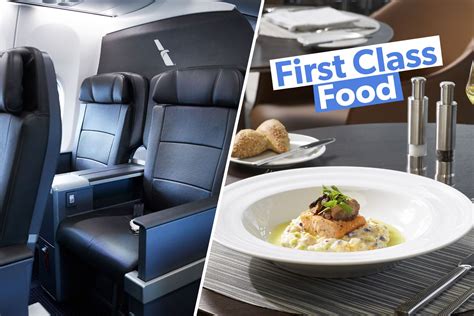
Introducing the Flagship Suite: American’s New Premium Strategy
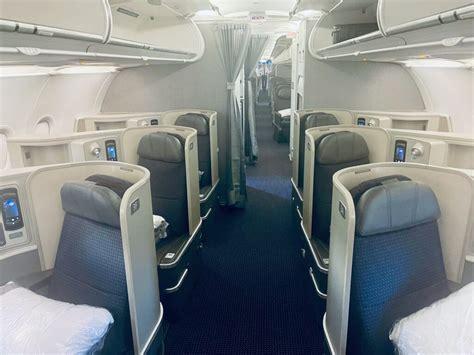
Instead of maintaining a separate first-class cabin, American Airlines decided to upgrade business class dramatically.
The airline’s new premium seat is called the Flagship Suite, and it represents the centerpiece of American’s future long-haul strategy.
These new suites introduce several major improvements:
- Sliding privacy doors
- Expanded personal storage
- Chaise lounge seating positions
- Large 17.5-inch 4K entertainment screens
- Wireless charging pads
- Bluetooth audio pairing
- Multiple USB ports
Each suite also converts into a 79-inch lie-flat bed, ensuring long-haul comfort comparable to traditional first-class seating.
American also created a premium sub-category called Flagship Suite Preferred, located in the first row of the cabin. These seats offer approximately:
- 20% more bed space
- 40% more overall personal area
While technically still business class, these upgraded suites effectively function as a first-class experience within the business cabin.
Reconfiguring the Boeing 777-300ER Fleet
The Boeing 777-300ER plays a critical role in American Airlines’ long-haul network, serving destinations across Europe, Asia, and South America.
Under the new cabin configuration, the aircraft will undergo significant changes.
The updated layout includes:
- 70 Flagship Suite business seats
- 44 premium economy seats
- 216 economy seats
Previously, the aircraft carried:
- 8 first-class seats
- 52 business-class seats
- 28 premium economy seats
The redesign removes first class entirely but adds 34 additional premium seats overall.
To accommodate these changes, American Airlines is making several structural adjustments to the aircraft interior. Galley space and lavatories will be slightly reduced, and some communal features—such as the walk-up bar between business cabins—will disappear.
These changes reflect a strategic focus on maximizing high-revenue seating while maintaining passenger comfort.
The Boeing 787 Dreamliner Debuts the New Suites
American Airlines has already begun introducing the Flagship Suite on newly delivered Boeing 787-9 Dreamliners.
These aircraft represent one of the airline’s most significant cabin upgrades in years.
Each premium-configured 787-9 includes:
- 51 Flagship Suites
- 32 premium economy seats
- 143 economy seats
Compared to earlier versions of the aircraft, the new layout increases business-class capacity by roughly 70%.
The suites use the Adient Ascent platform, arranged in a reverse herringbone layout that provides every passenger with direct aisle access and exceptional privacy.
Passengers also benefit from modern inflight technology, including high-definition screens, wireless charging, and multiple connectivity options.
American has already deployed these aircraft on routes such as:
- Chicago O’Hare – London Heathrow
- Philadelphia – London Heathrow
- Chicago – Los Angeles
As more Dreamliners join the fleet, these premium suites will appear on additional international routes.
The Airbus A321XLR: Bringing Premium Suites to Narrowbody Aircraft
The transformation of American’s premium cabins does not stop with widebody jets.
The airline also plans to install Flagship Suites on its upcoming Airbus A321XLR fleet.
This narrowbody aircraft will feature 20 private suites arranged in a 1-1 configuration, giving every passenger direct aisle access and exceptional privacy.
The design closely mirrors the suites found on the Boeing 787 and retrofitted 777 aircraft, creating a consistent premium experience across the fleet.
American Airlines has 50 A321XLR aircraft on order, and the type is expected to unlock entirely new route possibilities.
Because the A321XLR can fly long distances with fewer passengers, it enables airlines to launch nonstop flights between cities that previously could not support widebody aircraft.
Potential routes may include smaller European destinations and emerging South American markets.
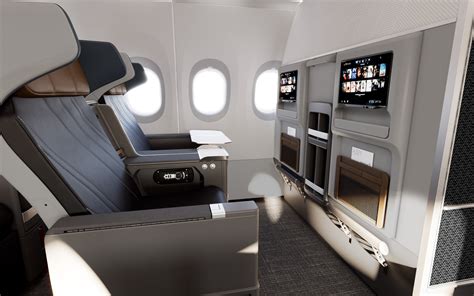
Transcontinental Travel Without First Class
American Airlines will also retire the Airbus A321T, the aircraft currently used for its premium transcontinental services.
These jets operate routes between cities such as New York, Los Angeles, San Francisco, and Boston.
The aircraft were originally designed to offer an unusually luxurious domestic experience, featuring both first class and business class cabins with lie-flat seats.
However, once the A321T fleet is reconfigured, it will be converted to match the standard A321 layout used across the rest of American’s narrowbody fleet.
While the first-class cabin will disappear, lie-flat business-class seating will remain on key transcontinental routes, ensuring passengers still receive a premium experience.
Why Business Class Has Become the New Flagship
The disappearance of first class from many airlines does not mean luxury air travel is disappearing. Instead, it signals a shift in where airlines concentrate their investment.
Modern business-class products now deliver:
- High levels of privacy
- Long lie-flat beds
- Sophisticated cabin design
- Premium dining and service
For airlines, the advantage lies in scalability. Business class occupies less space than first class while still commanding high fares.
This allows carriers to install more premium seats that sell consistently, improving both revenue and aircraft efficiency.
In effect, business class has evolved into the industry’s true flagship product.
The Future of Premium Travel at American Airlines
American Airlines’ decision to eliminate Flagship First reflects a broader transformation in the aviation industry.
Rather than maintaining a rarely filled luxury cabin, the airline is investing heavily in modern business-class suites, expanded premium economy seating, and more efficient aircraft layouts.
By 2026, American expects its long-haul fleet to feature over 45% more premium seats than today.
The strategy positions the airline to compete more effectively in lucrative global markets such as:
- London
- Tokyo
- Hong Kong
- São Paulo
- Sydney
In these markets, travelers increasingly expect high-end comfort—but they no longer insist on a traditional first-class cabin.
American Airlines is adapting to that reality. Instead of clinging to an outdated model, the carrier is building a new premium strategy centered on advanced business-class suites that deliver luxury at scale.
The result is a future where the best seat on the aircraft is no longer called first class—yet offers nearly everything passengers once expected from it.