America’s tactical aviation fleet is undergoing a transformation unlike anything seen since the years immediately following the Cold War. Across the United States Air Force and Marine Corps, some of the most recognizable combat aircraft in military history are quietly approaching retirement. These aircraft have dominated skies over Iraq, Afghanistan, the Balkans, and countless deterrence missions around the globe. Yet even legendary fighters eventually reach a point where age, maintenance costs, and evolving battlefield requirements outweigh their proven combat records.
The retirement of these aircraft is not a sign of weakness. Instead, it reflects a strategic shift toward a future centered on stealth technology, sensor fusion, network-centric warfare, long-range precision weapons, and increasingly sophisticated unmanned systems. The Pentagon is preparing for potential conflicts against technologically advanced adversaries where survivability and information superiority may prove more important than raw speed or payload capacity.
As a result, several iconic aircraft are being phased out, downsized, or significantly reduced between 2025 and 2030. Some are leaving quietly after decades of distinguished service, while others remain at the center of intense debates between military leaders, lawmakers, and aviation experts. Their replacements represent the next generation of American airpower and offer a glimpse into how future wars may be fought.
The following six fighter and attack aircraft are among the most significant platforms being retired or reduced in service, along with the systems poised to take their place.
The story begins with an aircraft that has served as one of America’s most reliable strike fighters for more than three decades.
The F-15E Strike Eagle Is Losing Its Oldest Airframes
The Boeing F-15E Strike Eagle remains one of the most capable multirole combat aircraft in the world. Originally developed from the air-superiority-focused F-15 Eagle, the Strike Eagle evolved into a long-range precision strike platform capable of attacking targets deep inside enemy territory while still defending itself against hostile aircraft.
Despite its continued effectiveness, the Air Force has begun retiring some of its oldest F-15E aircraft. Specifically, the focus is on 21 Strike Eagles powered by older Pratt & Whitney F100-PW-220 engines. These engines produce significantly less thrust than the newer F100-PW-229 variants that equip more modern examples in the fleet.
The challenge is not combat capability. These aircraft remain dangerous and effective weapons systems. The issue is economics. Maintenance requirements have steadily increased as the aircraft age, replacement parts become harder to obtain, and support costs continue to climb. Operating older Strike Eagles now requires a growing amount of manpower and resources that could otherwise be directed toward modernization efforts.
The retirement of these aircraft does not signal the end of the Strike Eagle itself. More than 200 F-15Es have already received advanced APG-82(V)1 AESA radar systems, ensuring that many will continue flying well into the 2030s.
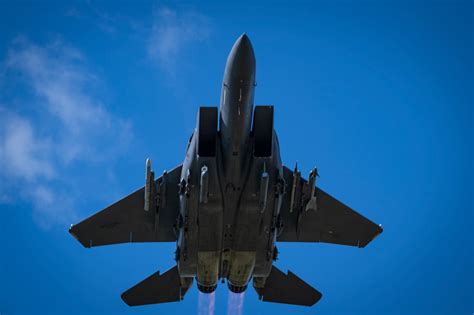
The aircraft replacing these retiring Strike Eagles is the Boeing F-15EX Eagle II. While visually similar to earlier Eagles, the F-15EX represents a major technological leap. It features digital fly-by-wire controls, open-mission architecture, improved avionics, enhanced networking capabilities, and significantly greater weapons capacity.
With 13 weapons stations and the ability to carry large numbers of advanced missiles, the F-15EX is designed to complement stealth aircraft rather than replace them. While the F-35A penetrates heavily defended airspace, the F-15EX can operate behind the stealth screen carrying massive weapons loads that would be impossible for stealth fighters to transport internally.
This combination gives the Air Force greater flexibility while reducing the burden of maintaining aging Strike Eagle airframes.
The Legendary F-15C Eagle Is Finally Leaving Active Duty
Few fighter aircraft in aviation history possess a combat record as impressive as the F-15C Eagle.
Designed specifically for air superiority, the F-15C became synonymous with American dominance in the skies. Throughout decades of service, it achieved an extraordinary combat record of 104 aerial victories without suffering a single loss to enemy aircraft.
That remarkable chapter officially began closing when the last active-duty F-15C completed its final flight from Kadena Air Base in Japan during 2025.
The reasons for retirement are straightforward. Structural fatigue has become increasingly difficult to manage, operating costs continue rising, and newer aircraft offer capabilities that simply did not exist when the Eagle first entered service.
Even so, the aircraft is not disappearing entirely.
Several structurally sound examples remain with the Air National Guard under a program often referred to as the “Platinum Eagles.” These aircraft continue performing homeland defense missions, maintaining around-the-clock readiness to intercept unidentified aircraft entering protected airspace.
Many of these fighters first entered service during the 1980s. Their continued usefulness demonstrates the exceptional design qualities that made the Eagle such a dominant aircraft.
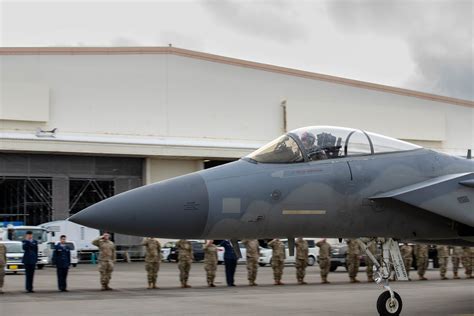
The primary successor is once again the F-15EX Eagle II. The aircraft preserves many of the characteristics that made the original Eagle successful, including exceptional range, speed, payload capacity, and reliability.
However, it also incorporates modern networking technologies and advanced sensors that allow it to operate effectively alongside fifth-generation stealth fighters.
In many ways, the F-15EX represents the evolution of the Eagle concept rather than its replacement. It carries forward a legacy that has defined American air superiority for nearly half a century.
The F-22 Block 20 Raptors Face an Uncertain Future
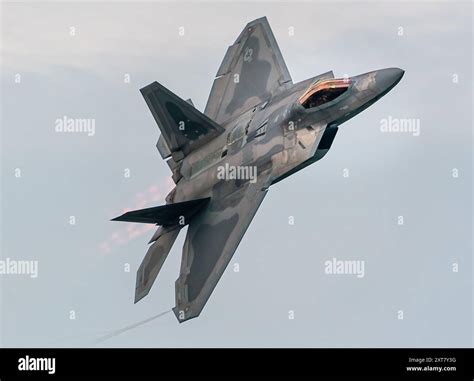
The Lockheed Martin F-22 Raptor remains one of the most sophisticated fighter aircraft ever built. It combines stealth, supercruise capability, extreme maneuverability, and advanced sensors into a platform that remains unmatched in many aspects of air combat.
Yet not all Raptors are equal.
Thirty-two Block 20 aircraft currently occupy a unique position within the Air Force. These aircraft primarily serve training roles and lack many of the upgrades installed on operational Block 30 and Block 35 fighters.
As a result, they cannot fully participate in modern combat missions.
The Air Force has repeatedly argued that upgrading these aircraft would be prohibitively expensive. Estimates suggest modernization could cost billions of dollars while taking more than a decade to complete.
At the same time, retiring them presents another problem.
More than 90 percent of basic F-22 pilot training takes place in Block 20 aircraft. Removing them from service without a replacement solution would force pilots to train on operational combat-coded aircraft, accelerating wear on the frontline fleet.
This dilemma has transformed the Block 20 Raptor into one of the most controversial aircraft retirement debates within the Pentagon.
The long-term answer lies beyond the current generation of fighters.
The Air Force is investing heavily in the Next Generation Air Dominance program, often abbreviated as NGAD. Central to this effort is the future Boeing F-47, a sixth-generation fighter designed to succeed the Raptor.
While many details remain classified, the aircraft is expected to incorporate unprecedented levels of stealth, sensor integration, artificial intelligence assistance, and manned-unmanned teaming capabilities.
Rather than simply replacing the F-22, the F-47 aims to redefine air dominance for an entirely new era of warfare.
The A-10 Warthog Refuses to Retire
No aircraft on this list has generated more debate than the Fairchild Republic A-10 Thunderbolt II.
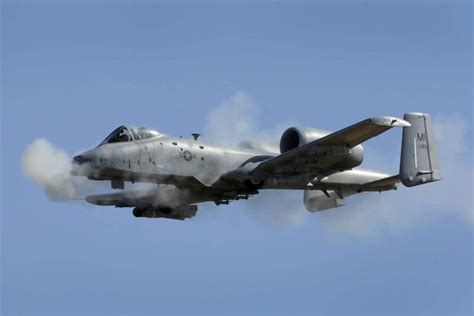
Known affectionately as the Warthog, the A-10 was designed around one mission: close air support. Its enormous GAU-8/A Avenger cannon, armored cockpit, and ability to absorb damage have made it legendary among ground forces.
For years, Air Force leaders have sought to retire the aircraft, arguing that it is too vulnerable for modern high-threat environments. Yet Congress has repeatedly intervened to keep the aircraft flying.
The reason is simple.
Few aircraft perform close air support as effectively or as economically as the A-10.
Recent operations have only strengthened its case. Warthogs have successfully employed APKWS-guided rockets against hostile drones, demonstrating unexpected utility against modern threats. These engagements highlighted the aircraft’s ability to destroy relatively inexpensive targets without expending costly air-to-air missiles.
Its operating costs also remain significantly lower than those of more advanced fighters.
Despite repeated retirement proposals, the A-10 continues finding ways to justify its existence.
Eventually, however, the aircraft will leave service.
Its replacement will not be a single aircraft but a combination of systems.
The F-35A will assume many conventional close air support missions while emerging Collaborative Combat Aircraft drones handle lower-risk operations requiring extended persistence.
This approach reflects broader changes in military doctrine. Instead of relying on one specialized aircraft, future close air support may be distributed across manned fighters, drones, sensors, and networked weapons systems working together.
Whether this combination can truly replicate the Warthog’s battlefield effectiveness remains one of the most closely watched questions in military aviation.
The AV-8B Harrier II Reaches the End of an Extraordinary Era
The AV-8B Harrier II occupies a unique place in aviation history.
For decades, it provided the Marine Corps with a capability few aircraft could match: the ability to operate from short runways, expeditionary bases, and amphibious assault ships while still delivering meaningful combat power.
Its vertical and short takeoff capabilities transformed how Marines projected airpower around the globe.
The aircraft proved its worth repeatedly, including during Operation Desert Storm, where it demonstrated remarkable mission-capable rates and operational flexibility.
Yet by 2026, the Harrier’s long service career is finally ending.
The retirement schedule is among the most clearly defined of any military aircraft transition currently underway. Following its final deployment, the remaining aircraft will move into storage, concluding more than four decades of service.
The driving force behind this retirement is not a failure of the Harrier itself.
Instead, the arrival of the F-35B has made continuation increasingly difficult to justify.
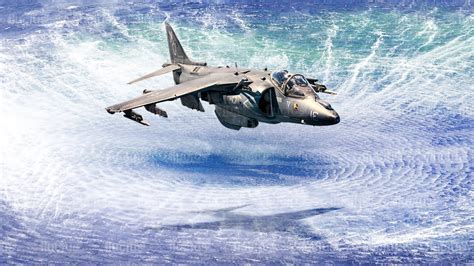
The F-35B preserves the Harrier’s defining short takeoff and vertical landing capability while dramatically improving virtually every other performance metric.
It flies faster, carries more advanced sensors, integrates seamlessly into modern combat networks, and offers stealth characteristics that significantly improve survivability.
Most importantly, it allows the Marine Corps to maintain expeditionary aviation capabilities without sacrificing relevance in future conflicts.
As the final Harriers leave service, they close one of the most distinctive chapters in military aviation history.
The Marine Corps Is Retiring the F/A-18C/D Hornet
The retirement of the Marine Corps’ F/A-18C/D Hornet fleet represents far more than the replacement of an aging fighter.
It marks the end of an entire aviation ecosystem.
Since entering service during the 1980s, the Hornet has participated in nearly every major American military operation. From Desert Storm to operations in Afghanistan and Iraq, the aircraft became a symbol of Marine aviation.
Its versatility allowed it to perform fighter escort, ground attack, reconnaissance, and close air support missions with equal effectiveness.
For decades, it served as the backbone of Marine fixed-wing combat power.
Now that era is drawing to a close.
The retirement process is scheduled to continue through 2030, culminating in the complete transition of remaining Marine Hornet units.
What makes this shift especially significant is the simultaneous elimination of maintenance specialties dedicated specifically to the Hornet airframe. This ensures that the retirement is effectively irreversible.
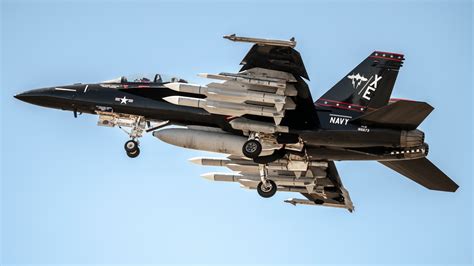
Replacing the Hornet is the expanding fleet of F-35B and F-35C Lightning II aircraft.
Unlike traditional fighters, the F-35 was designed around information dominance as much as aerodynamic performance. Its sensors, data fusion systems, and stealth characteristics allow pilots to identify, track, and engage threats long before being detected themselves.
While the Hornet may achieve higher top speeds in certain scenarios, the F-35’s ability to operate within heavily defended environments fundamentally changes how missions are executed.
By 2030, the Marine Corps is expected to field an overwhelmingly fifth-generation fixed-wing force, completing one of the most ambitious aviation transitions ever attempted by a military service.
Why These Retirements Matter More Than Ever
Taken individually, each retirement reflects a specific operational or financial challenge. Collectively, however, they reveal a much larger transformation taking place across the U.S. military.
The era of designing aircraft around a single mission is gradually fading. Future combat operations emphasize connectivity, information sharing, stealth, electronic warfare, and autonomous systems. Aircraft are increasingly expected to function as nodes within a larger combat network rather than independent platforms operating alone.
The F-15EX illustrates how legacy concepts can be modernized for contemporary warfare. The F-35 family demonstrates the growing importance of sensor fusion and survivability. The F-47 and broader NGAD initiative point toward a future where artificial intelligence and manned-unmanned teaming become standard elements of air combat.
Meanwhile, debates surrounding the A-10 highlight an important reality: technological advancement does not automatically eliminate the value of proven capabilities.
The coming years will determine whether these replacement programs fully deliver on their promises. What is already clear is that the United States is entering a new chapter in airpower history.
The aircraft departing service helped define American military aviation for decades. Their replacements will shape the battlefield for generations to come, carrying forward a legacy of innovation while fundamentally redefining what a fighter aircraft can be in the twenty-first century.