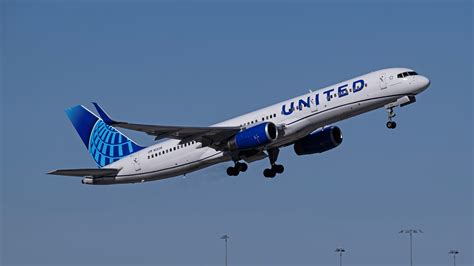
The Boeing 757-200 has long stood as one of the most iconic and versatile aircraft in commercial aviation. For decades, it carved out a niche that no other jet could fully replicate—bridging the gap between narrowbody efficiency and widebody range. At United Airlines, this aircraft wasn’t just another fleet member; it was a strategic powerhouse, enabling routes that would otherwise be economically unviable.
Yet today, despite its enduring reputation and operational strengths, the 757-200 is steadily approaching the end of its lifecycle within United’s fleet. This transition is not driven by nostalgia or sentiment, but by a precise, calculated evolution in airline economics, technology, and passenger expectations. What appears to be a simple retirement is, in reality, a profound transformation in how airlines operate in the modern era.
The Unique Role of the Boeing 757-200 in United’s Network
Few aircraft have demonstrated the operational flexibility of the Boeing 757-200. Designed in the late 20th century, it quickly earned recognition for its powerful engines, high thrust performance, and exceptional range. These characteristics allowed United Airlines to deploy it across an unusually diverse network.
The aircraft excelled in “long and thin” routes—markets with moderate demand but significant distance, particularly across the Atlantic. From hubs like Newark, United used the 757-200 to connect secondary European cities that could not sustain larger widebody aircraft. This strategy allowed the airline to expand internationally without overcommitting capacity.
Unlike traditional narrowbodies, the 757-200 could operate from shorter runways while carrying a full load over long distances, making it invaluable at constrained airports. It was this rare blend of performance and efficiency that made the aircraft indispensable for decades.
Aging Aircraft: When Reliability Meets Economic Reality
Time, however, is relentless—even for engineering marvels. Many of United’s Boeing 757-200 aircraft were delivered in the late 1980s and early 1990s. Today, that places them near or beyond 30 years of continuous service, a milestone that significantly alters their economic viability.
As aircraft age, maintenance becomes more intensive and costly. Components require frequent inspections, structural fatigue checks grow more complex, and sourcing replacement parts becomes increasingly difficult. While airlines are highly skilled at extending aircraft lifespans, there comes a point where maintenance costs begin to outweigh operational benefits.
For United Airlines, this tipping point is already visible. Extended maintenance downtime reduces aircraft availability, while rising costs erode profit margins—especially on routes where efficiency is critical. Even a well-maintained aircraft cannot escape the compounding financial burden of age.
Engine Complexity: The Hidden Cost Driver
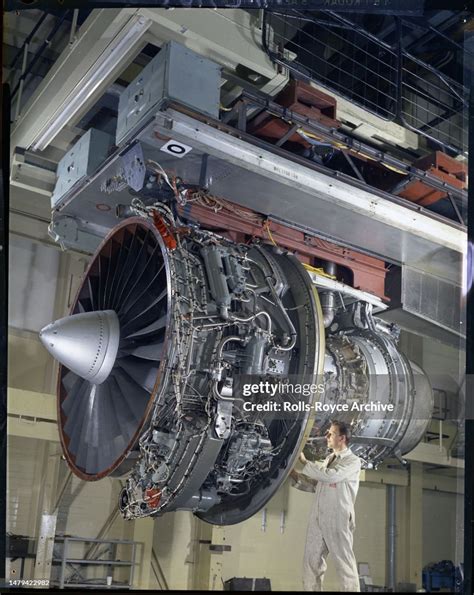
One of the less visible but highly impactful challenges lies in the engine diversity within the 757 fleet. Historically, United operated aircraft equipped with both Pratt & Whitney and Rolls-Royce RB211 engines, creating a dual-maintenance ecosystem.
This split required separate inventories of spare parts, distinct technical expertise, and parallel maintenance procedures. Over time, such complexity introduces inefficiencies that scale across the operation. United took steps to streamline this by retiring its Pratt & Whitney-powered aircraft earlier, but even a consolidated fleet still carries legacy maintenance burdens.
Maintaining a shrinking subfleet of aging aircraft demands specialized infrastructure that becomes harder to justify economically. As newer aircraft enter service, the contrast becomes even sharper—modern fleets are designed for standardization and efficiency, not fragmentation.
Fuel Efficiency: The Defining Factor in Modern Aviation
If there is one factor that decisively tilts the balance against the Boeing 757-200, it is fuel efficiency. Designed in an era of lower fuel costs, the aircraft simply cannot compete with modern designs that benefit from decades of aerodynamic and engine innovation.
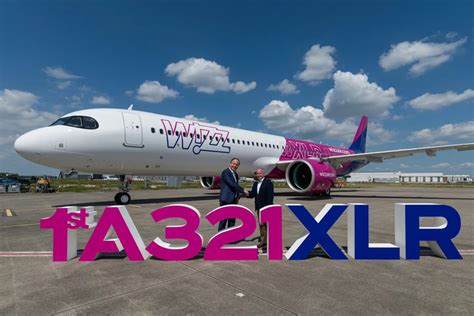
New-generation aircraft like the Airbus A321neo and A321XLR deliver dramatically lower fuel burn per seat, thanks to advanced engines, lightweight materials, and optimized wing designs. Over thousands of flights annually, these savings translate into millions of dollars in reduced operating costs.
Fuel efficiency is no longer just about profitability—it is central to environmental responsibility. Airlines face increasing pressure from regulators and consumers to reduce carbon emissions. Operating older, less efficient aircraft directly conflicts with these goals, making fleet renewal a strategic necessity rather than an option.
The Rise of the Airbus A321XLR as a Successor
For years, the Boeing 757-200 had no true replacement. Its unique capabilities left a gap that manufacturers struggled to fill. That gap is now closing with the arrival of the Airbus A321XLR.
This aircraft offers comparable range while delivering superior efficiency and lower operating costs. United Airlines has invested heavily in the A321neo family, signaling a clear transition toward a new generation of long-range narrowbodies.
The A321XLR enables United to maintain its network of transcontinental and transatlantic routes without sacrificing profitability. In fact, it enhances flexibility—allowing the airline to explore new destinations that were previously marginal or unviable.
This is not merely a replacement; it is an upgrade in every measurable dimension—from cost efficiency to environmental impact.
Evolving Passenger Expectations in a Competitive Market
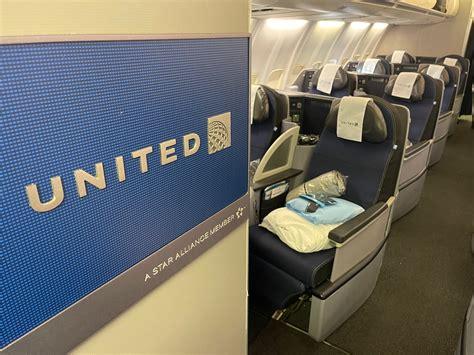
Modern travelers expect more than just transportation—they expect an experience. While the Boeing 757-200 offers a relatively spacious cabin for a narrowbody, its design reflects an earlier era of aviation.
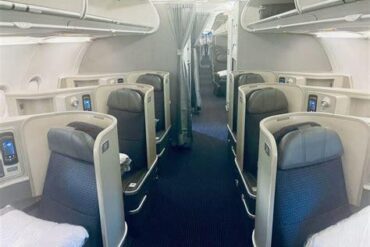
Newer aircraft feature larger overhead bins, quieter cabins, advanced air filtration systems, and high-speed connectivity. These enhancements are not luxuries; they are becoming standard expectations, especially among premium passengers.
United Airlines competes in a market where brand perception and passenger satisfaction directly influence revenue. Retrofitting older aircraft can only go so far—structural limitations prevent them from fully matching the comfort and technology of newer models.
Replacing the 757-200 allows United to deliver a consistent, modern onboard experience, reinforcing its competitive positioning across both domestic and international markets.
Operational Reliability and Network Efficiency
Reliability is the backbone of any airline operation. Even minor delays can cascade into network-wide disruptions, affecting thousands of passengers and increasing operational costs.
Older aircraft, despite meticulous maintenance, are inherently more prone to unexpected technical issues. Systems wear down, components fail more frequently, and turnaround times lengthen. For a global carrier like United Airlines, these risks are magnified across a complex route network.
Newer aircraft, by contrast, benefit from advanced diagnostics, improved system reliability, and longer maintenance intervals. This translates into higher dispatch reliability and fewer disruptions—critical factors in maintaining operational efficiency.
The retirement of the Boeing 757-200 is therefore not just about cost savings; it is about enhancing the overall resilience of the airline’s network.
The Strategic Shift: Beyond Aircraft Replacement
What makes this transition particularly significant is that it reflects a broader strategic evolution within United Airlines. The retirement of the 757-200 is not an isolated decision—it is part of a comprehensive effort to modernize the fleet, reduce complexity, and align with future industry trends.
Airlines today operate in an environment defined by thin margins, volatile fuel prices, and increasing environmental scrutiny. Success depends on optimizing every aspect of operations, from fleet composition to route planning.
By phasing out the Boeing 757-200, United is embracing a future built on efficiency, sustainability, and adaptability. The aircraft that once enabled expansion is now being replaced by one that enables optimization.
The End of an Era, and the Beginning of Another
The Boeing 757-200 remains a remarkable aircraft, one that reshaped airline networks and enabled new possibilities in global travel. Its retirement marks the end of a chapter defined by innovation and versatility.
But aviation is an industry that never stands still. The same qualities that once made the 757 indispensable are now being surpassed by a new generation of aircraft designed for a different era.
For United Airlines, this transition is not about leaving the past behind—it is about building a more efficient, sustainable, and competitive future. The skies will look different without the 757, but the strategy guiding its departure ensures that what replaces it will be even more capable.
And in that quiet evolution lies the real story: not just the retirement of an aircraft, but the reinvention of an airline’s operational philosophy for the decades ahead.