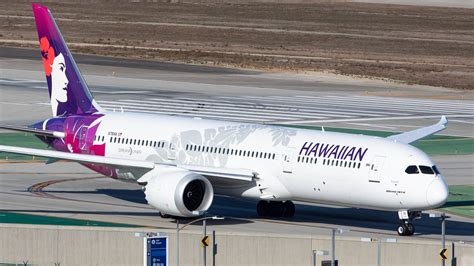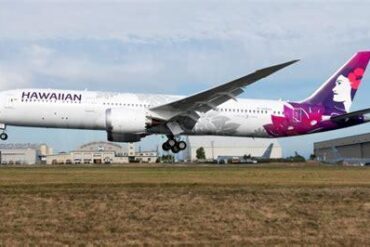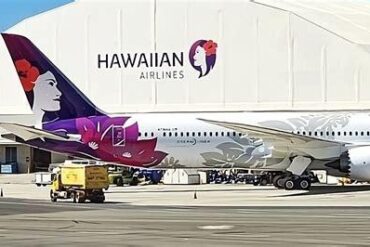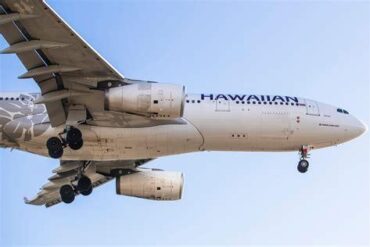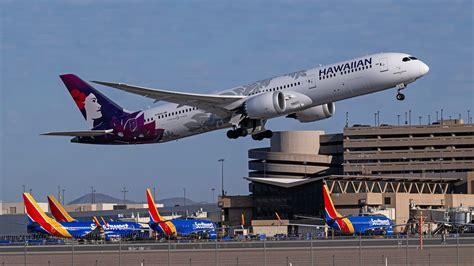
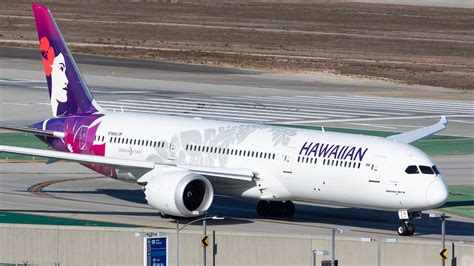
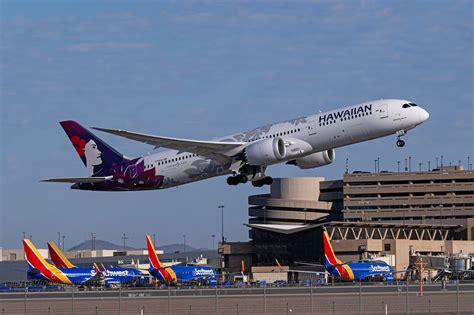
Hawaiian Airlines is redefining transpacific travel this winter by introducing its state-of-the-art Boeing 787-9 Dreamliner on the Seattle–Tokyo Narita route. The airline, now under Alaska Air Group, is replacing the Airbus A330-200 previously assigned to the route, marking a bold shift in service strategy and cabin experience.
Boeing 787-9 Replaces A330 on Key Pacific Route
Beginning January 1, 2026, Hawaiian Airlines will deploy the Boeing 787-9 Dreamliner daily on flights between Seattle-Tacoma International Airport (SEA) and Tokyo Narita International Airport (NRT). This switch is not just a fleet upgrade—it’s a rebranding of Hawaiian’s presence on one of the most competitive transpacific corridors.
According to updated schedule data, the Dreamliner will operate the majority of the service through mid-April 2026, offering up to 7,000 seats per direction in January alone, despite operating fewer total flights than the A330. The aircraft’s higher 300-seat capacity makes up for the reduction in frequency.
Flight Schedule and Service Dates Announced
The daily flight schedule, operating under flight numbers HA823 (SEA–NRT) and HA824 (NRT–SEA), is as follows:
- HA823: Depart SEA at 12:30 PM, arrive NRT at 4:00 PM (+1)
- HA824: Depart NRT at 6:25 PM, arrive SEA at 10:05 AM
The 787-9 Dreamliner will operate exclusively on:
- January: 25 round trips
- February: 28 round trips
- March: 31 round trips
- April: 20 round trips
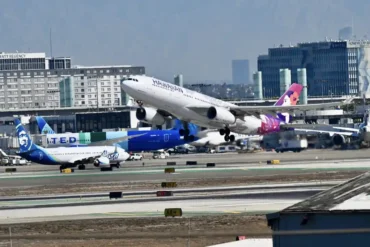
Remaining flights will be handled by the A330-200, though the transition signals the A330’s diminishing role in Hawaiian’s Pacific network.
Strategic Timing for Peak Winter Travel
Winter is traditionally one of the busiest travel periods for Pacific routes, driven by both business and leisure travel. Hawaiian Airlines is clearly leveraging this demand window to maximize the debut of its Dreamliner service, especially with Japan being a high-interest destination for West Coast travelers.
With a premium-heavy configuration and modern passenger experience, the Dreamliner is poised to drive greater customer satisfaction and loyalty during a critical revenue period.
Head-to-Head With Japan Airlines
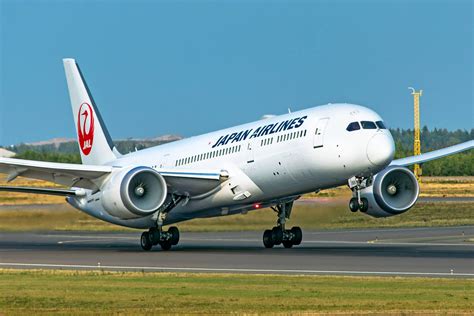
By upgrading to the Dreamliner on the Seattle–Tokyo route, Hawaiian Airlines enters direct competition with Japan Airlines (JAL), which also operates the same aircraft model on the route. However, there’s a key difference: Hawaiian’s 787-9 comes equipped with higher seating capacity, offering a tangible advantage in terms of market share and available seats per flight.
While JAL’s Dreamliner focuses on premium density, Hawaiian strikes a balance between premium comfort and volume, potentially attracting both leisure travelers and corporate accounts seeking availability without compromising on service quality.
Leihōkū Suites: A Premium Business Class Experience
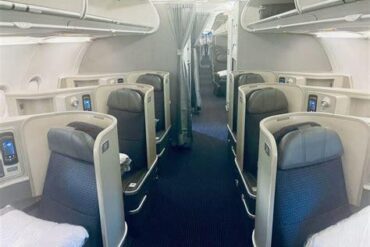
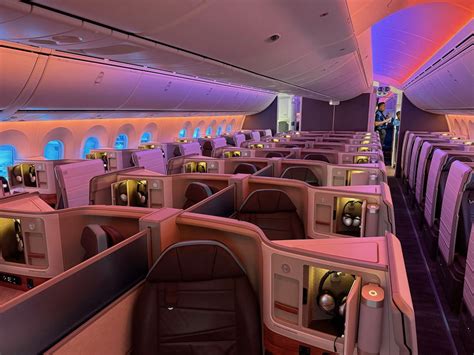
The centerpiece of Hawaiian Airlines’ Dreamliner service is its Leihōkū Suites, found exclusively on its 787-9 fleet. These business class pods offer:
- Fully lie-flat beds
- Sliding privacy doors
- Direct aisle access
- Mood lighting inspired by Hawaiian constellations
These features are a considerable upgrade from the 2-2-2 layout on the older A330-200, which lacks sliding doors or direct aisle access for all seats. Hawaiian is now positioned to appeal to the high-value segment of international travelers demanding comfort, privacy, and luxury.
A Key Milestone Post-Alaska Merger
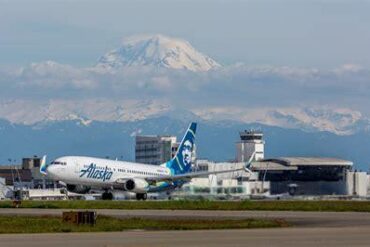
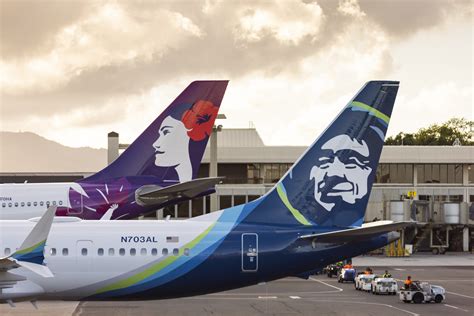
Hawaiian launched its Seattle–Tokyo route in May 2025, shortly after its acquisition by Alaska Air Group. With Alaska’s hub status in Seattle, the move represents a strategic effort to deepen the group’s footprint in transpacific markets and leverage interline connectivity.
The Dreamliner deployment aligns with Alaska’s ambitions to expand into international long-haul operations while reinforcing Hawaiian’s reputation for exceptional in-flight service and authentic Hawaiian hospitality.
Fleet Evolution: Phasing Out the A330-200
Hawaiian Airlines’ current widebody fleet includes four Boeing 787-9s with eight more on order, gradually phasing out the older A330-200s that have served for over a decade. This signals a shift not just in aircraft preference, but in customer experience strategy.
The Dreamliner’s advanced cabin pressurization, quieter engines, larger windows, and fuel efficiency make it ideal for routes like Seattle–Tokyo, which demand comfort for long-haul journeys and operational reliability across the Pacific.
Competition Heating Up in Seattle’s Transpacific Market
Hawaiian Airlines faces formidable competition from Delta Air Lines, which also operates extensive services from Seattle to Asia, including flights to Tokyo-Haneda, Seoul, and Shanghai. Hawaiian’s bet is that its unique brand identity, coupled with the Dreamliner’s superior passenger experience, will differentiate it in a crowded market.
Additionally, the airline is relying on connectivity through Alaska Airlines’ domestic network, providing convenient feed from secondary cities across the U.S. Pacific Northwest, Mountain West, and West Coast.
Implications for Frequent Flyers and Business Travelers
This route refresh is a win for loyalty members of both HawaiianMiles and Alaska’s Mileage Plan, which now offer reciprocal benefits post-merger. Elite members will gain access to upgrades, early boarding, and priority check-in on Dreamliner-operated flights.
Business travelers will appreciate the predictable daily schedule, high-quality cabins, and increased seat availability. Hawaiian’s Dreamliner product provides a legitimate alternative to legacy carriers for transpacific travel.
Looking Ahead: Expansion Potential and Future Deployments
Though the Dreamliner is scheduled on the Seattle–Tokyo route only through April 20, 2026, its performance could lead to extended deployment or future reassignment to other high-yield Asian destinations. Hawaiian’s route planners are closely monitoring demand, fleet performance, and competition.
Moreover, with eight additional 787-9s on the horizon, Hawaiian Airlines has the capacity to launch new Asia-Pacific routes or upgrade existing long-haul services such as those to Sydney, Auckland, and Seoul.
Conclusion: A New Era in Pacific Travel
Hawaiian Airlines’ decision to replace the Airbus A330-200 with the Boeing 787-9 Dreamliner on the Seattle–Tokyo Narita route is more than a fleet shuffle—it’s a strategic investment in customer experience, competitive edge, and global growth.
With a premium-heavy product, increased capacity, and integration into Alaska’s network, Hawaiian is staking its claim in the transpacific arena. For travelers in the Pacific Northwest, this means more comfort, better service, and an upgraded international experience that brings the islands a little closer to Tokyo.