Private aviation remains one of the most attractive yet misunderstood segments of the American aviation industry. While airline pilots at major carriers often dominate headlines with record compensation packages, private jet pilots continue to build lucrative careers that combine strong earnings with exceptional lifestyle advantages. In 2026, compensation for private jet pilots in the United States varies dramatically depending on aircraft type, operator, experience, schedule, and mission profile.
The result is a profession where annual earnings can range from under $70,000 for entry-level turboprop positions to more than $430,000 for senior captains operating ultra-long-range business jets.
Private Jet Pilot Compensation Is More Complex Than Base Salary
Evaluating private jet pilot pay requires looking beyond headline salary figures. Base pay frequently represents only one component of a much broader compensation package that can substantially increase total annual earnings.
Across the US business aviation sector, employers increasingly compete for experienced pilots through enhanced benefits packages. Corporate flight departments, charter operators, and aircraft management firms regularly offer incentives designed to recruit and retain highly qualified crews in a competitive labor market.
Additional compensation frequently includes:
- Sign-on bonuses ranging from $20,000 to $100,000
- Company-funded retirement contributions
- Annual performance bonuses
- Retention or longevity bonuses
- Comprehensive medical insurance
- Loss of License insurance coverage
- Per diem allowances
- Type-rating reimbursement
- Home-basing arrangements
For example, a corporate captain earning a base salary of $180,000 may ultimately receive total annual compensation exceeding $230,000 once bonuses, retirement contributions, and benefits are included.
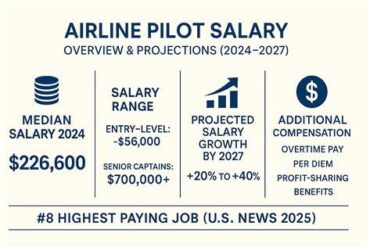
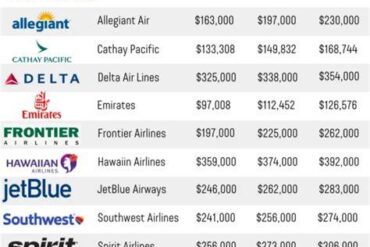
By comparison, senior captains at major airlines may receive total compensation approaching $450,000 or more after profit-sharing and retirement contributions are considered. Nevertheless, many private pilots willingly accept lower pay in exchange for enhanced flexibility and superior quality of life.
The private aviation sector has evolved considerably during the post-pandemic years, with many operators moving away from the traditional on-call model toward predictable roster systems and hard schedules.
Average Private Jet Pilot Salary in the United States in 2026
Determining an exact nationwide average remains difficult because business aviation encompasses everything from owner-flown turboprops to multinational corporate flight departments.
However, compensation data compiled from multiple industry sources paints a clear picture of prevailing salary levels.
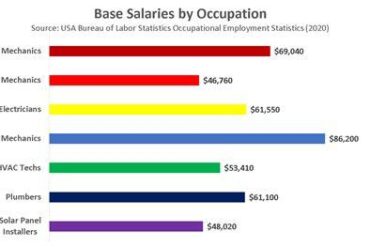
The average annual salary for a private jet pilot in the United States in early 2026 stands at approximately $130,916. Most pilots fall within a relatively broad pay range, reflecting differences in experience, aircraft complexity, and employer type.
Typical compensation ranges include:
- 25th percentile: approximately $100,000
- Median range: approximately $130,000
- 75th percentile: approximately $155,000
- Top 10%: approximately $175,000 and above
Although these numbers are substantial by most professional standards, they remain notably lower than compensation available at major US airlines, where median pilot pay exceeds $220,000 annually.
Several factors explain this gap. Airline pilots generally benefit from union contracts, guaranteed minimum monthly flying hours, seniority systems, and extensive collective bargaining protections. Private aviation compensation structures tend to be negotiated individually and vary significantly among employers.
Despite lower average salaries, elite private aviation positions can rival or even exceed airline compensation levels.
Aircraft Type Has a Major Impact on Pilot Earnings
Within business aviation, the aircraft itself often serves as one of the strongest indicators of pilot pay.
Larger, more technologically advanced aircraft demand extensive training, greater operational expertise, and higher levels of responsibility. Consequently, operators must offer premium salaries to attract and retain qualified crews.
Pilots flying ultra-long-range business jets consistently earn the highest compensation across the industry.
Gulfstream G700 and G800 Salaries
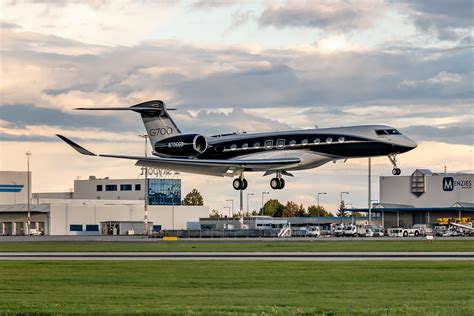
The introduction of the Gulfstream G700 and forthcoming Gulfstream G800 has established new benchmarks for business aviation compensation.
First officers operating these flagship aircraft typically earn between $187,700 and $241,100 annually.
Captains can expect annual salaries ranging from approximately $330,400 to $420,400.
Senior captains frequently command compensation packages worth $345,400 to $434,500 per year.
These figures place elite Gulfstream crews among the highest-paid private aviation professionals worldwide.
Why Gulfstream Pilots Earn Premium Salaries
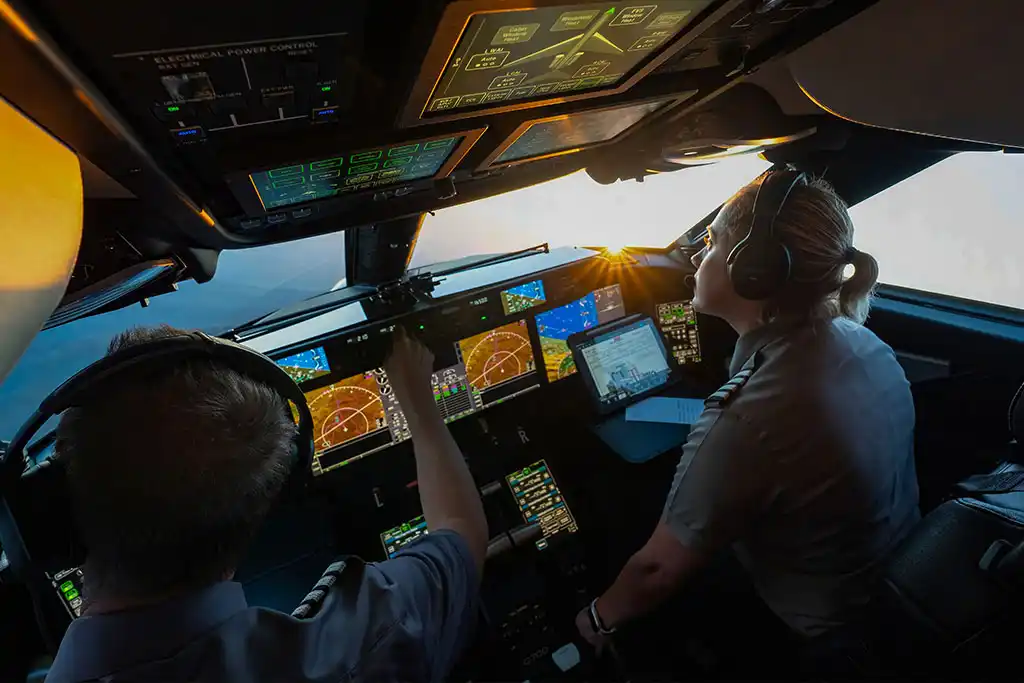
The compensation premium associated with aircraft such as the Gulfstream G700 and G800 reflects several operational realities.
First, these aircraft perform some of the world’s longest business aviation missions, regularly connecting destinations such as New York and Singapore, Los Angeles and Dubai, or London and Tokyo nonstop.
Such operations require advanced international flight planning, sophisticated oceanic procedures, complex airspace coordination, and extensive systems knowledge.
Second, these aircraft are usually owned by Fortune 500 corporations, ultra-high-net-worth individuals, or premium charter companies. Operators serving these clients prioritize experience, professionalism, and discretion, often paying significantly above market rates.
Finally, the acquisition and operating costs of ultra-long-range jets are extraordinarily high. Operators charging premium charter rates possess greater financial flexibility to compensate flight crews competitively.
In business aviation, premium aircraft typically attract premium pilots serving premium clientele.
Salaries Across Other Large Business Jets
While Gulfstream dominates the upper end of compensation, numerous other large-cabin aircraft also provide excellent earning potential.
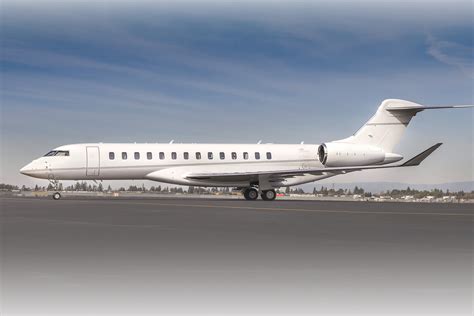
Pilots operating aircraft such as the Dassault Falcon 900, Bombardier Global Express, Global 5000, and Global 7500 frequently receive salaries comparable to those flying Boeing Business Jets.
Typical compensation ranges include:
| Aircraft Category | First Officer | Captain | Senior Captain |
|---|---|---|---|
| Boeing 737 BBJ | $141,200-$187,600 | $237,700-$365,000 | $250,200-$371,600 |
| Falcon 900 | Similar to BBJ | Similar to BBJ | Similar to BBJ |
| Global 5000/Express | $150,000-$220,000 | $250,000-$380,000 | $300,000+ |
| Global 7500/8000 | $180,000+ | $320,000-$420,000 | $430,000+ |
Operators employing these aircraft frequently maintain dedicated corporate flight departments supporting executive transportation worldwide.
Midsize and Super-Midsize Jet Pilot Salaries
Midsize business jets represent a significant portion of the US private aviation fleet.
Aircraft including the Cessna Citation Latitude, Hawker 800 series, Learjet 35/36, and various midsize Gulfstream models offer attractive compensation while requiring lower operating costs than heavy jets.
Captains flying these aircraft often earn between $140,000 and $230,000 annually, depending on employer and schedule.
Examples include:
- Gulfstream G450: often exceeding $250,000 for experienced captains
- Citation Latitude: typically $160,000 to $220,000
- Learjet series: commonly $130,000 to $200,000
- Hawker family: generally $120,000 to $190,000
These aircraft dominate charter fleets and corporate transportation networks throughout North America.
Smaller Aircraft Mean Lower Salaries
Compensation generally declines as aircraft size and complexity decrease.
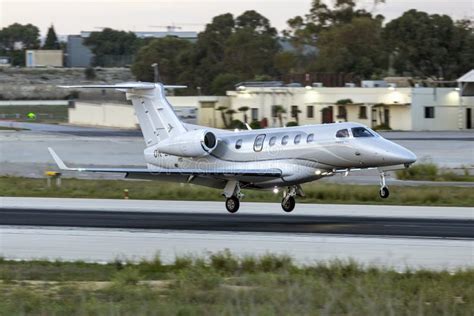
Pilots operating light jets such as the Embraer Phenom 100, Phenom 300, CitationJet family, and Pilatus PC-24 often earn less than their heavy-jet counterparts.
Although these positions still provide respectable incomes, annual salaries typically remain below those available in large-cabin aircraft operations.
Entry-level first officers on light business jets commonly earn between $80,000 and $130,000, while experienced captains may receive $120,000 to $180,000.
Smaller aircraft frequently serve regional charter missions, owner-operated flights, and short-haul corporate transportation.
Turboprop Pilot Pay in Business Aviation
Turboprop operations occupy the lower end of private aviation compensation, although certain aircraft remain highly competitive.
The Beechcraft King Air 90 and 100 family illustrates this trend.
First officers generally earn between $65,800 and $98,800 annually.
Senior captains typically receive between $73,400 and $110,000.
Larger King Air variants, including the King Air 200, 250, 300, and 350, offer progressively higher compensation.
One notable exception is the Pilatus PC-12, widely regarded as one of business aviation’s premier single-engine turboprops.
Pilots operating the PC-12 can earn:
- First officer equivalent compensation: $131,500 to $169,000
- Senior captain compensation: $146,500 to $188,300
These salaries reflect the aircraft’s versatility, strong corporate demand, and intensive utilization across charter, corporate, and special-mission sectors.
Why Many Pilots Choose Private Aviation Over Airlines
Pure compensation does not fully explain career decisions in aviation.
Many pilots intentionally leave airline careers for business aviation despite significant pay reductions.
Quality of life frequently outweighs financial considerations.
Private aviation increasingly offers:
- Predictable rotations
- Home-based schedules
- Reduced commuting requirements
- Fewer hotel nights
- Greater schedule flexibility
- More varied flying experiences
Airline flying can become highly standardized, with crews repeatedly operating identical routes between major hubs.
Business aviation, by contrast, often involves diverse destinations including mountain communities, remote islands, private estates, and international business centers.
Pilots also enjoy greater operational involvement, stronger relationships with passengers, and increased professional autonomy.
For experienced aviators approaching the latter stages of their careers, these lifestyle advantages can prove more valuable than maximizing income.
The Future of Private Jet Pilot Salaries
Private aviation compensation remains strong entering 2026.
Persistent pilot shortages, expanding corporate flight departments, and continued demand for premium charter services continue to support wage growth throughout the sector.
While major airlines still offer the industry’s highest compensation packages, business aviation provides an increasingly attractive alternative for pilots seeking balance, flexibility, and professionally rewarding flying experiences.
For top-tier operators flying flagship aircraft such as the Gulfstream G700, Global 7500, and Boeing Business Jet, annual earnings exceeding $400,000 demonstrate that private aviation remains one of the most financially rewarding niches in the global aerospace industry.