The United States airline industry offers one of the most diverse career landscapes for professional pilots anywhere in the world. From small regional carriers operating short feeder routes to global giants like Delta Air Lines, American Airlines, and United Airlines, pilots can follow many different paths as they build their careers. Between the regional airlines and the traditional legacy carriers lies another powerful segment of the industry: low-cost and ultra-low-cost airlines.
Over the past two decades, airlines such as Allegiant Air, Frontier Airlines, and Spirit Airlines have reshaped domestic air travel. Their business models focus on low fares, high aircraft utilization, dense seating configurations, and point-to-point route networks. While their ticket prices are often significantly cheaper than those offered by legacy carriers, the pilots flying these aircraft still earn competitive and steadily increasing salaries.
Pilot compensation has become one of the most important issues in aviation throughout the 2020s. A persistent pilot shortage, accelerated by pandemic-era retirements and rapid airline expansion, forced carriers to dramatically improve pay and benefits. Low-cost airlines that once lagged behind legacy carriers in compensation have introduced new contracts, higher hourly pay scales, and more attractive career progression opportunities.
The result is striking. In 2026, entry-level pilots at some low-cost carriers approach six-figure annual earnings, while experienced captains can make well over $250,000 per year depending on their airline, aircraft, and schedule. Understanding how these salaries work requires looking beyond simple annual numbers and examining the complex structure of airline pilot compensation.
How Pilot Pay Works at US Low-Cost Airlines
Airline pilot compensation in the United States does not function like a traditional salaried profession. Instead, pilots are typically paid hourly based on flight time, with pay rates determined by three major factors: seniority, position, and aircraft type.
The two primary pilot roles are first officer and captain. A first officer, often referred to as the co-pilot, assists the captain in operating the aircraft and managing the flight deck. When pilots gain enough experience and seniority, they can upgrade to the captain position, which carries significantly higher responsibility and pay.
Unlike most jobs, a pilot’s seniority within a specific airline plays a dominant role in compensation. Each airline has a negotiated pay scale, usually defined in union contracts. Every year of service moves the pilot up one step on the pay ladder, increasing hourly earnings regardless of how many hours they fly.
Low-cost airlines also guarantee a minimum number of paid flight hours per month, typically between 70 and 75 hours. Even if a pilot flies fewer hours due to operational disruptions or scheduling changes, they still receive pay for that guaranteed minimum. This provides a predictable baseline income.
However, pilots often fly more than the minimum, which significantly boosts their earnings. Additional compensation can include:
- Per diem allowances during trips, typically $2–$3 per hour away from base
- Overtime or premium pay for additional flying
- Holiday pay and training pay
- Signing bonuses or retention bonuses during pilot shortages
Over the course of a year, these supplemental payments can add thousands or even tens of thousands of dollars to a pilot’s total compensation.
The system may seem complex, but it rewards experience and availability. Pilots with higher seniority often gain access to better schedules, higher-paying trips, and preferred aircraft assignments.
Allegiant Air Pilot Salaries in 2026
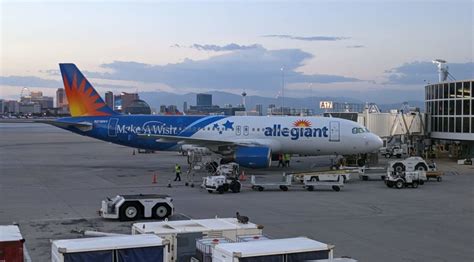
Among American low-cost carriers, Allegiant Air occupies a unique niche. Instead of focusing primarily on large hub airports, the airline specializes in leisure travel between smaller cities and vacation destinations. Routes frequently connect mid-sized communities directly to popular destinations such as Las Vegas, Orlando, and coastal Florida resorts.
This strategy produces a distinctive operating model. Many flights are designed as out-and-back trips, meaning pilots often depart from their base in the morning and return later the same day. For pilots seeking improved work-life balance, this schedule structure can be particularly appealing.
In terms of pay, Allegiant has historically offered slightly lower starting salaries than some competitors in the ultra-low-cost segment. However, compensation still grows significantly with experience.
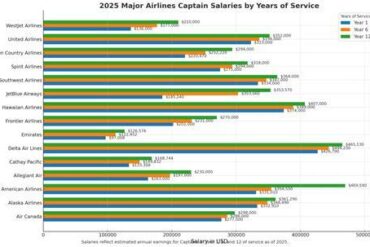
A first-year Allegiant first officer earns approximately $57 per flight hour. With a standard minimum guarantee of monthly flight hours, this translates to roughly $48,000 to $50,000 annually before additional compensation. While that figure may appear modest compared to other airlines, the rapid pay progression quickly improves earnings.
Within several years, Allegiant first officers typically see their hourly pay rise above $110 per hour, pushing annual income well into the six-figure range depending on flying hours.
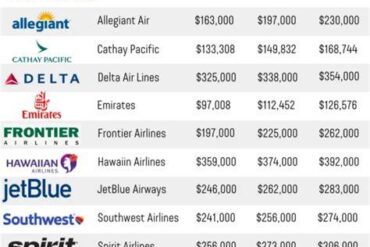
The most dramatic increase occurs when a pilot upgrades to captain. A first-year captain at Allegiant earns approximately $163 per hour, a substantial jump from first officer pay. As seniority increases, captain pay climbs steadily.
By the twelfth year of service, Allegiant captains can earn about $230 per hour. Depending on monthly flight hours, senior captains may earn close to $195,000 annually or more, especially when overtime opportunities and per diem payments are included.
Although Allegiant does not always lead the industry in pay rates, its schedule flexibility and lifestyle advantages remain attractive for many pilots.
Frontier Airlines Pilot Salaries and Career Growth
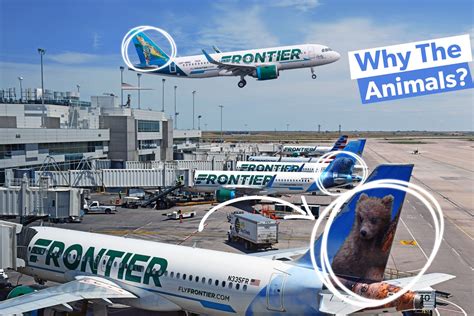
Frontier Airlines represents one of the fastest-growing airlines in North America. Known for its distinctive animal-themed aircraft tails, the airline operates a modern fleet dominated by Airbus A320-family aircraft, including the highly efficient A321neo.
Rapid growth has forced Frontier to recruit a steady stream of pilots, particularly as the airline expands its route network across the United States, Mexico, and the Caribbean. To remain competitive in recruiting, Frontier has significantly improved pilot compensation during the 2020s.
A first-year Frontier first officer earns roughly $100 per flight hour, making it one of the highest starting pay rates among ultra-low-cost airlines. Based on typical minimum flight hours, this equates to approximately $90,000 in annual earnings before bonuses and additional flying.
This strong starting pay has made Frontier a popular destination for pilots transitioning from regional airlines, where pay historically started much lower.
As pilots accumulate seniority, hourly pay increases steadily each year. By the time a pilot reaches mid-career first officer status, annual earnings can easily exceed $150,000.
Upgrading to captain dramatically boosts income. Frontier captains earn well over $200 per hour after several years in the left seat. The most senior captains can reach approximately $270 per hour, which can translate into annual earnings exceeding $240,000 depending on their schedules.
Frontier’s rapid fleet expansion also creates opportunities for faster upgrades to captain, allowing pilots to access higher pay earlier in their careers compared with slower-growing airlines.
Spirit Airlines Pilot Salaries and Industry Reputation
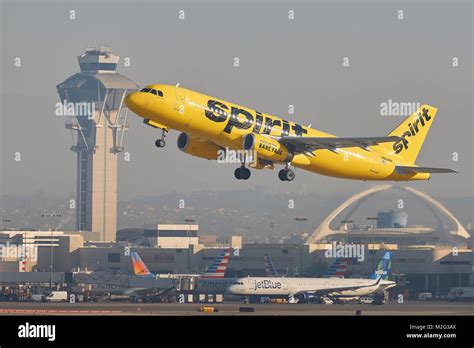
Few airlines in the United States are as instantly recognizable as Spirit Airlines. Its bright yellow aircraft, aggressive low-fare strategy, and highly unbundled pricing model have made it one of the most talked-about airlines in North America.
Despite its budget reputation among passengers, Spirit pilots earn some of the highest salaries in the ultra-low-cost airline segment.
A newly hired Spirit first officer begins with a pay rate of roughly $97 per flight hour. Factoring in minimum flight hours, this typically results in about $84,000 in first-year earnings before additional pay incentives.
Like other airlines, Spirit uses a structured seniority pay scale that increases annually. Over time, experienced first officers can earn well above $150,000 per year, especially if they take advantage of additional flying opportunities.
Captain compensation at Spirit is particularly strong. Senior captains can earn approximately $312 per hour, one of the highest rates among low-cost carriers. Under typical scheduling conditions, this can produce annual earnings approaching $270,000.
However, Spirit’s financial situation has experienced turbulence in recent years due to industry competition, shifting travel demand, and restructuring efforts. While pilot pay remains competitive, future contracts and compensation structures may evolve as the airline adjusts its long-term strategy.
Why Seniority Controls Everything in an Airline Career

In aviation, seniority functions as the backbone of career progression. Unlike many industries where promotions depend primarily on performance reviews or managerial decisions, airline pilots move forward largely based on time spent at a specific airline.
Every pilot begins at the bottom of the seniority list upon joining a new airline. As time passes, their position gradually improves as older pilots retire or move on to other carriers.
Seniority determines far more than pay alone. It also influences:
- Monthly schedules and preferred routes
- Vacation selection and time off
- Aircraft assignments
- Eligibility for captain upgrades
For new pilots, the early years can involve challenging schedules, reserve duty, and lower pay levels. Yet those same pilots may eventually enjoy top-tier salaries, flexible schedules, and desirable routes once they reach higher seniority.
The upgrade from first officer to captain remains one of the most important milestones in a pilot’s career. This transition often doubles hourly pay, dramatically increasing total earnings.
A pilot who begins earning around $90,000 annually as a new first officer might reach $200,000 or more within a decade after upgrading to captain and building seniority.
The Pilot Shortage and Its Impact on Salaries
The sharp rise in pilot pay across the airline industry during the 2020s did not occur in isolation. It was driven by a powerful economic force: a global shortage of qualified airline pilots.
Several factors converged to create this shortage. Thousands of experienced pilots retired during the pandemic, while training pipelines slowed due to flight school closures and reduced airline hiring. At the same time, air travel rebounded rapidly as global economies reopened.
Airlines suddenly found themselves competing fiercely for qualified pilots.
Low-cost carriers, which historically paid less than legacy airlines, faced particular pressure to raise wages. Without competitive compensation packages, recruiting and retaining pilots became increasingly difficult.
The result was a wave of new union contracts and pay increases across the industry. Many low-cost carriers introduced higher starting pay, improved retirement contributions, and expanded bonuses to remain competitive.
Today, the salary gap between low-cost carriers and legacy airlines has narrowed significantly. While legacy carriers still offer some of the highest long-term earning potential, the difference is no longer as dramatic as it once was.
Final Thoughts on Low-Cost Airline Pilot Pay in 2026
The evolution of pilot salaries at US low-cost airlines tells a fascinating story about how aviation economics have changed in recent years. Airlines built around low fares and streamlined operations now offer highly competitive pilot compensation, especially for experienced captains.
Although starting salaries vary between airlines such as Allegiant Air, Frontier Airlines, and Spirit Airlines, the long-term earning potential remains substantial. With experience and seniority, pilots can progress from entry-level first officer roles to six-figure incomes and eventually quarter-million-dollar captain salaries.
Beyond the financial rewards, these airlines also provide clear career pathways, rapid fleet growth, and expanding route networks, all of which contribute to strong long-term employment prospects.
For aspiring aviators, the message is simple: even within the budget airline sector, the cockpit remains one of the most financially rewarding and technically fascinating careers in modern transportation. The sky, as it turns out, still pays quite well.