Delta Air Lines will suspend its nonstop flights between John F. Kennedy International Airport (JFK) and John Wayne Airport (SNA) in Southern California on November 29, removing the only competitive challenge to American Airlines’ premium transcontinental offering at Orange County until spring 2027. The Atlanta-based carrier reintroduced the route in May after a seven-year absence, originally planning six weekly frequencies, but wound up operating daily service throughout its run. The retreat restores American’s monopoly on lie-flat business class into SNA, a niche it has cultivated since launching the route on July 2, 2021.
Delta’s Seasonal End Date Moves Forward
A Delta spokesperson framed the decision as standard schedule housekeeping rather than a strategic withdrawal. “As part of routine network planning, Delta is adjusting the seasonal end date for its New York-JFK to Orange County (SNA) service to November 29, 2026. We apologize to our customers for any inconvenience this may cause, but Delta remains committed to Orange County and will resume seasonal JFK-SNA service in May 2027.” According to aviation data and analytics firm Cirium, flights are slated to return on May 6, 2027, with daily frequencies, identical flight numbers, and unchanged departure and arrival times—a pause rather than a permanent exit, at least on paper.
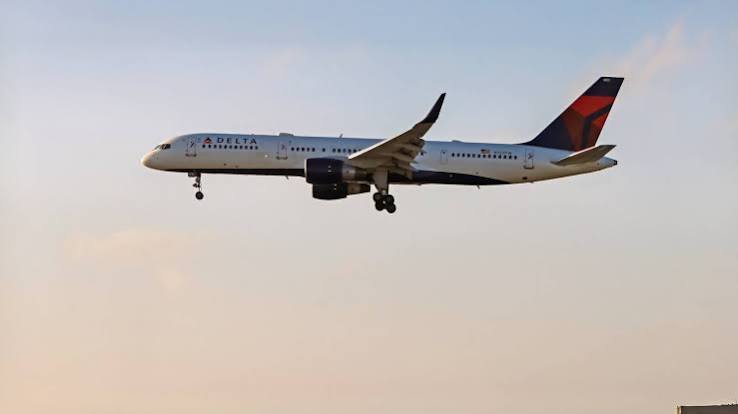
The published timetable currently shows DL403 departing JFK at 8:00 AM and touching down at SNA at 11:04 AM, a six-hour, four-minute westbound block aboard a Boeing 757-200. The return, DL556, operates as a red-eye, leaving Orange County at 9:15 PM and landing at JFK at 5:18 AM the following morning after five hours and three minutes in the air. When Delta revived the service in May, it became the carrier’s third regularly scheduled SNA route flown with the 757-200, joining Atlanta and Detroit.
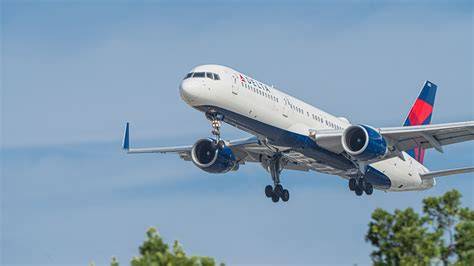
Inside Delta’s Premium 757: The 75S Configuration
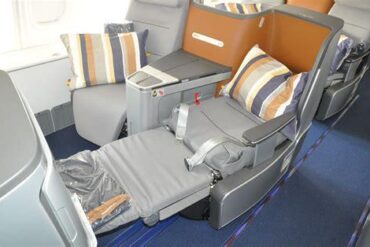
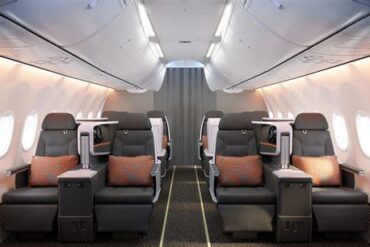
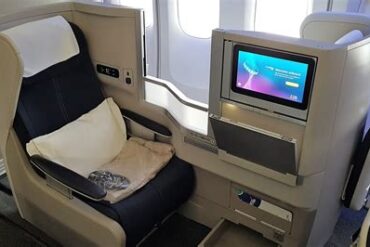
The aircraft Delta commits to this corridor is no ordinary domestic narrowbody. Delta deploys its premium 757s, designated the 75S configuration, fitted with lie-flat seats in Delta One. The cabin holds 168 passengers across three classes: 16 Delta One lie-flat seats in a 2-2 arrangement, 44 Delta Comfort seats, and 108 Delta Main seats in a 3-3 layout. Seat width is uniform at just over 17 inches, but Delta Comfort offers a 35-inch pitch, giving travelers meaningfully more legroom than Delta Main’s 31 to 33 inches. For premium passengers crossing the country, those lie-flat pods represent the single strongest argument for routing through Orange County instead of Los Angeles International Airport (LAX), where congestion and terminal transfers routinely consume the time saved in the air.
American Retains Daily JFK–SNA Flights and the Only Lie-Flat Option
American will keep operating the route daily, preserving the only lie-flat business class product to SNA once Delta departs. American launched JFK–SNA on July 2, 2021, and while it was not the first carrier ever to fly the city pair, it became the first to bring a regularly scheduled business class product to John Wayne Airport through its premium-heavy Airbus A321s. Delta, by contrast, formerly served the route with the Boeing 737-700 before retiring the type from its fleet entirely.
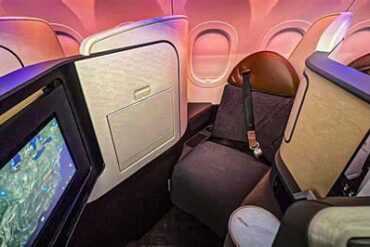
American’s aircraft, designated the A321T (Transcontinental), has been dedicated exclusively to coast-to-coast flying to Boston, Los Angeles, New York, Orange County, and San Francisco since 2013. The jet carries 102 seats, 30 of them lie-flat, and held the distinction of being the only single-aisle aircraft in the United States with a three-class layout until American introduced its replacement, the A321XLR, complete with new Flagship suites.
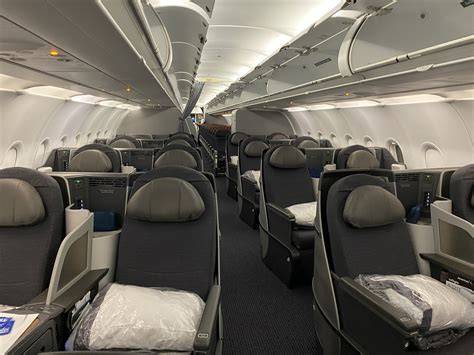
The A321T Retirement Clock and the A321XLR Transition
The A321T airframes themselves will not be retired—only their seating configurations. As A321XLR deliveries accumulate, American has been steadily stripping lie-flat seats from the older jets and refitting them to the standard interior found across the rest of its A321 fleet. Six airframes have already been converted to the standard layout, leaving 11 awaiting the same treatment. The exact timing of the A321T’s official phase-out remains unclear, though the end of 2027 appears likely. American said last month it will discontinue Flagship First seat sales in March, yet Cirium data shows the A321T remaining on JFK–SNA through September, meaning the premium cabin keeps its dedicated aircraft on this route for now.
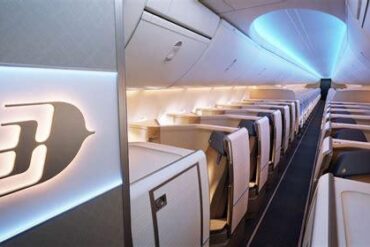
American debuted the A321XLR on JFK–LAX late last year, then inaugurated transatlantic operations with the type between New York and Edinburgh, followed by domestic service between New York and San Francisco. The aircraft has even substituted on hub-to-hub rotations linking Chicago, Los Angeles, and Charlotte. Its Flagship Suites, notably, face away from the windows—a design choice American defends as prioritizing privacy over views.
United Stays Out of the Lie-Flat Race at SNA
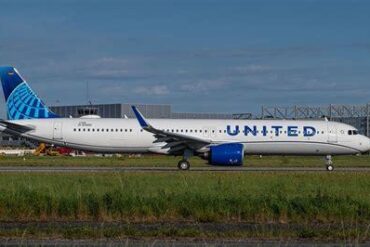
All three US legacy carriers connect Orange County with the New York metropolitan area, but only Delta and American sell a true business class. United Airlines flies Boeing 737-700s, -800s, and MAX 8s between SNA and Newark Liberty International Airport (EWR), equipped with domestic first class recliner seats rather than lie-flat beds. That distinction matters on a five- to six-hour transcontinental haul, where angled or upright recliners remain a hard sell against fully flat pods for corporate travelers and high-value leisure passengers.
What the Pause Means for Travelers
For passengers who booked Delta One on the JFK–SNA corridor beyond November 29, the practical outcome is reaccommodation, likely via LAX or through a connecting itinerary. The larger consequence is competitive: with American alone offering lie-flat seats into John Wayne, fares and award availability on the route face less downward pressure during the winter season. Delta’s stated commitment to Orange County and its May 2027 return suggest the withdrawal reflects seasonal economics—weak winter demand on a business-heavy route—rather than an admission that the market cannot support two premium operators. Until then, the scoreboard reads one legacy carrier with flat beds, one with recliners, and one absent entirely.