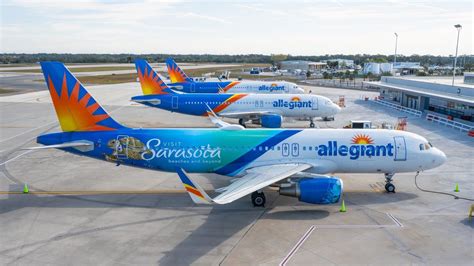
California is becoming a much smaller market for Allegiant Air after the ultra-low-cost carrier removed 24 routes and exited three major airports, reshaping its footprint across the state. The changes have significantly reduced Allegiant’s presence and reflect a strategy centered on lower-cost alternatives to congested hubs.
Although California accounted for only around 5% of Allegiant’s total passenger traffic, the state still represented an important part of the carrier’s western network. In the twelve months ending March 2026, approximately 943,000 passengers flew to or from California on Allegiant, making the airline only the state’s tenth-largest domestic carrier.
The restructuring accelerated during the past year. Service at San Diego International Airport ended in September 2025, flights from Los Angeles International Airport ceased in January 2026, and operations at Oakland International Airport ended in May 2026. At the same time, the airline added Hollywood Burbank Airport to its network in February 2026, signaling a clear preference for smaller and less expensive facilities.
After the changes, California’s importance within Allegiant’s network has fallen even further. The airline will serve 42 states in July 2026, while California ranks only thirteenth among its markets. Departures from the state have dropped by 31% year over year, and the number of routes has declined from 38 to just 23.
Allegiant Repositions Around Secondary Southern California Airports
Despite eliminating two dozen routes, Allegiant introduced nine new services. Those additions are concentrated at Hollywood Burbank Airport (BUR) and John Wayne Airport-Orange County (SNA). Both airports offer lower operating costs and less congestion compared with Los Angeles International Airport.
This approach mirrors the carrier’s long-standing business model of serving underserved airports rather than competing directly at crowded hubs. Burbank has previously attracted low-cost operators, including Avelo Airlines and the now-defunct SkyBus, which attempted to replicate the successful European ultra-low-cost formula pioneered by Ryanair.
Flight activity varies widely throughout the week. Tuesdays remain the quietest day in Allegiant’s schedule, with only one outbound departure from California, while Sundays can see as many as 17 departures.
All 24 California Routes That Allegiant Eliminated
The majority of reductions came after the airline withdrew from Los Angeles, Oakland, and San Diego.
Fresno Yosemite International Airport (FAT)
- Portland
Los Angeles International Airport (LAX)
- Bellingham
- Cedar Rapids
- Cincinnati
- Grand Rapids
- Indianapolis
- Little Rock
- McAllen
- Northwest Arkansas
- Omaha
- Sioux Falls
- Spokane
- Springfield, Missouri
- Tulsa
- Wichita
Oakland International Airport (OAK)
- Bellingham
- Idaho Falls
- Kalispell
- Missoula
San Diego International Airport (SAN)
- Bellingham
- Des Moines
- Medford
- Provo
Stockton Metropolitan Airport (SCK)
- Denver
Some routes have not disappeared entirely from Southern California. Services to Indianapolis and Bellingham moved from Los Angeles to Burbank, while Cincinnati, Grand Rapids, and Spokane are now served from Orange County.
Other Airlines Have Filled Several Markets
Passengers have not necessarily lost all options following Allegiant’s withdrawal. Multiple competing airlines continue serving many of these destinations.
Alaska Airlines now exclusively operates Fresno-Portland and San Diego-Medford. The Medford route is flown by Horizon Air using Embraer E175 regional jets. Meanwhile, American Airlines continues serving Indianapolis, Northwest Arkansas, Omaha, and Tulsa from Los Angeles.
Delta Air Lines maintains flights between Los Angeles and Cincinnati, Indianapolis, and Spokane. Several markets are supported through regional aircraft, preserving connectivity despite Allegiant’s exit.
These competitive dynamics show that many affected routes still possess demand, although not necessarily enough to support Allegiant’s low-frequency model.
Stockton-Denver Service Lasted Only Four Months
Among all the route cuts, the brief experiment between Stockton and Denver stands out.
Allegiant inaugurated the route on May 22, 2025, using a 156-seat Airbus A319. Flights operated only twice weekly, and the service disappeared by August 31 of the same year.
According to Department of Transportation data, the route carried just 4,883 round-trip passengers during its short existence. Average seat occupancy reached only 59.9%, well below the airline’s broader California average of 84.9%.
Perhaps most remarkably, the average base fare amounted to only about $20, excluding taxes and ancillary fees. Even with extremely low ticket prices, demand remained insufficient.
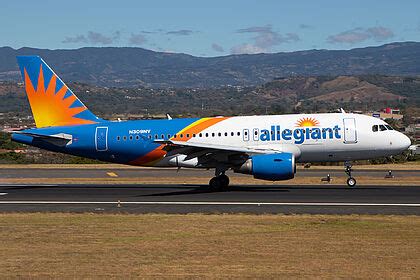
California Becomes a Smaller Piece of Allegiant’s Strategy
The latest network overhaul highlights a broader shift in Allegiant’s business approach. Rather than maintaining expensive operations at major airports such as Los Angeles, Oakland, and San Diego, the airline is concentrating on airports that better align with its ultra-low-cost structure.
With only 23 California routes remaining and a growing emphasis on Burbank and Orange County, Allegiant appears determined to prioritize profitability over network size. The result is a much smaller presence in the Golden State, but one that more closely matches the carrier’s traditional strategy of connecting underserved cities with limited-frequency, leisure-focused service.