JetBlue Airways has once again reshaped its route network, pulling back service on ten established flights while simultaneously expanding aggressively in key markets such as Florida, the Caribbean, and select Latin American destinations. This strategic recalibration underscores the airline’s ongoing effort to become leaner and more profitable, balancing growth opportunities with aircraft limitations and operational realities. While the sudden route cuts may raise eyebrows among travelers and aviation analysts, a closer look reveals a deliberate move to optimize network efficiency, maximize yield, and position JetBlue for sustainable profitability.
The recent wave of route discontinuations spans multiple U.S. airports, including Hartford’s Bradley International Airport (BDL), Manchester-Boston Regional Airport (MHT), Newark Liberty International Airport (EWR), and Orlando International Airport (MCO). Among the most notable closures is Manchester, where JetBlue is entirely ending its service after only a year of operations. According to internal communications, the carrier concluded that Manchester did not meet performance expectations, despite reasonable load factors. Passengers in the region are being redirected to nearby airports such as Boston, Portland, and Worcester, preserving some regional connectivity while allowing JetBlue to redeploy its limited aircraft resources more strategically.

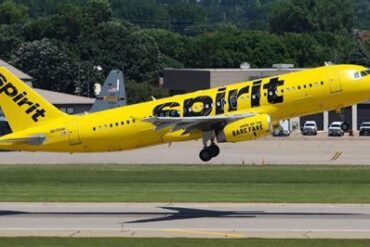
JetBlue’s expansion strategy, however, is highly targeted rather than broad-based. In Florida, the airline is capitalizing on market opportunities created by the demise of Spirit Airlines. Eleven new routes from Fort Lauderdale-Hollywood International Airport were announced earlier this month, cementing JetBlue’s dominance in the region. Fort Lauderdale represents a high-priority focus city for the airline, offering brand recognition, a loyal customer base, and the potential to absorb demand left by Spirit’s exit. These additions contrast sharply with the simultaneous pruning elsewhere, highlighting JetBlue’s disciplined approach to fleet deployment: every route must justify its existence not merely by passenger numbers but by profitability and strategic value.
Aircraft availability remains one of the most critical constraints on JetBlue’s network decisions. With only 12 Airbus A220-300 deliveries expected this year and deferred Airbus A320neo-family deliveries extending to 2030 and beyond, the airline cannot pursue unlimited growth. Coupled with persistent Pratt & Whitney engine issues that affect the Airbus narrowbody fleet, JetBlue is forced to prioritize routes where each aircraft yields the highest strategic return. This context explains why well-loaded routes, such as Hartford–Tampa (87.3% load factor) or Newark–Punta Cana (87.4%), were not spared from discontinuation. High passenger volume alone does not guarantee profitability; yield—the revenue generated per seat—is the decisive metric guiding these decisions.
JetBlue’s Focus on Yield Over Load
The airline’s route cuts illuminate a fundamental shift in strategy: prioritizing profitable passengers over sheer volume. Many of the discontinued routes faced fierce nonstop competition from established carriers and low-cost operators. For example, Hartford–Tampa competed against Southwest Airlines and Breeze Airways, while Orlando–San José, Costa Rica, contended with Frontier Airlines, Southwest Airlines, and Volaris. Newark routes to destinations such as Aruba, Cancún, Punta Cana, and Santo Domingo faced competition from United Airlines and Arajet, where JetBlue could attract passengers but not necessarily the higher-yield clientele critical for profitability.
This approach signals a move toward maximizing aircraft productivity and focusing on markets where JetBlue can leverage its scale. Smaller outstations or secondary routes, even with decent load factors, may not provide the same return as larger hubs or leisure markets where the airline can dominate. As a result, smaller stations like Hartford may face additional scrutiny in the future, particularly where competition is intense and low-cost carriers are expanding their presence.

Newark: A Strategic Retreat
Newark Liberty International Airport represents the most telling example of JetBlue’s network realignment. While Spirit’s exit could have presented an opportunity for expansion, Newark poses unique challenges that outweigh potential gains. It is a high-cost, congested airport dominated by United Airlines, giving JetBlue a comparatively smaller footprint. The carrier’s internal communications emphasize the cost pressures and operational challenges of Newark, stating that it is “an extremely high-cost airport,” arguably one of the most expensive in JetBlue’s network.
The competitive environment at Newark is particularly difficult. United’s extensive network enables it to bundle routes with corporate contracts and feed passengers from a broader domestic system, creating a loyalty advantage. JetBlue’s presence, while meaningful, does not offer the same economies of scale, making certain routes economically unviable despite strong load factors. This dynamic illustrates the airline’s strategic focus: deploying aircraft where operational costs, network control, and yield potential converge, rather than chasing volume alone.
Aircraft Allocation and Strategic Optimization
Fleet management is at the heart of JetBlue’s recent decisions. With limited deliveries, every narrowbody aircraft becomes a high-value asset. Deploying jets to Fort Lauderdale, Boston, JFK, San Juan, or other high-priority markets maximizes both yield and strategic advantage. In essence, JetBlue is trading breadth for depth, concentrating flights in regions where it can control pricing, maintain strong market share, and reduce exposure to high-cost competition. This careful allocation underscores a broader trend in the airline industry: operational efficiency and profitability increasingly outweigh network expansion for its own sake.
JetBlue’s focus on high-yield passengers also aligns with the airline’s loyalty program evolution. Its partnership with United through the ‘Blue Sky’ loyalty collaboration reduces the need to compete directly on certain routes. Passengers can now access desirable flights on United aircraft while JetBlue reallocates its own planes to markets where it can exercise more pricing power and brand influence. This not only enhances revenue potential but also strengthens customer satisfaction by maintaining connectivity, even as specific routes are discontinued.

Implications for Passengers and the Broader Market
The immediate impact of JetBlue’s route cuts is most visible for passengers in affected airports, particularly smaller outstations where alternatives may be limited. Travelers from Manchester, Hartford, and some Newark routes will need to adjust itineraries or consider connecting flights. Yet the broader implications extend beyond passenger inconvenience. JetBlue’s approach signals an industry-wide emphasis on yield management and strategic fleet deployment, highlighting how airlines are adapting to constrained resources, rising costs, and competitive pressures.
In markets like Florida, the strategy appears poised to deliver tangible benefits. By concentrating flights in Fort Lauderdale and surrounding areas, JetBlue can achieve higher load factors, reduce operational complexity, and capitalize on the vacuum left by Spirit Airlines. The airline’s expansion into leisure-focused destinations in the Caribbean and Latin America is similarly calculated, targeting routes where JetBlue can maintain brand loyalty and capture high-yield passengers, reinforcing profitability over pure passenger numbers.
Analyzing the 10 Routes Being Cut
Each of the ten routes removed from JetBlue’s network reveals a nuanced calculation of profitability versus opportunity cost:
- Hartford – Tampa: Despite an 87.3% load factor, competition from Southwest and Breeze Airways likely suppressed fares, reducing profitability.
- Manchester – Fort Lauderdale / Fort Myers / Orlando: These routes, despite moderate to strong load factors, did not meet JetBlue’s strategic requirements for high-yield passengers or operational efficiency.
- Newark – Aruba / Cancún / Punta Cana / Santo Domingo / Tampa: Operating at some of the highest load factors in the JetBlue network, these routes nonetheless could not deliver adequate yields due to intense United competition and high airport costs.
- Orlando – San José, Costa Rica: Facing low-cost competition from Frontier, Volaris, and Southwest, the route was likely unable to sustain margins despite healthy demand.
This pattern reinforces the airline’s philosophy: aircraft are more valuable when deployed in markets where JetBlue enjoys scale advantages, stronger pricing power, and less direct exposure to entrenched competitors.

Strategic Takeaways and Future Outlook
JetBlue’s abrupt route cuts highlight a calculated and disciplined approach to network management. Key takeaways include:
- Focus on High-Yield Markets: JetBlue is prioritizing routes and airports where it can achieve stronger yields, even if load factors are lower elsewhere.
- Consolidation Over Expansion: The airline is willing to retreat from secondary markets to consolidate strength in strategically valuable hubs.
- Fleet Optimization: Limited aircraft availability drives a focus on operational efficiency, ensuring jets are deployed where they can maximize profitability.
- Competitive Positioning: JetBlue’s strategy reflects an understanding of local market dynamics, avoiding costly competition against dominant carriers at airports like Newark.
- Long-Term Profitability: By aligning route structure with yield-focused priorities, JetBlue positions itself for sustainable financial performance rather than short-term passenger growth.
For travelers, these moves may require adjustments and careful monitoring of alternative airports. For the airline industry, the shift underscores an emerging emphasis on precision in route planning, where the mix of passenger volume, yield, and operational costs drives decisions more than ever before.
JetBlue’s expansion in Fort Lauderdale, Caribbean, and Latin American markets suggests the airline will continue to pursue growth selectively, leveraging its strongest markets and brand recognition. Conversely, smaller routes with heavy competition or marginal returns may face further reductions. Analysts predict that this kind of network rationalization, balancing yield and capacity, will continue as airlines navigate fleet constraints, operational costs, and the evolving competitive landscape.
Ultimately, JetBlue’s strategy is a sophisticated example of modern airline management: an ongoing recalibration that balances expansion in profitable markets with the hard realities of limited aircraft and high operational costs. The decision to cut ten routes is not merely a reflection of poor performance, but a deliberate prioritization of strategic opportunity over breadth, illustrating a keen focus on long-term sustainability and financial resilience in a challenging industry environment.

As the airline moves forward, stakeholders should expect a continued emphasis on high-yield routes, concentrated hubs, and disciplined fleet deployment. The Fort Lauderdale expansion serves as a blueprint, showing how targeted growth in high-value markets can offset retrenchment elsewhere. In an era where profitability is paramount, JetBlue’s recalibrated network demonstrates a sophisticated, profit-focused vision, signaling that full airplanes alone are no longer sufficient—the quality of passengers and strategic alignment of aircraft are the true drivers of success.