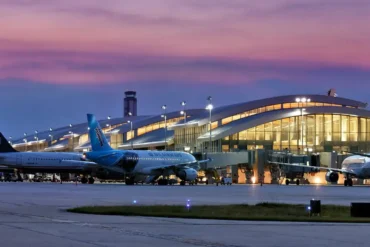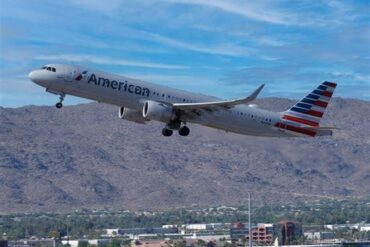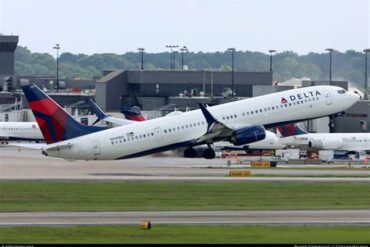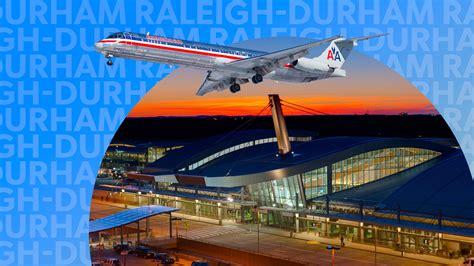
What happened to American Airlines’ hub in Raleigh-Durham is a fascinating story of ambition, rapid expansion, economic realities, and the constantly changing dynamics of the U.S. airline industry. For a brief period during the late 1980s and early 1990s, Raleigh-Durham International Airport (RDU) appeared destined to become one of American Airlines’ most important connecting centers on the East Coast. The carrier invested heavily in facilities, expanded nonstop service across the United States and Europe, and transformed the airport into a growing aviation gateway.
Yet only a few years after establishing the hub, American Airlines dramatically scaled back operations and eventually dismantled the entire hub structure. The decision left many wondering why a seemingly successful operation disappeared so quickly. The answer lies in a combination of industry deregulation, changing economic conditions, network optimization, and the emergence of more strategically valuable hubs elsewhere.
The Rise of American Airlines After Deregulation
The roots of the Raleigh-Durham hub can be traced directly to the Airline Deregulation Act of 1978. Before deregulation, airlines operated under strict government oversight that controlled routes, fares, and market access. Once those restrictions were removed, carriers suddenly had unprecedented freedom to expand, compete, and reshape their networks.
For American Airlines, the 1980s became a period of aggressive growth. The airline sought to establish dominance in key regions of the country by building hub-and-spoke systems that could efficiently connect passengers from smaller cities to major destinations.
The strategy proved highly effective. Massive hubs emerged in places such as Dallas/Fort Worth, allowing American to funnel passengers through centralized operations. At the same time, the airline searched for additional locations that could support connecting traffic and strengthen its national presence.
Raleigh-Durham quickly attracted attention because of its geographic position between the northeastern and southeastern United States. Located in the heart of North Carolina’s rapidly growing Research Triangle region, the airport offered significant potential for both local demand and connecting traffic.
By the mid-1980s, American Airlines identified Raleigh as a promising opportunity to expand its East Coast footprint.
How Raleigh-Durham Became an American Airlines Hub
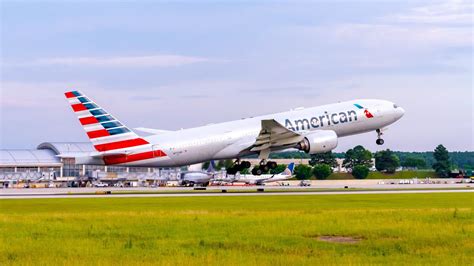
American Airlines first entered the Raleigh-Durham market in 1985. Initially, service was modest, consisting of only 11 daily departures. However, the airline quickly recognized opportunities for expansion and soon announced plans to transform RDU into a full-scale hub.
The decision represented a major vote of confidence in the airport and the surrounding region. At the time, Raleigh-Durham was experiencing steady economic growth fueled by technology companies, universities, research institutions, and expanding business activity.
American’s investment accelerated rapidly. New routes were added, frequencies increased, and connecting opportunities multiplied. What had started as a relatively small operation evolved into a bustling hub handling hundreds of daily aircraft movements.
The airport suddenly offered travelers a wide range of nonstop destinations that would have been unimaginable only a few years earlier. Passengers could connect conveniently throughout the eastern United States while also gaining access to longer domestic and international routes.
The transformation was remarkable. Within a short period, Raleigh-Durham had become one of the most important airports in American Airlines’ expanding network.
The Peak Years of the Raleigh Hub
At its height, American Airlines operated approximately 261 daily flights through Raleigh-Durham when both mainline and regional operations were included. This represented an enormous increase from the carrier’s initial schedule and demonstrated just how seriously the airline viewed the market.
The hub connected cities throughout the East Coast while also serving destinations farther west. Travelers benefited from improved schedules, shorter travel times, and expanded route options.
Perhaps most impressive was the introduction of international service. American Airlines elevated Raleigh-Durham beyond a regional connecting point by launching flights to major European destinations.
Nonstop routes to London and Paris provided direct access to two of the world’s most important global cities. These services reflected the airline’s belief that the Research Triangle region could support international demand from business travelers, academics, and tourists.
Additional flights to popular leisure destinations such as Cancun and Cozumel further diversified the network. For local residents, the airport suddenly offered a level of connectivity usually associated with much larger metropolitan areas.
The hub became a symbol of Raleigh-Durham’s growing importance on the national stage.
Economic Benefits That Extended Beyond Aviation
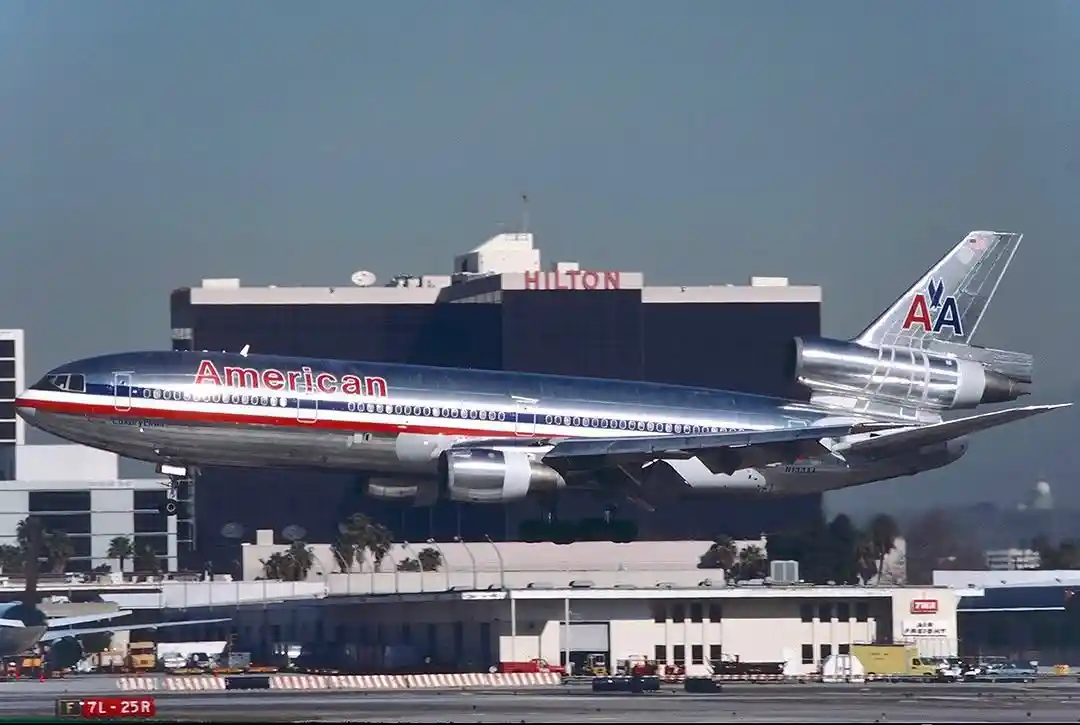
The impact of American Airlines’ hub reached far beyond passenger travel. Major airline hubs generate substantial economic activity, and Raleigh-Durham was no exception.
As operations expanded, airport infrastructure required significant upgrades. New facilities were constructed to accommodate larger numbers of passengers and aircraft, creating jobs and stimulating regional development.
American Airlines played a central role in several major projects. The carrier contributed to the planning and development of Terminal C, cargo facilities, flight kitchens, fuel infrastructure, and parking facilities.
These investments permanently altered the airport’s capabilities.
At the same time, Raleigh-Durham was completing other critical infrastructure improvements, including a new 10,000-foot runway and an upgraded air traffic control tower. Together, these developments positioned the airport for long-term growth.
The hub also generated employment opportunities across multiple sectors. Airline personnel, airport workers, maintenance technicians, catering staff, transportation providers, and hospitality businesses all benefited from increased activity.
For local leaders, American’s presence represented a powerful economic engine capable of attracting new investment to the region.
Why American Airlines Began Reconsidering Raleigh
Despite the hub’s growth and apparent success, warning signs began to emerge in the early 1990s.
The airline industry entered a difficult period characterized by economic uncertainty, rising costs, and increasing competition. Carriers across the country faced pressure to improve profitability while eliminating underperforming operations.
For American Airlines, network efficiency became an increasingly important priority.
Although Raleigh-Durham was growing, it remained relatively small compared with the airline’s largest hubs. Dallas/Fort Worth handled vastly greater traffic volumes and generated stronger economies of scale. Other hubs also offered larger local markets and more robust revenue opportunities.
As executives evaluated the network, Raleigh became vulnerable.
The airport’s role as a connecting center could be replicated elsewhere, while operating costs associated with maintaining a hub remained substantial. In an environment where airlines were searching aggressively for cost savings, smaller hubs often faced intense scrutiny.
Industry observers began reporting rumors that American Airlines was considering major changes to its Raleigh operation.
The Decision to Close the Hub
Concerned about the future of the airport, North Carolina officials and business leaders attempted to persuade American Airlines to maintain its commitment to Raleigh-Durham.
A delegation reportedly traveled to Dallas to meet with airline executives and explore possible solutions. The effort reflected the importance of the hub to the region’s economy and transportation infrastructure.
However, the broader economic realities proved difficult to overcome.
American Airlines ultimately concluded that maintaining the Raleigh hub no longer aligned with its strategic objectives. Roughly a decade after launching operations in the city, the airline began dismantling the hub structure.
Flights were reduced, connecting operations diminished, and Raleigh gradually transitioned from a hub to a standard destination within the airline’s network.
For local stakeholders, the decision was disappointing. Years of rapid growth had created expectations that the airport would remain a major American Airlines gateway indefinitely.
Instead, the carrier redirected resources toward markets that offered stronger long-term returns.
Raleigh Was Not the Only Hub American Abandoned
The closure of Raleigh-Durham was part of a broader pattern that affected several American Airlines hubs established during the post-deregulation expansion era.
Throughout the 1980s, the airline aggressively pursued growth opportunities by opening hubs in multiple markets. Besides Raleigh, American also developed major operations in Nashville, San Jose, and San Juan.
Initially, these hubs appeared promising. They expanded the carrier’s reach and strengthened its competitive position.
However, aviation economics changed significantly during the following decades.
As market conditions evolved, American reevaluated its network and concentrated resources in hubs capable of generating stronger profits. Several secondary hubs ultimately failed to meet long-term expectations.
Nashville and San Jose experienced similar reductions. In both cases, American gradually scaled back operations before eventually relinquishing hub status altogether.
The airline’s strategic focus shifted toward larger, more efficient connecting centers capable of supporting extensive domestic and international networks.
How Other Airlines Filled the Void
One of the most interesting aspects of American’s hub closures is what happened afterward.
The disappearance of a major airline hub does not necessarily mean an airport will decline. In many cases, other carriers identify opportunities and move in to capture market share.
Nashville and San Jose provide excellent examples. Following American’s retreat, Southwest Airlines expanded aggressively and eventually became the dominant carrier at both airports.
The low-cost airline’s business model proved highly effective in these markets, allowing it to offer extensive domestic service while maintaining strong passenger demand.
Raleigh-Durham followed a somewhat different path. Rather than being dominated by a single replacement hub carrier, the airport evolved into a diversified operation served by multiple airlines.
This approach allowed RDU to continue growing despite losing its American Airlines hub status.
The Lasting Legacy of American’s Raleigh Investment
Although the hub itself disappeared, its impact remains visible today.
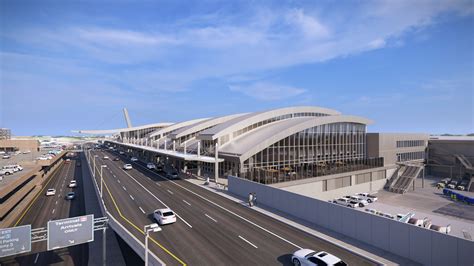
Many of the infrastructure improvements developed during the American Airlines era continue to serve passengers decades later. Facilities constructed to support hub operations helped position Raleigh-Durham for future growth.
The airport continued attracting new routes, additional airlines, and expanding passenger traffic long after American reduced its presence.
As the Research Triangle region became one of the fastest-growing economic centers in the United States, demand for air travel remained strong. The airport successfully leveraged its upgraded infrastructure to accommodate this growth.
More recently, carriers have continued investing in the market. New domestic routes, expanded international service, and airline base openings have reinforced Raleigh-Durham’s role as one of the Southeast’s most important airports.
The hub may have vanished, but the foundation it created endured.
Why Charlotte Succeeded Where Raleigh Did Not
Ironically, American Airlines still maintains a major presence in North Carolina today—just not in Raleigh.
The airline’s acquisition of US Airways brought Charlotte Douglas International Airport into the American network. Over time, Charlotte evolved into one of the carrier’s most important hubs.
Several factors explain why Charlotte succeeded where Raleigh struggled.
Charlotte offers a larger connecting operation, stronger passenger volumes, and a strategic location that efficiently links northern and southern destinations. The city also supports substantial business travel demand and serves as a powerful gateway for transatlantic flights.
These advantages make Charlotte a highly versatile hub capable of supporting both domestic and international growth.
For American Airlines, concentrating resources in Charlotte delivers greater efficiency than operating a separate hub in Raleigh.
The result is a network structure that aligns more closely with modern airline economics.
The Story Behind a Short-Lived Aviation Experiment
American Airlines’ Raleigh-Durham hub represented a bold attempt to capitalize on opportunities created by airline deregulation. For a brief period, the airport emerged as a thriving connecting center offering extensive domestic and international service.
Yet aviation remains an industry defined by constant change. Economic downturns, competitive pressures, and evolving network strategies ultimately made the hub difficult to justify.
While American Airlines moved on, Raleigh-Durham retained many of the benefits generated during those transformative years. The airport’s infrastructure improvements, enhanced capabilities, and elevated profile helped establish the foundation for continued growth long after the hub disappeared.
Today, the story of American’s Raleigh operation serves as a reminder that airline hubs are never permanent. They exist only as long as they fit an airline’s strategic vision. In Raleigh-Durham’s case, that vision lasted little more than a decade, but its influence continues to shape the airport and the region decades later.