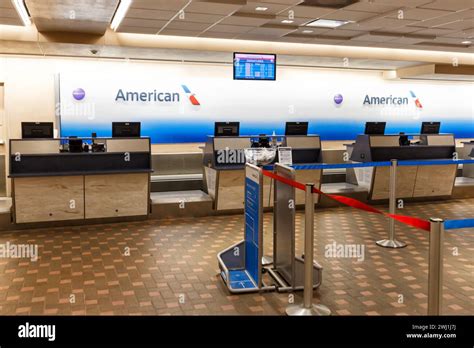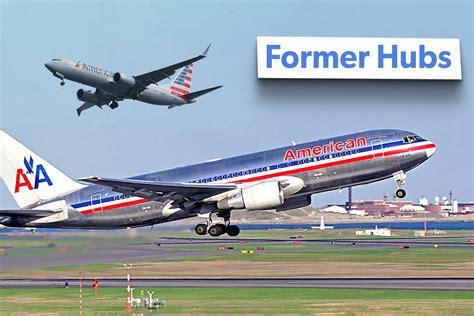
In the years following airline deregulation, American Airlines was a pioneer of the modern hub-and-spoke system. It was once a formidable force at Boston Logan International Airport (BOS), boasting dozens of destinations and market leadership. But today, its presence at Logan is merely a shadow of what it once was. The retreat is not the result of a single decision, but rather a strategic shift, a changing competitive landscape, and evolving priorities within American’s expansive network.
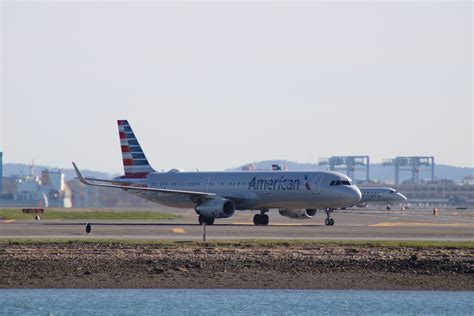
American Airlines’ Network Philosophy: Focus Where It Dominates
American Airlines’ current network strategy revolves around doubling down on markets where it can assert dominance. This means concentrating resources in airports like Dallas/Fort Worth (DFW), Charlotte Douglas (CLT), and Philadelphia (PHL)—all cities where American holds commanding market shares. Boston, in contrast, has become a city where American is outmatched by more entrenched competitors.
Rather than invest in contested markets with razor-thin margins, American has redirected its aircraft and crews to airports where it already leads. This makes business sense in the short term, particularly with finite resources and rising operational costs, but the long-term implications of surrendering markets like Boston remain to be seen.
From Market Leader to Also-Ran: The Decline of American in Boston
Between 2001 and 2009, American Airlines was the largest carrier at Boston Logan, operating 33 destinations at its peak. At the time, this was a respectable figure for a non-hub airport, and it positioned American as the go-to airline for both business and leisure travelers in New England. But the tides turned quickly.
By 2013, American had whittled its Boston schedule down to just six routes. The drastic reduction coincided with growing competition and the merger with US Airways. Instead of fighting for market share in Boston, American consolidated its East Coast strategy around Philadelphia, a hub it inherited through the merger.
Meanwhile, JetBlue surged in Boston, overtaking American by 2010 to become the airport’s largest carrier. As American retreated, JetBlue captured a loyal base with its customer-friendly service and extensive route map. By 2023, American had fallen to fifth place at Logan.
JetBlue and Delta: The Boston Battlefield
Boston is no easy market to dominate. Today, it is defined by the tug-of-war between JetBlue Airways and Delta Air Lines, both of which have invested heavily in the airport. According to U.S. Department of Transportation data, JetBlue holds 27% of Boston’s market share, followed by Delta at 21%.
American, by comparison, manages only 14%. While this still places it ahead of United and Spirit, the reality is stark: American is no longer a major player in Boston, and reviving its standing would require a costly and uncertain fight.
What makes the situation even more challenging is the loss of American’s partnership with JetBlue, a relationship that could have offered network synergies and shared market access. Instead, JetBlue has turned toward partnerships with other carriers, including United, creating further disadvantage for American.
Philadelphia: American’s Transatlantic Powerhouse
One of the clearest explanations for American’s retreat from Boston is the presence of Philadelphia International Airport (PHL). As the dominant airline in Philly, American operates 47% of all mainline flights at the airport. This includes a robust schedule of transatlantic flights that service much of Europe.
The airline’s overwhelming control in Philadelphia contrasts sharply with the competition it faces in Boston. Moreover, both cities compete for similar connecting traffic from New England and the Mid-Atlantic. Maintaining large hubs in both would be inefficient and could cannibalize revenue.
Rather than build up Boston again, American has focused on making Philadelphia its primary Northeastern international gateway. The hub is less contested and offers higher connectivity potential with a fraction of the operational friction found at Logan.
Charlotte and Washington: Reinforcing the East Coast Stronghold
Beyond Philadelphia, American Airlines has two more hubs that further dilute Boston’s strategic necessity: Charlotte Douglas International Airport (CLT) and Ronald Reagan Washington National Airport (DCA).
Charlotte serves as a mega-hub for domestic and Caribbean travel. Post-merger, it has expanded significantly and now accounts for 64% of the airport’s market share. With extensive short-haul and medium-haul offerings, CLT effectively covers routes that a Boston hub might also serve.
DCA, while limited by perimeter rules that restrict long-haul flights, is strategically critical. It gives American a prime foothold in the politically and economically significant Washington D.C. region. Despite its limitations, DCA’s importance to American far outweighs that of Boston.
Why Boston No Longer Fits American’s Strategy
The abandonment of Boston is not a product of failure but strategic realignment. American’s preference for market dominance means it avoids fragmented, ultra-competitive airports unless it already has a commanding presence. Boston, with its split market, does not align with this model.
The carrier’s product offering also lags behind in areas that matter in premium markets. While Delta and JetBlue push ahead with differentiated in-flight experiences, customer service, and loyalty perks, American’s brand has struggled to maintain a competitive edge. Without an exceptional product or a clear network advantage, there’s little incentive for American to try to retake Boston.
Is There Room for a Comeback?
In theory, American could invest in Boston again, perhaps targeting underserved international routes or launching premium services tailored to business travelers. But this would require significant capital, a major marketing push, and a willingness to engage in head-to-head combat with two powerful incumbents.
At present, there is no indication that American plans such a move. Its Northeast schedule is already heavily weighted toward New York JFK, Philadelphia, and Washington, and spreading its resources even thinner could prove self-defeating. Any revival of American’s Boston hub would need to be part of a much broader rethink of its network strategy and premium product positioning.
Looking Ahead: A Strategy Under Pressure
American Airlines’ retreat from Boston is emblematic of its broader corporate strategy—defensive, hub-centric, and consolidation-focused. This is not inherently flawed, especially given the complexities of airline profitability. However, American’s competitors have demonstrated the value of calculated risk in contested markets.
JetBlue’s strength in Boston remains one of its most defensible assets, while Delta has leveraged its premium brand to steadily grow. American, in contrast, is betting on safer waters—markets it already dominates. Whether that strategy pays off in the long term remains an open question.
As American continues to underperform financially compared to Delta and United, there may come a time when playing it safe no longer suffices. Should that day arrive, Boston—once a shining jewel in the carrier’s crown—might offer a valuable opportunity for bold reinvestment. Until then, Logan remains firmly in the rearview mirror of American Airlines.