The Boeing 747 is often remembered as the crown jewel of American aviation. From the moment it first took flight in 1969, it transformed the global airline industry, ushering in an era of long-haul international travel that was faster, more efficient, and grander than anything that had come before. It was not just a machine; it was a symbol of progress, an icon of luxury in the skies. Yet, the final and most advanced variant, the Boeing 747-8, never flew in the livery of a single US passenger airline. This is not a story of technical failure—but rather, one of evolving economics, changing market demands, and the relentless pressure of operational efficiency.
The 747 Legacy: A Giant That Defined an Era
The 747 program had its roots deep in the golden age of commercial aviation. The original 747-100 became a flagship for airlines like Pan Am, TWA, and United, all of whom reveled in the luxury and prestige it offered. The jet could carry more passengers farther than any aircraft before it, reducing costs per seat-mile and opening up the skies to mass international travel. It was a revolutionary success, especially during a time when passenger numbers were booming, fuel prices were manageable, and airports were not yet choked with congestion.
By the time the Boeing 747-400 took to the skies in the late 1980s, the aircraft had cemented its place in airline history. However, with the dawn of the 21st century, cracks began to show—not in the aircraft’s design, but in its fit for a new economic and operational environment.
The 747-8: Advanced, But Misaligned
Boeing introduced the 747-8 in 2005 with great ambition. The new version featured upgraded General Electric GEnx-2B67 engines, an advanced wing design with raked wingtips, improved aerodynamics, and a stretched fuselage, making it the longest commercial aircraft ever built. It was offered in two versions: the 747-8I (Intercontinental) for passengers and the 747-8F (Freighter).
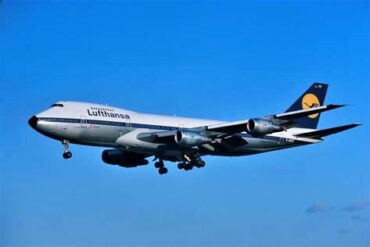
Yet, even with these enhancements, the 747-8I failed to attract US airlines. Its 15-year production run from 2008 to 2023 resulted in only 47 passenger units sold—none of them to domestic carriers. The majority of orders went to Lufthansa, Korean Air, and Air China. The American market remained silent. Why?
Economics Over Emotion: The Rise of the Twinjet
What grounded the 747-8 in the US was simple: fuel economics and fleet strategy. In an age of volatile oil prices and an increasing focus on sustainability, the four-engine configuration of the 747-8 was its Achilles’ heel. The aircraft burned significantly more fuel per seat-mile than widebody twinjets like Boeing’s own 777 or the newer 787 Dreamliner.
- The 747-8I averages 0.142 miles per gallon, while a Boeing 777 achieves nearly 0.3 miles per gallon.
- Maintenance costs for four engines are also dramatically higher than for two.
This fuel inefficiency made the 747-8 economically unviable for US carriers, who operate in one of the most competitive and cost-sensitive aviation markets in the world.
The Fall of Pan Am: A Warning Unheeded
No discussion about the 747 can ignore the fate of Pan American World Airways. As the launch customer of the original 747, Pan Am became synonymous with the aircraft. However, that brand loyalty may have contributed to the airline’s downfall.
By the late 1980s, Pan Am was hemorrhaging money. It was slow to modernize its fleet and overinvested in jumbo jets during a time of rising fuel prices and declining demand. The bombing of Pan Am Flight 103 over Lockerbie and the fallout from the Persian Gulf Crisis pushed the company over the edge. By 1991, Pan Am had declared bankruptcy, with many analysts pointing to its overdependence on the 747 as a contributing factor.
US carriers learned from Pan Am’s demise. In a post-deregulation era where load factors, route efficiency, and operational cost control dominate airline strategy, there was little appetite to repeat the mistakes of the past.
A Narrow Window and a Widebody Alternative
The 747-8 was born into a world where it had little room to succeed. Its launch in 2005 meant that by the time it entered service in 2012, the market had already shifted.
During those years, Boeing’s 777-300ER had become the twinjet of choice for long-haul routes. Its exceptional range, fuel efficiency, and capacity allowed airlines to operate routes once reserved for jumbos—more profitably and more flexibly. Meanwhile, Airbus’ A350 and the Boeing 787 began encroaching on both long and ultra-long-haul routes.
In this environment, the 747-8 was a solution to a problem that no longer existed. American carriers were not going to commit billions of dollars to an aircraft that didn’t align with their route structures or fiscal priorities.
The Freighter That Flew
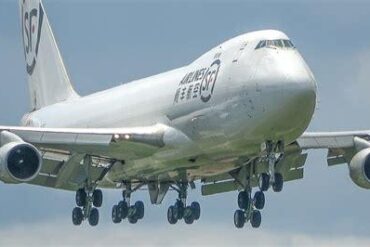
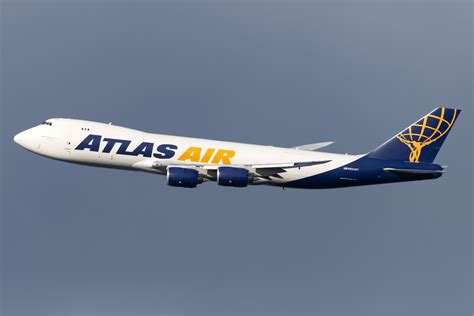
Ironically, where the 747-8 failed as a passenger jet, it thrived as a freighter. The 747-8F became a staple of cargo airlines such as Atlas Air, Cargolux, and UPS. Its design allowed it to carry massive payloads across continents efficiently, especially with its nose-loading capability—a unique advantage in the freighter world.
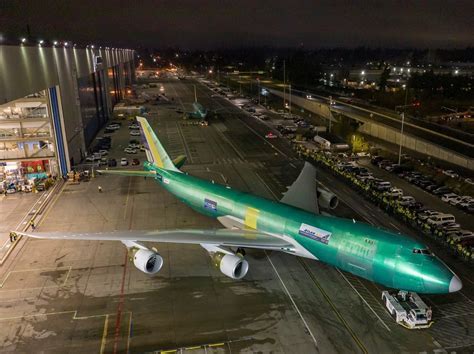
In fact, the last Boeing 747-8 ever built, rolled off the assembly line in 2023, was a freighter delivered to Atlas Air. That ending—more freight than flight—was fitting for an aircraft that had found its last true market niche in logistics.
The A380 Parallel: Another Jumbo, Another Struggle
If Boeing’s 747-8 had trouble securing US airline customers, Airbus’ A380 faced similar—and arguably worse—challenges. Though the A380 offered more seating capacity and a more modern cabin layout, its double-deck configuration made airport compatibility a logistical headache. And critically, it lacked a viable freighter version.
The A380’s production ceased in 2021, two years before the 747-8. Both aircraft were victims of the same trend: an aviation world that values point-to-point travel, not hub-and-spoke mega-routes. Long-range twinjets have allowed airlines to bypass congested hubs and connect smaller markets directly.
Airbus CEO Tom Enders said in 2019, “Despite all our sales efforts with other airlines in recent years… the A380 is not only an outstanding engineering and industrial achievement. But today’s announcement [of ending production] is painful.” The sentiment mirrored Boeing’s quiet decision to end 747 production. The age of the jumbo was over.
Environmental Reality and Strategic Shifts
As climate change moved from peripheral concern to boardroom priority, airlines faced increasing pressure to reduce their carbon footprint. Four-engine jets, with their higher emissions, became harder to justify—not just economically but ethically and socially. Regulatory pressures and sustainability initiatives are now baked into the long-term strategies of every major airline.
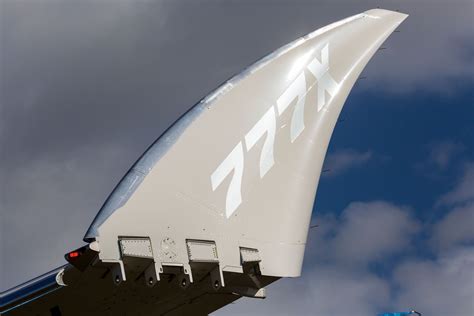
Modern twinjets like the 777X and A350-1000 are not only cheaper to operate but also more environmentally friendly. Their range and capacity make them ideal successors to jumbos for long-haul, high-density routes. Moreover, ETOPS (Extended-range Twin-engine Operational Performance Standards) advancements have removed the need for aircraft to be within a certain distance of diversion airports, previously a key limitation for twin-engine aircraft on transoceanic routes.
The Final Chapter: Why the 747-8 Was Never Meant for the US Market
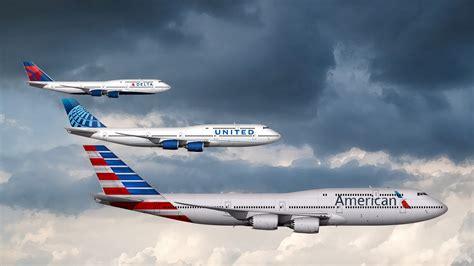
The final nail in the coffin wasn’t a dramatic crash or a fundamental design flaw—it was the success of the alternatives. As US airlines like Delta, United, and American modernized their fleets, they focused on right-sizing: aircraft that could serve multiple roles efficiently, not massive widebodies locked into a few long-haul routes.
Even the emotional appeal of the 747-8 couldn’t override the harsh logic of spreadsheets and shareholder meetings. While United Airlines and others briefly operated older 747-400s, they retired them in favor of smaller, more efficient aircraft.
The 747-8 was the last gasp of an old idea in a new world. US airlines watched, acknowledged its engineering marvel, and simply said, “Not for us.”