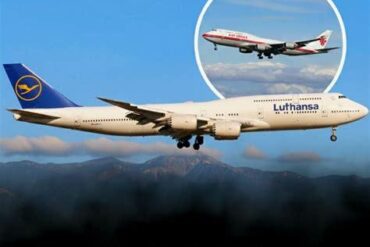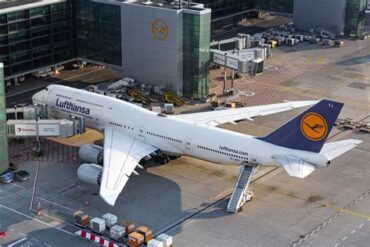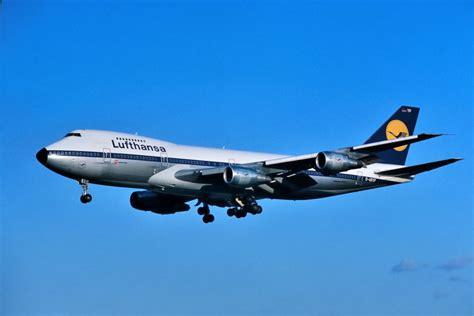
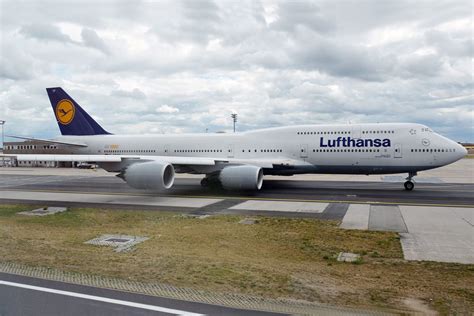
For more than five decades, Lufthansa and the Boeing 747 have shared one of the most recognizable partnerships in commercial aviation. While many airlines gradually moved away from four-engine aircraft, Lufthansa remained one of the strongest supporters of the legendary Queen of the Skies, operating nearly every major passenger version of the aircraft.
Among dozens of Jumbo Jets that proudly wore Lufthansa colors, one aircraft quietly became a perfect symbol of the airline’s entire Boeing 747 journey. Registered D-ABYP and named “Niedersachsen,” this Boeing 747-230 witnessed the golden years of intercontinental travel, survived intense competition from newer aircraft, and ultimately disappeared without ever finding a second airline.
Its story is not merely about one aircraft. Instead, it reflects the changing economics of aviation, evolving passenger expectations, and the transformation of global airline fleets over several decades.
After serving Lufthansa faithfully for more than twenty years, D-ABYP ended its career in a scrapyard rather than beginning a second life elsewhere. Ironically, that ending tells an even bigger story than its successful years in the skies.
Lufthansa’s Deep Connection With the Boeing 747
Few airlines have embraced the Boeing 747 as enthusiastically as Lufthansa. The German flag carrier became one of Boeing’s earliest and most loyal customers, helping establish the Jumbo Jet as the backbone of long-haul international travel.
Beginning with the original Boeing 747-100, Lufthansa steadily expanded its fleet with newer generations, including the 747-200, 747-400, and eventually the modern 747-8 Intercontinental. Even today, Lufthansa remains among the last passenger airlines operating scheduled Boeing 747 flights, a distinction shared with only a handful of carriers worldwide.
This long relationship gave Lufthansa extensive operational experience with virtually every major evolution of the aircraft. Yet among all these variants, the Boeing 747-200 represented an especially important transitional chapter.
The aircraft combined the revolutionary size of the original Jumbo with improved engines, greater range, increased payload capability, and significantly better reliability. During the late 1970s and 1980s, it became the workhorse that connected Germany with North America, Asia, Africa, and South America.
D-ABYP Entered Service During Aviation’s Golden Age
Delivered in 1979, Boeing 747-230 D-ABYP joined Lufthansa during a period when international air travel was rapidly expanding.
Widebody aircraft had fundamentally changed commercial aviation. Instead of carrying around 150 passengers across oceans, airlines could now transport nearly 400 travelers in remarkable comfort.
D-ABYP carried the proud name “Niedersachsen,” honoring the German state of Lower Saxony, following Lufthansa’s long-standing tradition of naming aircraft after German cities and regions.
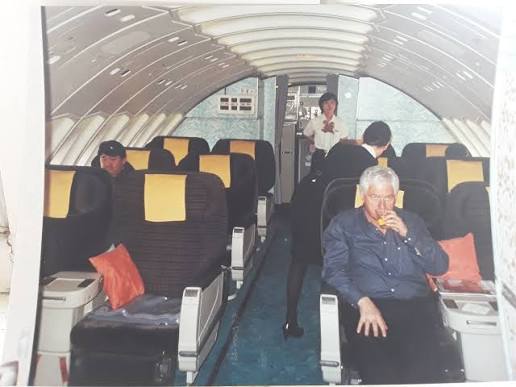
Inside, the aircraft reflected premium international travel standards of its era.
Its cabin accommodated 389 passengers, divided into:
- 8 First Class seats
- 51 Business Class seats
- 330 Economy Class seats
Although these numbers seem high today, the cabin layout was considered relatively spacious for the late twentieth century. Lufthansa prioritized passenger comfort while maximizing the Boeing 747’s exceptional carrying capacity.
The aircraft spent more than two decades flying countless intercontinental missions, becoming a familiar sight at major airports worldwide.
Why the Boeing 747-200 Became Lufthansa’s Global Ambassador
The Boeing 747 transformed Lufthansa’s international network.
Before the arrival of the Jumbo Jet, airlines often needed multiple frequencies using smaller aircraft to satisfy demand. The enormous capacity of the 747 allowed Lufthansa to consolidate passengers onto fewer flights while simultaneously reducing seat-mile costs.
The result was improved efficiency and greater flexibility on some of the airline’s busiest routes.
Throughout the 1980s and 1990s, aircraft like D-ABYP routinely operated flagship services between Frankfurt and destinations such as New York, Los Angeles, Tokyo, Johannesburg, Hong Kong, and Singapore.
The Boeing 747 also became a flying advertisement for Lufthansa.
Its distinctive hump-backed silhouette was instantly recognizable, while its massive size projected prestige, technological leadership, and international reach. For many travelers, flying aboard a Lufthansa Boeing 747 represented the beginning of an unforgettable overseas journey.
More Than Passenger Aircraft: Lufthansa’s Diverse 747 Fleet
While D-ABYP served exclusively as a passenger aircraft, Lufthansa’s Boeing 747 family included several specialized variants.
The airline operated:
- Standard passenger 747-200s
- 747-200M Combi aircraft
- Dedicated 747-200 Freighters
The Combi version represented an especially clever solution.
Rather than filling the entire main deck with passenger seats, Lufthansa sacrificed part of the economy cabin to create a large cargo compartment behind the passenger section. This configuration proved ideal for destinations where freight demand exceeded passenger growth.
Meanwhile, Lufthansa Cargo became one of the world’s largest operators of the Boeing 747 Freighter.
Notably, Lufthansa was the launch customer for the Boeing 747-200F, demonstrating how strongly the airline believed in Boeing’s long-haul strategy.
The Quiet Retirement That Marked the End of an Era
Unlike many historic aircraft that enjoy museum preservation or continue flying with smaller airlines, D-ABYP experienced a remarkably understated ending.
After leaving Lufthansa in 2001, the aircraft received an American registration, suggesting another chapter might begin.
Instead, that chapter never materialized.
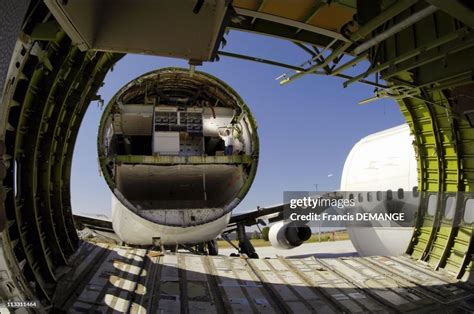
Only two years later, the aircraft was dismantled and scrapped without ever entering commercial service for another airline.
Considering the Boeing 747’s legendary reputation, this outcome appears surprising at first glance.
However, changing aviation economics made the decision entirely logical.
Why Passenger Boeing 747-200s Lost Their Value
Passenger aircraft rarely enjoy thriving second-hand markets once newer technology becomes widely available.
Unlike automobiles, aircraft economics revolve around operating costs rather than purchase price alone.
Airlines calculate expenses including:
- Fuel consumption
- Maintenance requirements
- Spare parts availability
- Engine overhaul costs
- Crew training
- Reliability
- Passenger appeal
By the early 2000s, every one of these factors favored newer aircraft.
The Boeing 747-200 relied upon older engine technology that burned substantially more fuel than later widebody aircraft.
Maintenance requirements also increased dramatically as the fleet aged.
Passengers increasingly preferred quieter cabins, modern entertainment systems, improved seating, and updated interiors found aboard newer aircraft.
Consequently, airlines seeking used long-haul aircraft often bypassed older 747-200s entirely.
Freight Operators Saw Opportunity Where Passenger Airlines Did Not
Ironically, many Boeing 747-200s enjoyed successful second careers—not carrying passengers, but transporting cargo.
Freight operators evaluate aircraft very differently.
Cargo does not complain about cabin noise.
It does not require entertainment systems.
It does not care about window size, cabin mood lighting, or inflight Wi-Fi.
Instead, cargo airlines prioritize payload, reliability, acquisition cost, and structural durability.
Older Boeing 747 airframes remained exceptionally capable freight aircraft despite becoming less competitive in passenger service.
This explains why numerous Lufthansa 747-200 Freighters and Combi aircraft continued flying long after passenger versions disappeared.
D-ABYP, however, lacked the economics to justify passenger-to-freighter conversion.
Conversion costs, combined with the aircraft’s age and newer alternatives entering the market, ultimately made scrapping the more financially attractive option.
New Boeing 747 Variants Accelerated the Aircraft’s Obsolescence
Another major reason behind D-ABYP’s limited resale prospects was Boeing itself.
The manufacturer continued improving the Boeing 747 throughout the aircraft’s production life.
The production timeline illustrates just how rapidly technology advanced.
| Variant | Production Period | Units Built |
|---|---|---|
| Boeing 747-100 | 1969–1986 | 177 |
| Boeing 747-200 | 1971–1991 | 393 |
| Boeing 747-300 | 1983–1990 | 81 |
| Boeing 747-400 | 1988–2008 | 694 |
| Boeing 747-8 | 2011–2022 | 155 |
Although the Boeing 747-200 became the second most-produced variant in the family, its market value declined rapidly after the arrival of the revolutionary 747-400.
The newer aircraft introduced:
- Glass cockpit technology
- Reduced flight crew requirements
- Improved fuel efficiency
- Increased range
- Better operating economics
- Modern avionics
- Enhanced reliability
For airlines evaluating second-hand aircraft, the choice became obvious.
Paying more for a younger, more capable 747-400 often made better long-term financial sense than purchasing an aging 747-200.
Lufthansa Chose Evolution Instead of Nostalgia
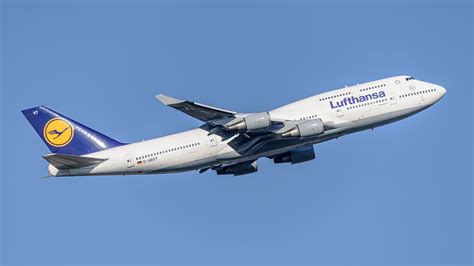
Rather than extending the lives of its aging 747-200 fleet, Lufthansa invested directly in the Boeing 747-400.
Interestingly, the airline largely skipped the Boeing 747-300 altogether.
The 747-300 offered improvements, but not enough to justify introducing another subfleet between the -200 and the dramatically more advanced -400.
This strategy simplified fleet planning while providing immediate operational advantages.
The Boeing 747-400 became Lufthansa’s flagship throughout the 1990s and remained central to its long-haul network well into the twenty-first century.
The Boeing 747 Still Has a Home at Lufthansa
Although hundreds of Boeing 747s have disappeared from airline fleets worldwide, Lufthansa continues flying the aircraft.
Its remaining fleet consists of:
- Boeing 747-400
- Boeing 747-8 Intercontinental
The 747-8 represents the final evolution of the legendary Jumbo.
Featuring new wings, advanced avionics, quieter cabins, and efficient General Electric GEnx engines, it delivers substantially lower operating costs than earlier generations.
Lufthansa also became the largest passenger operator of the Boeing 747-8, reinforcing its commitment to the aircraft even as most competitors transitioned entirely to twin-engine fleets.
However, time continues moving forward.
The airline has already confirmed plans to retire its remaining Boeing 747-400 fleet as newer aircraft arrive.
The Boeing 777-9 Will Continue the Legacy
The aircraft expected to inherit many of the Boeing 747’s responsibilities is the Boeing 777-9.
Despite significant certification delays, Lufthansa remains positioned to become the launch customer.
The new aircraft offers several important advantages.
It can carry passenger numbers approaching those of the Boeing 747 while flying farther using only two engines.
Combined with advanced composite materials and efficient GE9X engines, the Boeing 777-9 promises dramatically lower fuel consumption and maintenance costs.
For modern airlines facing intense competition and rising environmental expectations, these improvements represent enormous financial benefits.
The transition perfectly illustrates how aviation evolves.
Every generation eventually gives way to something more efficient.
Airbus Also Offers Lufthansa a New Direction
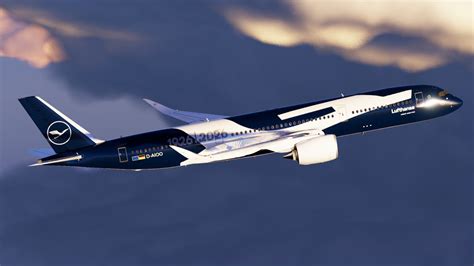
Alongside the Boeing 777-9, Lufthansa has invested heavily in the Airbus A350-1000.
Although somewhat smaller than the Boeing 747, the aircraft offers extraordinary range approaching 9,000 nautical miles, allowing airlines to operate ultra-long-haul routes with remarkable efficiency.
Its lightweight carbon-fiber construction, modern Rolls-Royce engines, and advanced aerodynamics reduce operating costs while providing passengers with quieter cabins, higher humidity, and improved comfort.
Rather than replacing the Boeing 747 directly, the A350-1000 complements Lufthansa’s future fleet by providing flexibility across varying passenger demand levels.
Together, the Boeing 777-9 and Airbus A350-1000 represent the next chapter of long-haul aviation.
Why D-ABYP Remains Historically Significant
Aircraft often become famous because of dramatic events, record-breaking flights, or celebrity passengers.
D-ABYP achieved historical importance for an entirely different reason.
Its life mirrors Lufthansa’s complete Boeing 747 journey.
It entered service during the rapid expansion of international aviation.
It spent decades connecting continents as one of the airline’s flagship aircraft.
It witnessed technological revolutions across commercial aviation.
Finally, it quietly disappeared as economics overtook nostalgia.
Thousands of passengers undoubtedly remember flying aboard D-ABYP without realizing they were traveling on an aircraft that would later symbolize the transition between two generations of commercial aviation.
Conclusion
The story of Lufthansa’s Boeing 747-200 D-ABYP “Niedersachsen” extends far beyond one retired aircraft. It reflects the broader evolution of the airline industry, where technological innovation, fuel efficiency, and operating economics continually reshape airline fleets.
During its more than two decades of service, D-ABYP represented the height of long-haul travel, helping Lufthansa strengthen its reputation as one of the world’s leading international airlines. Yet its inability to find a second passenger operator illustrates how quickly commercial aviation moves forward. Even an aircraft that once defined global travel can become economically obsolete when newer, more capable designs emerge.
Today, Lufthansa continues to honor the legacy of the Queen of the Skies through its Boeing 747-8 fleet while preparing for a future built around the Boeing 777-9 and Airbus A350-1000. As those next-generation aircraft gradually assume the airline’s flagship routes, the memory of D-ABYP endures as a reminder of an era when the Boeing 747 ruled the skies and Lufthansa stood among its greatest champions.
Frequently Asked Questions
Why was Lufthansa’s Boeing 747-200 D-ABYP scrapped instead of sold?
The aircraft’s age, high operating costs, older engine technology, and competition from newer Boeing 747 variants made it unattractive to passenger airlines. Converting it into a freighter was also not considered economically viable.
How many Boeing 747-200 aircraft did Lufthansa operate?
Lufthansa operated 30 Boeing 747-200 aircraft, introducing the type in 1971 and retiring the entire fleet by 2002.
Does Lufthansa still fly Boeing 747 aircraft today?
Yes. Lufthansa remains one of the few airlines still operating passenger Boeing 747s, including both the 747-400 and the 747-8 Intercontinental, although the 747-400 fleet is expected to retire as newer aircraft enter service.
What aircraft will replace Lufthansa’s Boeing 747 fleet?
Lufthansa’s future long-haul fleet will primarily rely on the Boeing 777-9 and the Airbus A350-1000, both of which offer significantly improved fuel efficiency, lower operating costs, and greater operational flexibility compared with older four-engine aircraft.