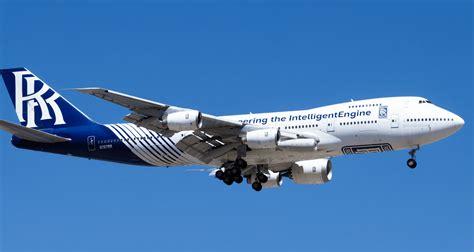
For nearly half a century, a single aircraft represented the cutting edge of aerospace innovation for one of the world’s foremost engine manufacturers. The Rolls-Royce Boeing 747-200B testbed, affectionately dubbed Spirit of Excellence, has now been officially retired after 45 years in the skies — and two decades serving as a flying laboratory. Its legacy, however, remains as one of aviation’s most extraordinary chapters in experimental flight and engine development.
The Final Flight of N787RR: Closing the Book on a Flying Icon
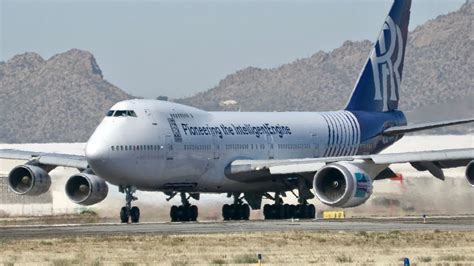
N787RR, the registration number synonymous with high-altitude engine testing, took its final recorded flight on July 9, a circular 4.5-hour journey departing and landing in Tucson, Arizona, where Rolls-Royce operated the aircraft. This historic sortie marked the end of an era for the 747-200B, which had been with the company since June 2005. According to data from Flightradar24, there has been no flight activity since, confirming its retirement.
While grounded, N787RR wasn’t idle—it was an irreplaceable tool for collecting real-world data that no wind tunnel or computer simulation could replicate. Deborah Robinson, Rolls-Royce’s Director of Test & Experimental Engineering, emphasized the importance of flight testing by stating, “In the air, we can take it a step further and perform a wide range of tests to further confirm the results of our extensive ground and rig test programmes.”
From Cathay Pacific to Rolls-Royce: The Aircraft’s Rich History
Before its second life as a technological testbed, the aircraft led a long and diverse career. Delivered in April 1980 to Cathay Pacific, the aircraft bore the registration VR-HIA, later re-registered as B-HIA in 1997. It faithfully served the airline for nearly two decades before being phased out in December 1999.
Following its retirement from Cathay, the plane transferred to Air Atlanta Icelandic, a global ACMI and charter operator. During this phase, it temporarily served Saudi Arabian Airlines and AirAsia, operating under short-term lease agreements. Its flying days could have ended there, but fate had a more specialized role in mind.
In June 2005, Rolls-Royce acquired the airframe and transformed it into the world-renowned Flying Test Bed (FTB). Renamed Spirit of Excellence, it took on a new mission: testing the next generation of turbofan engines, including some of the company’s most ambitious engineering milestones.
An Engineering Powerhouse in the Sky
The testbed wasn’t just another modified jet. It was a floating R&D lab, able to accommodate one or more experimental engines alongside standard RB211 turbofans. Most notably, N787RR was integral to the development of the Trent 1000, the powerplant for the Boeing 787 Dreamliner. The aircraft’s tail number — N787RR — was a nod to that very engine family.
Rolls-Royce also used the aircraft to trial the Pearl 10X, a next-gen engine designed for the upcoming Dassault Falcon 10X. Capable of collecting up to 20 gigabytes of data daily, the testbed offered engineers a rare opportunity to observe performance metrics, fuel consumption, vibration patterns, and thermal dynamics in real-time, under actual flight conditions.
In a groundbreaking configuration, the aircraft once flew with five engines: three operational RB211s, a Trent 1000 in the fourth position, and a Pearl 10X attached to a wing-mounted pylon. This setup demonstrated the aircraft’s flexibility and sheer importance in pushing the limits of aerospace design.
Why Testbeds Like This Matter: The Need for Airborne Validation
Despite rapid advancements in digital simulation, wind tunnel testing, and ground-based test rigs, none can perfectly emulate the dynamics of high-altitude, high-speed performance. Rolls-Royce recognized this gap, which is why aircraft like N787RR were kept flying long after their commercial retirement.
The benefits were multifaceted:
- Validation of Engine Behavior in Operational Conditions
- Real-world Feedback on Aerodynamic Interactions
- Stress Testing at Extreme Flight Envelope Boundaries
- Simultaneous Evaluation of Multiple Engine Configurations
As Robinson pointed out, such flights “feed back into our extensive models,” ensuring Rolls-Royce’s engines meet or exceed expectations once deployed to commercial or military fleets.
Rolls-Royce and the Evolution of Experimental Flight
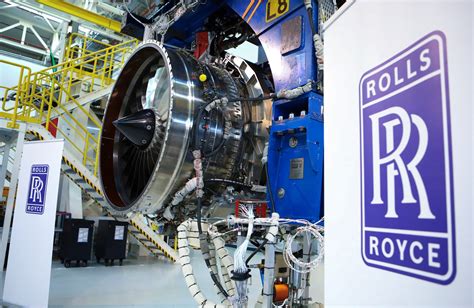
The retirement of N787RR signals not an end, but a transition in experimental aerospace testing. Rolls-Royce has since invested heavily in advanced ground facilities, like its Ultrafan demonstrator test center, which debuted in 2023. These centers employ high-tech simulation and analytics to reduce the need for extended flight programs.
Still, nothing replaces atmospheric flight entirely. The Ultrafan — the largest jet engine ever built by Rolls-Royce — will undoubtedly need future flight validation, potentially in next-generation testbeds. Whether these will be remanufactured legacy airframes or purpose-built platforms remains to be seen.
The Broader Decline of the 747-200 Fleet
Only a handful of Boeing 747-200s remain in the skies today, most relegated to cargo or special missions. Their retirement reflects both the age of the design — the 747-200 first flew in 1971 — and the efficiency demands of modern aviation. These quadjets have been superseded by twin-engine aircraft with better fuel burn, lower emissions, and comparable range.
For enthusiasts, however, planes like N787RR offered a unique blend of nostalgia and innovation. It was not simply a relic, but a flying crucible where engines of the future were forged.

What Happens Next? The Future of Rolls-Royce Test Programs
With the 747-200B grounded, attention turns to what comes next in Rolls-Royce’s airborne testing roadmap. Potential candidates for replacement platforms could include modified Boeing 767s, 777s, or even military derivatives — aircraft with enough payload capacity and structural resilience to mount full-scale turbofans externally.
Rolls-Royce’s upcoming engine programs, such as:
- Ultrafan, which promises 25% better fuel efficiency over the first Trent engine
- AE2100 upgrades for military and turboprop applications
- New Pearl variants for business aviation
…will all need rigorous testing under real-world flight dynamics. Whether that future testing will rely on manned aircraft, optionally piloted systems, or even drone-based prototypes remains open.
Conclusion: The End of a Skybound Legacy
N787RR, the Spirit of Excellence, wasn’t just another Boeing 747. It was a flagship of engineering experimentation, helping usher in a new era of fuel-efficient, quieter, and more reliable engines. As it retires to a quiet corner of aviation history, its contribution will echo through every Trent and Pearl-powered flight that follows.
For Rolls-Royce, the bar has been set high by this majestic flying testbed. Its successor, whatever form it takes, has big contrails to fill.