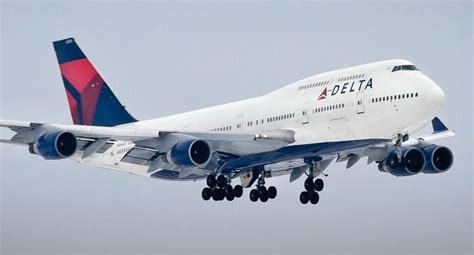
The Boeing 747-8 was meant to be the pinnacle of jumbo jet evolution—a longer, more efficient version of the iconic Queen of the Skies. Introduced in the late 2000s, it represented Boeing’s effort to revive and future-proof the 747 series against an aviation landscape that was rapidly changing. Yet despite its engineering prowess, the aircraft struggled to gain commercial traction. The story of the 747-8 is not just about technical upgrades, but about a mismatch between design ambition and market reality.
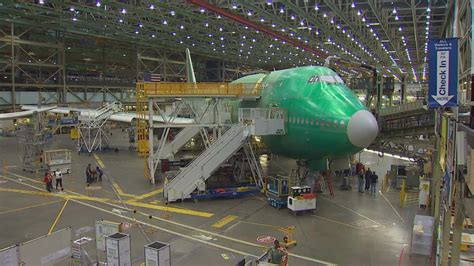
Boeing’s Strategic Vision: A Modern Giant for a New Era
In designing the Boeing 747-8, the manufacturer sought to compete with Airbus’s new flagship—the A380—and also to provide a next-generation option for carriers already familiar with the 747. The aircraft was introduced in two versions: the 747-8 Intercontinental (747-8i) for passengers and the 747-8 Freighter (747-8F) for cargo. With its fuselage stretched 18 feet beyond that of the 747-400, the -8 variant became the longest commercial aircraft in the world.
Key upgrades included:
- New General Electric GEnx-2B67 engines derived from the 787 Dreamliner
- Redesigned wings with advanced aerodynamics and raked wingtips
- A higher maximum takeoff weight (987,000 lbs)
- Increased fuel efficiency and reduced noise footprint
These enhancements were all aimed at making the aircraft more economical and capable for long-haul operations, while increasing passenger capacity by roughly 50 seats over the 747-400. Boeing envisioned the 747-8 as a strong competitor to the A380, offering better fuel burn per seat and more flexible airport compatibility.
Falling Short on Orders and Operational Appeal
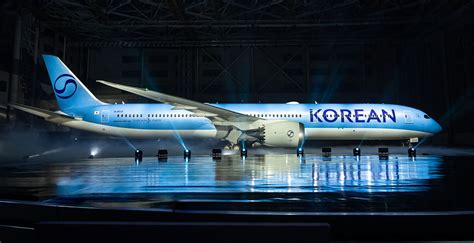
Despite its technical improvements, the 747-8I saw only 47 orders, with the majority coming from Lufthansa and Korean Air. In stark contrast, the freighter variant performed better, logging 107 orders. No major U.S. airline ordered the passenger version—a clear signal that Boeing had misread key customer expectations.
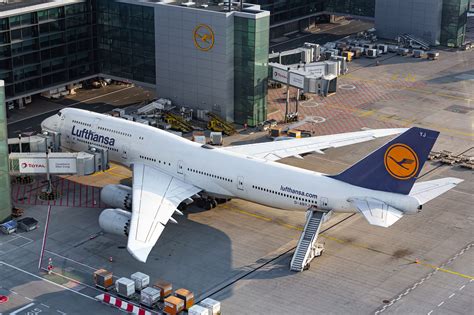
One of the biggest reasons was the changing economics of air travel. Airlines were moving away from four-engine aircraft, particularly for passenger service. Operating costs were significantly higher, and twin-engine alternatives were increasingly capable of matching the 747-8’s range and payload.
The global financial crisis of 2008 only made things worse. Airlines tightened budgets and focused on efficiency. The 747-8I, with its massive size and fuel needs, was a tough sell. Boeing soon had to cut production rates—from two aircraft per month to just half an aircraft by 2016. It was an admission that demand had flatlined.
The Twinjet Revolution: Boeing Outcompeted by Its Own Aircraft
Ironically, Boeing’s own success with aircraft like the 777-300ER and the 787 Dreamliner further doomed the 747-8. Airlines found these twin-engine widebodies more appealing because they offered similar range, superior fuel efficiency, and were more adaptable to changing route structures.
The 787, in particular, revolutionized long-haul operations by enabling point-to-point travel between secondary cities—routes that didn’t require a massive aircraft. Airlines could reduce risk, cut costs, and still offer non-stop international service.
Even the Airbus A350, launched in 2015, intensified pressure. This new competitor offered long range, high efficiency, and comfort—all in a twin-engine frame. The era of the quadjet, especially for passengers, was rapidly ending.
A Changing Industry: From Hubs to Direct Routes
The hub-and-spoke model, which once justified jumbo jets like the 747 and A380, was no longer dominant. Airlines realized that passengers preferred direct flights, even at a premium. Technological advances in engine reliability made twinjets a safer, more practical option for these long hauls.
As a result, airport compatibility, turnaround time, and operational costs became central considerations. The 747-8, while advanced, still had:
- Higher fuel consumption per flight than twinjets
- Longer boarding and deplaning times
- Limited gate availability at many airports
These factors made the aircraft less attractive to airlines focused on optimizing schedules and lowering operating expenses.
Freighter Resilience: Where the 747-8 Found Success
While the 747-8I stumbled, the 747-8F emerged as a critical player in global cargo. Its unique front-loading nose door, immense payload capacity, and long range made it indispensable for freight carriers. In fact, UPS and Cargolux continue to operate the aircraft as a cornerstone of their logistics fleets.
The air cargo sector had fewer alternatives that could match the 747-8F’s abilities. Even the A380, which was never developed as a freighter, left this niche wide open. The 747-8F capitalized on that void, ensuring the aircraft line had at least partial commercial viability.
The Missed U.S. Market and Strategic Lessons
That no U.S. airline ordered the 747-8I is telling. It highlights the disconnect between Boeing’s expectations and airline strategies. Domestic carriers like Delta, United, and American were all gravitating toward more economical twinjets, shrinking the potential customer base right from the start.
Even for global airlines, the aircraft’s economics didn’t stack up. Emirates, for example, chose to double down on the A380, banking on its massive scale. Asian carriers like Singapore Airlines and Cathay Pacific found better value in more nimble aircraft that could serve diverse markets with less risk.
Operational Realities and Design Oversights
The size of the 747-8, while impressive, limited its operational flexibility. Not all airports could accommodate its wingspan or turning radius. In regions without sufficient infrastructure, this created logistical headaches. At the same time, fuel prices were volatile, and airlines began prioritizing resilience in their cost models.
Additionally, the overall air travel industry was evolving to be more frequency-focused rather than capacity-focused. Passengers wanted multiple flight options per day—not a single, massive flight. The 747-8 was optimized for the latter, making it feel increasingly like a relic of a bygone era.
The Symbolic Role: Air Force One and the Final Chapter
Despite its commercial challenges, the 747-8’s symbolic legacy endures. Two units are currently being modified to serve as the next Air Force One, replacing the aging 747-200s. This high-profile role ensures the aircraft will remain visible in global affairs well into the 2030s.
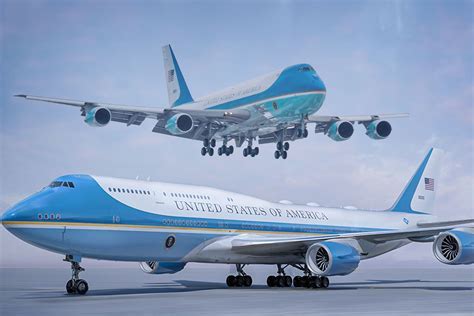
These aircraft represent more than transport—they’re flying symbols of state power. Boeing’s choice of the 747-8 for this role underscores the aircraft’s enduring design excellence and structural integrity, even if airlines moved on.
Conclusion: A Majestic Miscalculation
The Boeing 747-8 was a technical marvel launched at the wrong time. Its development was rooted in a belief that the jumbo jet still had a role to play in commercial aviation. But the world had already changed. Airlines were trimming fleets, optimizing for efficiency, and chasing flexibility. The age of mega-hubs and massive aircraft was fading fast.
Boeing’s strategy to stretch the 747 into a new generation underestimated the twinjet revolution, fuel economics, and changing passenger behavior. In doing so, it created an aircraft that was excellent on paper but incompatible with the real-world demands of modern airlines.
Yet, the 747-8 remains a testament to aerospace innovation. It capped one of the most legendary aircraft lines in history with style and grace. Though the skies now belong to twinjets, the final Queen of the Skies will always be remembered for what she tried to be—and what she taught us about the future of flight.