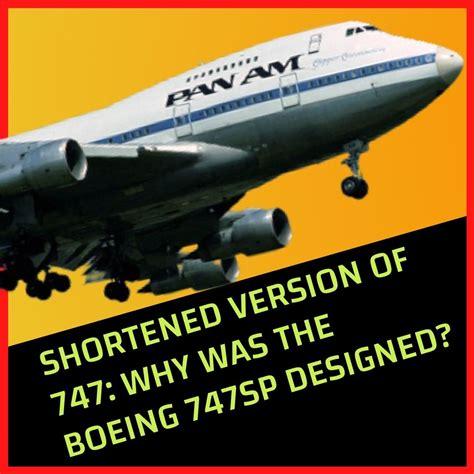
The Boeing 747SP emerged from a moment when global aviation was stretching itself across longer distances and more demanding environments. Airlines were beginning to imagine nonstop routes that pushed beyond the capabilities of early-generation widebodies, yet the original Boeing 747-100 lacked the reach to connect cities such as New York and Tehran without technical stops. The 747SP became Boeing’s attempt to create a purpose-built long-range variant using the foundation of the world’s first jumbo jet while drastically rethinking its proportions and performance profile. The quest to satisfy airline ambitions, combined with a need to defend market share against rising rivals, ultimately shaped one of the most distinctive widebodies ever built.
Engineering a Shrink That Defied Expectations
Boeing’s decision to shrink the 747 was unconventional because shortening a large airframe typically worsens weight distribution, efficiency, and performance. Yet the company pursued a radical redesign that transformed the original 231-foot-long structure into a compact 183-foot airframe while maintaining the iconic 747 wingspan. Engineers cut fuselage sections both forward and aft of the wing, redesigned the center structure, and created a taller, more authoritative vertical stabilizer to compensate for the reduced length. The outer wing received simplified single-slotted flaps, and several structural components were lightened to offset the inherent penalties of a derivative design.
Despite its smaller size, the 747SP preserved the broad aerodynamic presence of the 747 family. It achieved higher cruising speeds and could sustain flight near its service ceiling of 45,100 feet—an altitude other 747 variants could rarely maintain. Its 6,650-nautical-mile reach positioned it at the far edge of subsonic range capabilities during the mid-1970s, making it the most capable long-distance airliner of its time.
A Jet Built for Pan Am and Iran Air’s Grand Routes
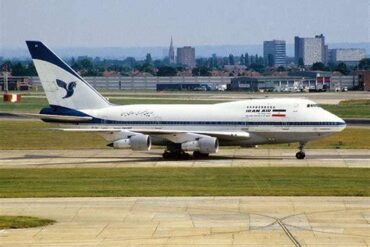
The 747SP was not conceived in a vacuum; it emerged because Pan Am and Iran Air jointly requested an aircraft capable of flying reliably between New York and Tehran without stopping. Boeing had already introduced the 747-200, which offered better range than the 747-100, but not enough to serve demanding, ultra-long city-pairs with full payloads. Launching the 747SP in 1973 gave the airlines a viable solution, one that opened networks previously unreachable even by the most capable jets in service.
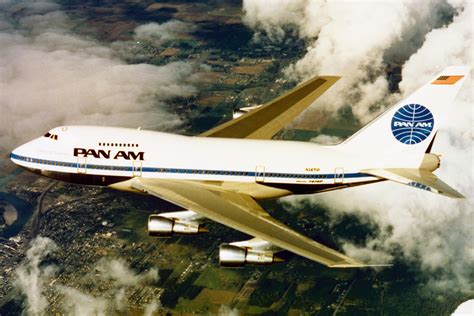
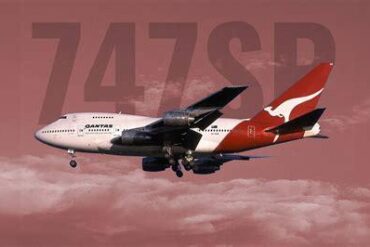
Although Pan Am’s first 747SP route connected New York and Tokyo, the aircraft’s performance quickly attracted interest from carriers operating out of restrictive airports. Qantas, for example, used the type to bridge the Pacific and to operate into Wellington, where short runways and tricky weather demanded exceptional field performance. The 747SP became a specialist machine: small enough to fill consistently, powerful enough to handle demanding environmental conditions, and efficient enough—initially—to make ultra-long sectors viable.
Fighting the Trijets Without a Clean-Sheet Design
Another unspoken motivation behind the 747SP’s development was competitive pressure. McDonnell Douglas and Lockheed were successfully selling the DC-10 and L-1011 TriStar, widebodies that were smaller and more economical on many routes than the original 747. Boeing lacked the financial headroom in the early 1970s to design an all-new mid-size widebody, so the company repurposed the 747 platform into a more compact competitor. The 747SP was intended to give airlines long-haul flexibility without forcing Boeing to invest in an entirely new aircraft program.
A Brilliant Idea Undone by Oil Prices and Physics
The promise of the 747SP faded quickly after the 1973 oil crisis, which transformed fuel from a negligible cost into a defining factor in aircraft economics. Shrink derivatives suffer from the physics of mass and drag—they carry much of the structural weight of their larger counterparts but offer fewer seats to spread operating costs across. The 747SP was no exception. While it could fly farther than the DC-10 or L-1011, it burned more fuel due to its quadjet configuration and inherited structural weight. As fuel prices rose, the aircraft’s per-seat costs became difficult for most airlines to justify.
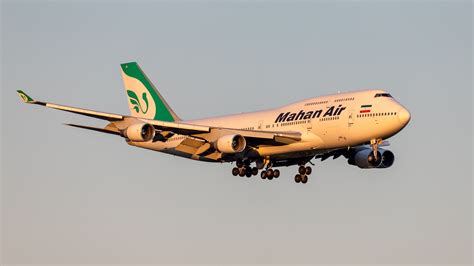
Boeing had expected demand for roughly 200 aircraft. Only 45 were sold, a fraction of the forecast. The timing was unfortunate, but so were the economics: the very features that made the 747SP an engineering triumph also made it commercially fragile.
The Rise of the 747-200 and the Fall of the SP
The final blow to the 747SP’s commercial prospects came from within Boeing’s own lineup. As engine manufacturers introduced more powerful variants of the Pratt & Whitney JT9D, General Electric CF6, and Rolls-Royce RB211, the 747-200 grew markedly more capable. Its range approached that of the 747SP, but with far better economics due to its greater seating capacity. Many airlines found it more profitable to fly a 747-200 with blocked seats on ultra-long routes than to operate a fully loaded 747SP.
Once the 747-200 became economically competitive on the same missions, the specialist value of the 747SP faded, and the aircraft’s narrow market evaporated. By the early 1980s, its role had been marginalized to a handful of niche routes, VIP operators, and record-setting long-distance missions.
Lasting Influence on Later 747 Variants
Although the 747SP struggled commercially, its engineering legacy left a permanent mark on the 747 family. Its upper-deck design, which extended farther aft and ended above the wings, became the template for the 747-300 and, later, the legendary 747-400. The SP also demonstrated the aerodynamic advantages of a higher cruise altitude and faster cruise speed, characteristics that helped shape Boeing’s later long-range strategy.
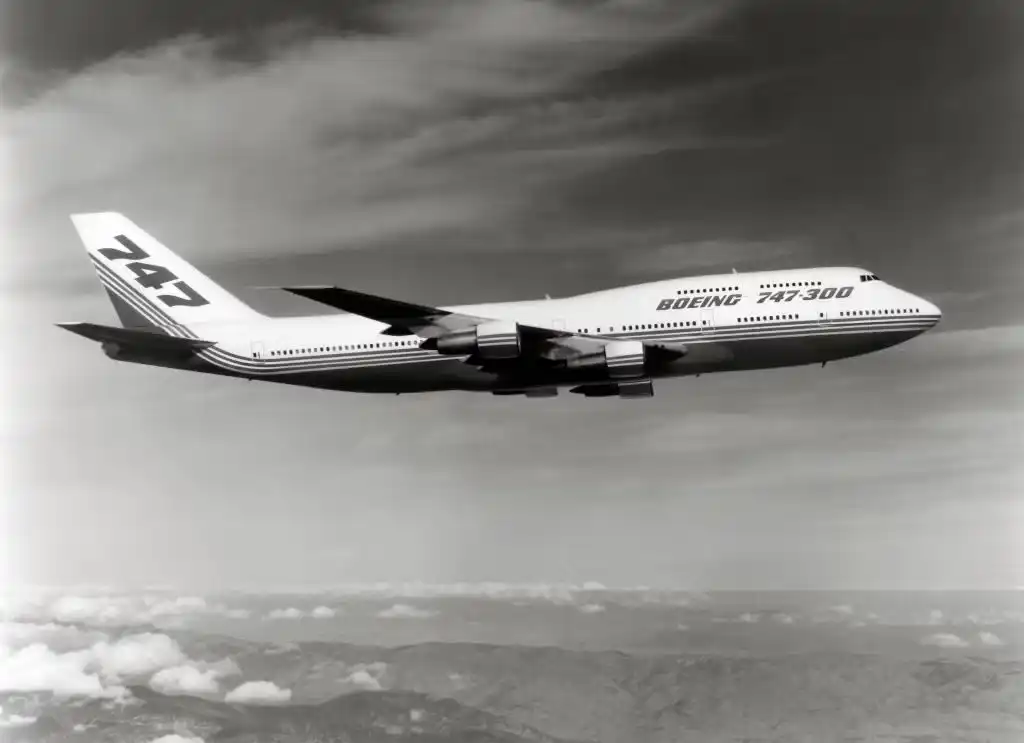
The aircraft set world records spanning endurance, altitude, and circumnavigation, underscoring the depth of its performance envelope even as its commercial appeal dwindled.
A Technically Magnificent Answer to a Very Narrow Question
The Boeing 747SP delivered remarkable advantages: it was easier to fill than other 747 variants, it could leap off short runways with confidence, and it reached farther than any subsonic airliner of its era. Yet these strengths aligned with the needs of only a small circle of airlines. Rising fuel costs, competition from more efficient trijets, and the increasing range of later 747 models gradually eliminated the SP’s reason for being.
The aircraft that once wore the crown as the world’s longest-ranged airliner ultimately became a specialist, admired for its engineering but remembered as a commercial rarity. Its story remains a vivid chapter in aviation history, proof that even the most innovative ideas must align with economics to thrive.