The Eurofighter Typhoon, a collaborative marvel born of European defense cooperation, has served as a backbone of the continent’s aerial superiority for over two decades. Introduced into the Royal Air Force (RAF) in 2003, this fourth-generation fighter has demonstrated its capability in everything from air policing missions to full-fledged combat operations, particularly during NATO missions in Libya in 2011. Despite the aircraft’s longevity and adaptability, it is now facing a convergence of pressures—technological, strategic, and political—that are beginning to close in on its future viability.
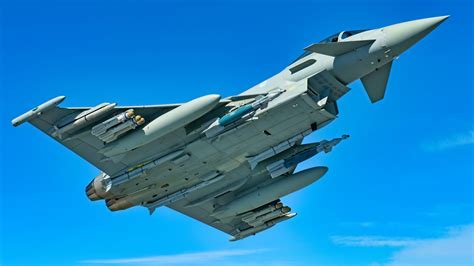
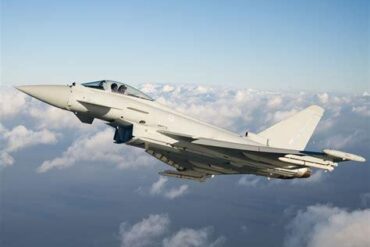
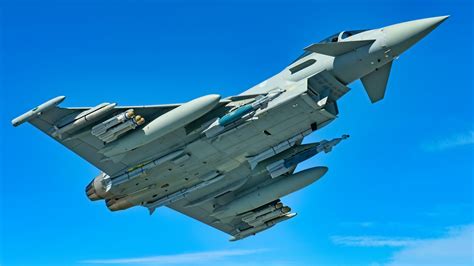
The Typhoon’s design—a twin-engine, delta-wing, canard-equipped platform—was optimized for air superiority, but it has since proven capable in multi-role operations including ground strike and reconnaissance. It’s fast—capable of Mach 2.35—and agile, with a high service ceiling of 55,000 feet. But none of these attributes are enough to shield it from obsolescence in a world increasingly dominated by fifth and sixth-generation stealth aircraft.
Tranche 1 Typhoons: From Combat to Cannibalization
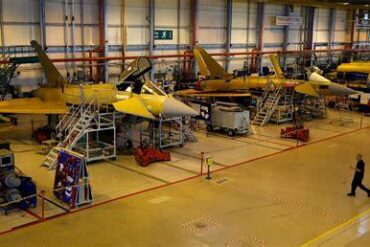
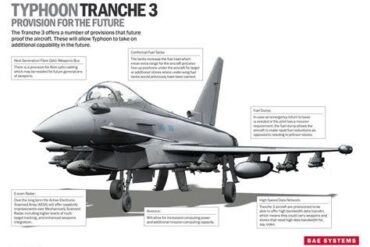
Starting in March 2025, the RAF will begin retiring 30 Tranche 1 Typhoons. These early-generation jets, once the pride of the fleet, will be stripped for parts under the “Reduce to Produce” initiative—a pragmatic, if symbolic, acknowledgment that the platform’s golden age is waning. Twenty-six aircraft will be decommissioned by 2025, with an additional four phased out by 2027. The move is not merely logistical; it is strategic. These aircraft lack the infrastructure and systems necessary to meet modern warfare demands.
Yet, their technological skeletons—radars, flight control systems, engine parts—will be recycled into the broader fleet, which still includes Tranche 2 and Tranche 3 variants. Manufacturer BAE Systems has floated the idea of upgrading Tranche 1s, but the RAF has made no such commitments. The reality is clear: these aircraft are being gently eased out, not reinvented.
The Stealth Divide: F-35s, GCAP, and Strategic Shifts
The Eurofighter Typhoon’s existential dilemma deepens when viewed alongside the UK’s growing investment in the Lockheed Martin F-35B Lightning II and the Global Combat Air Programme (GCAP)—a sixth-generation stealth fighter initiative in partnership with Japan and Italy. The UK Ministry of Defence has indicated a strong preference for expanding the F-35 fleet, which boasts stealth capabilities and a service life extending into the 2070s.
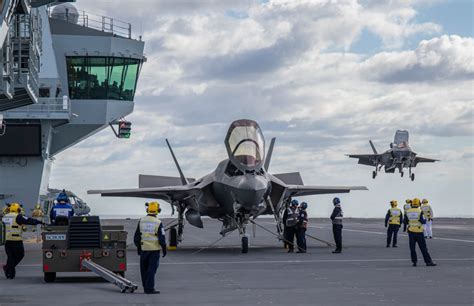
These next-gen fighters are not merely more survivable in contested airspace; they represent the future of networked, sensor-fusion-heavy, electronic warfare. The Typhoon, for all its rugged reliability, cannot match the F-35’s digital warfare integration, sensor stealth, or interoperability with modern carrier fleets.
And yet, as one UK defense official told Janes, the Typhoon will remain a “core component” of the RAF’s combat aviation strategy. This dual-track procurement strategy—continuing to support Typhoon operations while investing in future platforms—may seem contradictory but reflects broader European defense realities: fiscal pragmatism, industrial sovereignty, and transitional readiness.
Technical Brilliance That Still Commands Respect
Despite its age, the Eurofighter Typhoon is far from obsolete. Its technical specifications remain impressive:
- Crew: 1 or 2
- Length: 15.96 m (52 ft 4 in)
- Wingspan: 10.95 m (35 ft 11 in)
- Max takeoff weight: 23,500 kg (51,809 lb)
- Engines: 2 × Eurojet EJ200 turbofans
- Top speed: Mach 2.35 (1,600 mph)
- Combat range: 1,389 km (863 mi)
- Service ceiling: 16,764 m (55,000 ft)
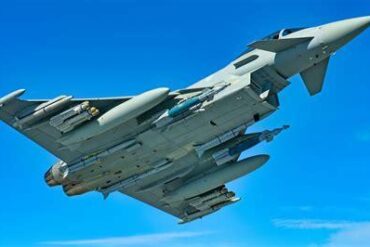
Its Mauser BK-27 cannon, paired with a mix of air-to-air and air-to-ground munitions, grants it versatility across mission profiles. But it is the airframe’s aerodynamic finesse and thrust-to-weight ratio that still allow the Typhoon to outmaneuver most threats in a dogfight.
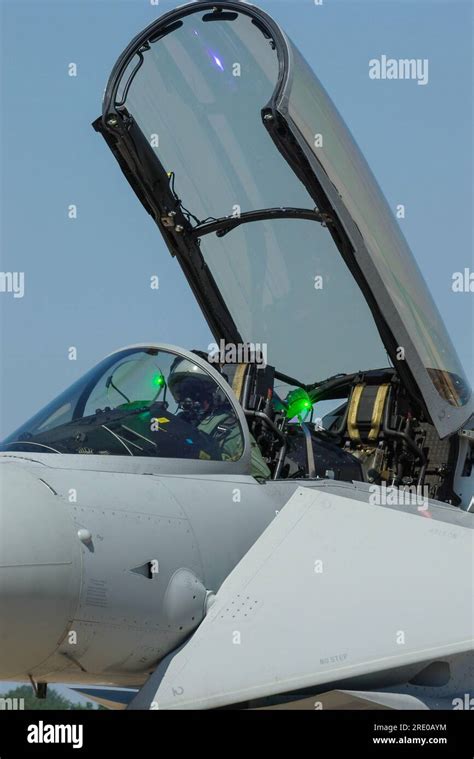
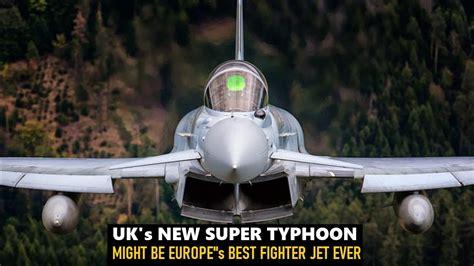
Equally noteworthy are its partial stealth features. The jet incorporates serpentine air intakes to obscure turbine visibility, aggressively swept edges to reduce radar cross-section, and semi-recessed weapon mounts that shield payloads from radar reflection. Additionally, radar-absorbent materials (RAM) are applied to key surfaces. While these do not equate to full stealth, they do make the Typhoon more survivable than legacy fourth-gen aircraft.
Low Cost and High Value: The Typhoon’s Strategic Role
In a budget-conscious defense environment, the Eurofighter’s relatively low operating costs per flight hour serve as a major advantage. Stealth aircraft like the F-35 are expensive to fly, maintain, and house. For less contested missions—air policing, Baltic patrols, quick-reaction alert (QRA) duties—the Typhoon offers high capability at lower cost.
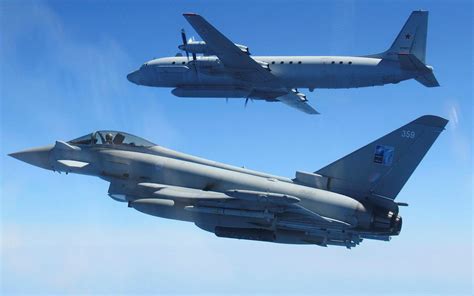
This economic efficiency dovetails with political considerations. The Typhoon program supports thousands of jobs across the UK, Germany, Spain, and Italy, and sustains a vast industrial base that includes Leonardo, Airbus, and BAE Systems. Shutting down the Typhoon prematurely would not only strain budgets but also disrupt Europe’s defense ecosystem.
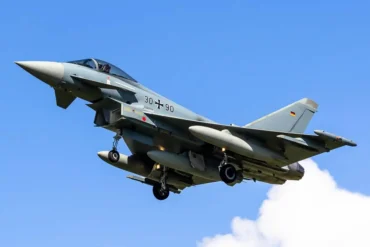
Moreover, the aircraft remains a linchpin in coalition operations. Eurofighter users—Austria, Oman, Qatar, Saudi Arabia, and Spain—continue to operate and upgrade their fleets. In Qatar, for example, Typhoons provide a bridge between training and advanced combat capabilities, filling the gap until next-generation assets arrive.
The Clock Is Ticking, But Not Yet Struck
Ultimately, the Eurofighter Typhoon finds itself in a strategic limbo—too old to be future-proof, but too valuable to discard. By 2040, most expect its complete phase-out from frontline roles. Yet between now and then, the aircraft will remain a mainstay for air defense missions that don’t demand stealth.
Whether through avionics upgrades, engine refinements, or enhanced mission software, Typhoon operators continue to breathe life into this resilient fighter. And as sixth-generation platforms emerge from development to deployment, the Typhoon will serve as a testbed, a complementary platform, and a transitional workhorse.
The walls may be closing in, but the fortress hasn’t yet crumbled. The Eurofighter Typhoon, in its final decades, will continue to fly—powerful, relevant, and unmistakably European.