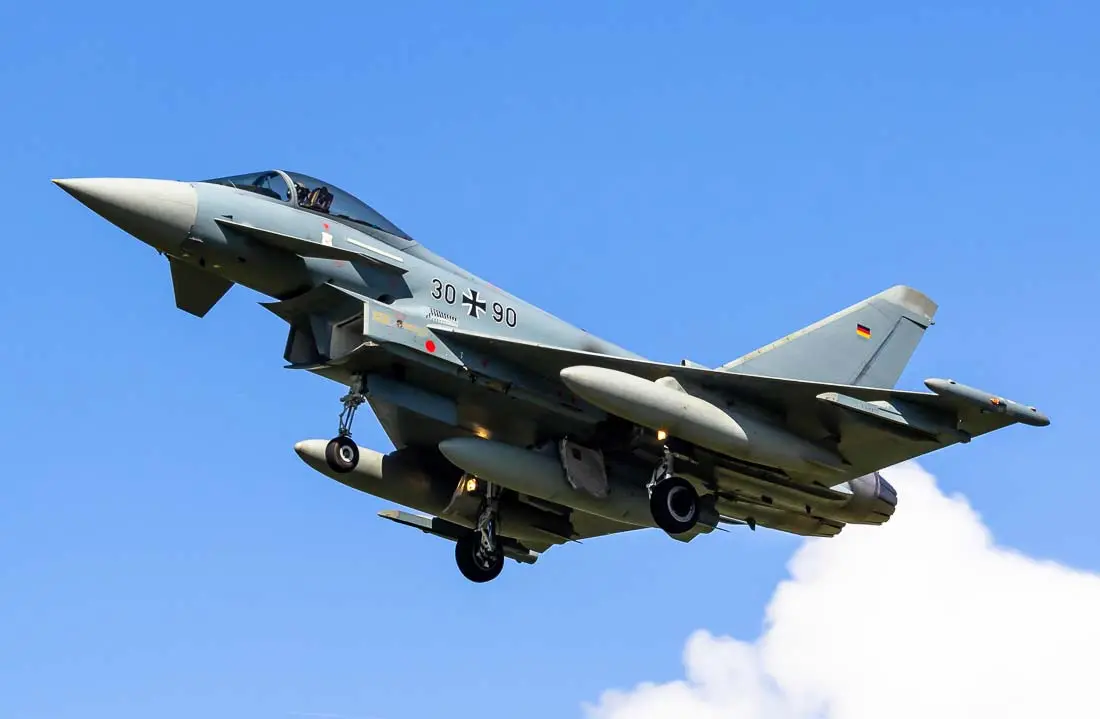
Poland’s next fighter aircraft decision is about far more than replacing aging jets. It represents a broader strategic calculation involving military capability, industrial independence, alliance politics, and the future direction of European defense. While Boeing’s F-15EX Eagle II offers unmatched payload capacity and exceptional long-range firepower, the Eurofighter Typhoon increasingly aligns with Poland’s operational requirements and long-term strategic ambitions.
As NATO’s eastern frontline nation, Poland faces one of the most demanding air defense environments in Europe. Every minute matters when responding to unidentified aircraft approaching its borders with Russia and Belarus. In such circumstances, the ability to launch quickly, climb rapidly, patrol efficiently, and maintain sustained air superiority may outweigh the advantage of carrying thousands of additional pounds of weapons.
Rather than asking which fighter is objectively superior, Polish defense planners appear to be asking a more practical question: which aircraft best fits Poland’s unique strategic environment? Increasingly, the answer points toward Europe’s premier multirole fighter.
Poland’s Security Environment Demands Speed Over Maximum Payload
Unlike many NATO members protected by geographic distance, Poland occupies one of the alliance’s most strategically sensitive locations. Since Russia’s invasion of Ukraine in 2022, the Polish Air Force has dramatically increased its readiness posture, frequently scrambling fighters to monitor military aircraft operating near NATO airspace.
Quick Reaction Alert (QRA) missions have become routine rather than exceptional. Pilots must be capable of launching within minutes, climbing to interception altitude almost immediately, identifying unknown aircraft, and maintaining prolonged patrols over vast sections of Poland’s eastern frontier.
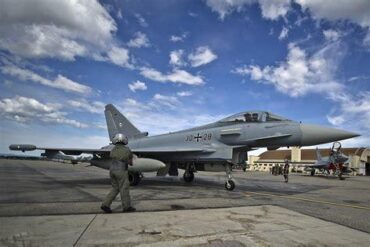
The Eurofighter Typhoon was originally engineered with precisely these missions in mind.
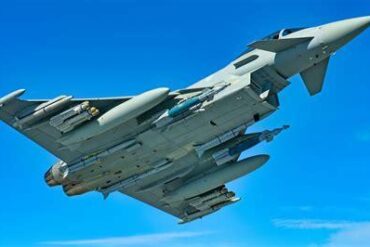
Designed during the Cold War primarily as an air superiority interceptor, the Typhoon emphasizes explosive acceleration, exceptional climb rate, and sustained supersonic performance. These characteristics allow it to respond faster than heavier aircraft when seconds can determine mission success.
By contrast, the F-15EX Eagle II evolved from one of America’s greatest air superiority fighters into a modern heavy multirole platform optimized to carry enormous missile loads and long-range strike weapons. Its strengths lie in endurance, payload, and overwhelming firepower rather than the fastest possible reaction time.
Although the F-15EX remains one of the fastest operational fighters in the world with a top speed approaching Mach 2.5, its significantly heavier airframe naturally limits the rapid climb performance that gives the Typhoon its reputation as one of NATO’s quickest interceptors.
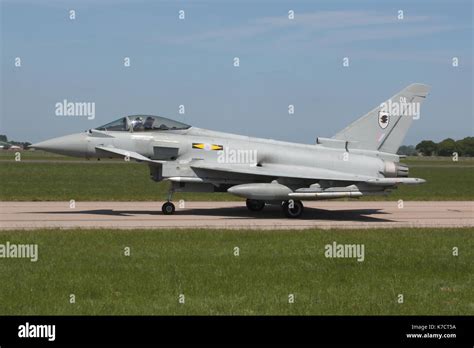
The Eurofighter Typhoon Was Built for Air Defense
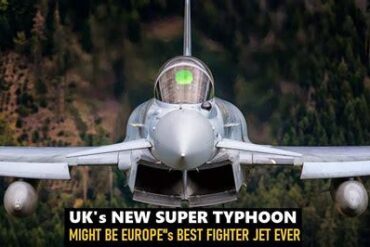
The Typhoon reflects decades of European design philosophy focused almost exclusively on achieving air superiority.
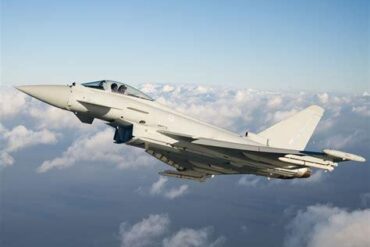
Its lightweight construction, delta wing, canard foreplanes, and highly advanced fly-by-wire flight controls create an intentionally aerodynamically unstable aircraft. Rather than resisting pilot inputs, the aircraft constantly seeks maximum agility, with computers making thousands of flight corrections every second.
This unconventional approach delivers extraordinary maneuverability.
The Typhoon boasts an exceptional instantaneous turn rate, allowing pilots to rapidly point the aircraft toward enemy fighters during close-range engagements. Equally important, its excellent thrust-to-weight ratio enables the aircraft to regain lost energy after aggressive maneuvers far more quickly than heavier competitors.
For interception missions, however, perhaps its greatest advantage is vertical performance.
Twin EJ200 engines generate outstanding acceleration immediately after takeoff, enabling the aircraft to reach operational altitude remarkably quickly. Combined with its ability to supercruise at approximately Mach 1.5 without engaging fuel-hungry afterburners, the Typhoon can patrol larger areas while consuming significantly less fuel than aircraft requiring continuous afterburner operation for supersonic flight.
This combination of rapid response and efficient high-speed patrol directly supports Poland’s continuous air policing mission.
Why the F-15EX Still Remains an Exceptional Fighter
None of this diminishes the remarkable capabilities of Boeing’s newest Eagle.
The F-15EX Eagle II represents more than five decades of combat-proven fighter evolution combined with twenty-first century digital technologies. Equipped with advanced mission computers, sophisticated electronic warfare systems, cutting-edge radar, and an open mission architecture, it remains among the world’s most capable fourth-generation-plus combat aircraft.
Its greatest strength is sheer carrying capacity.
The aircraft can transport approximately 29,500 pounds of weapons, nearly 10,000 pounds more than the Eurofighter Typhoon. This allows it to carry enormous combinations of air-to-air missiles, long-range cruise missiles, precision-guided bombs, anti-ship weapons, and hypersonic systems.
Rather than serving as the primary dogfighter, the F-15EX increasingly functions as a heavily armed “missile truck.”
Working alongside stealth aircraft such as the F-35 Lightning II, it can remain outside heavily defended airspace while receiving targeting information from stealth fighters operating closer to enemy defenses. The Eagle then launches massive volleys of long-range missiles before withdrawing without entering the highest-threat areas.
This cooperative doctrine perfectly matches current U.S. Air Force concepts for future air warfare.
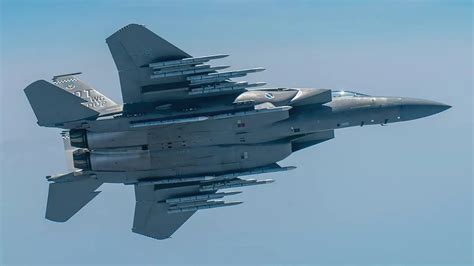
Two Fighters Built Around Opposite Design Philosophies
The differences between the Typhoon and the Eagle II extend well beyond performance figures.
Each aircraft embodies a fundamentally different philosophy of aerial combat.
The Eurofighter prioritizes agility, responsiveness, and flexible multirole capability. Its aerodynamic layout allows it to dominate visual-range engagements while remaining highly effective during beyond-visual-range combat using advanced European missiles.
The F-15EX emphasizes overwhelming offensive power. Its larger fuselage, stable wing design, and enormous fuel capacity allow it to carry unprecedented weapon loads across long distances while maintaining impressive speed.
One aircraft resembles a precision rapier.
The other functions as a heavyweight broadsword.
Neither philosophy is inherently superior. Their effectiveness depends entirely on operational requirements.
For Poland, whose fighters may need to launch repeatedly against unidentified aircraft near its borders, agility and response speed may provide greater practical value than maximum weapon capacity.
Pairing with Poland’s Incoming F-35 Fleet
Poland has already committed to acquiring the Lockheed Martin F-35 Lightning II, introducing fifth-generation stealth capabilities into its air force.
This purchase changes how future supporting fighters will operate.
The F-35 excels at penetrating defended airspace, gathering intelligence, identifying targets, and sharing battlefield information across secure digital networks.
Supporting aircraft can then exploit that information using different strengths.
If Poland selected the F-15EX, the Eagles would likely remain farther from enemy air defenses, carrying large missile inventories and acting as airborne arsenals directed by stealthy F-35s.
If Poland selected the Eurofighter Typhoon, the two aircraft could operate much closer together. The Typhoon’s outstanding agility, high-altitude performance, and supercruise capability would enable it to escort F-35s into contested airspace while engaging hostile fighters before they threaten the stealth aircraft.
Recent upgrades have also expanded the Typhoon’s air-to-air missile capacity to approximately fourteen missiles, reducing one of the aircraft’s previous disadvantages relative to heavier competitors.
European Weapons Offer Increasing Strategic Value
Another reason the Typhoon has become increasingly attractive lies in its compatibility with Europe’s most advanced indigenous weapons.
The fighter integrates systems including the Meteor beyond-visual-range missile and the Storm Shadow long-range cruise missile, both widely regarded among the world’s most capable air-launched weapons.
Meteor, in particular, has transformed European air combat capability.
Unlike conventional rocket-powered missiles that rapidly lose energy during flight, Meteor’s ramjet propulsion maintains speed throughout much of its engagement envelope. This dramatically increases the missile’s effectiveness against maneuvering targets at long distances.
For Poland, which increasingly emphasizes European defense cooperation, integrating these weapons into its frontline fighter fleet carries significant strategic advantages.
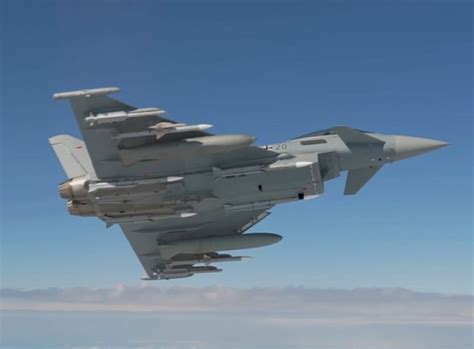
Industrial Independence Is Becoming a National Security Priority
Military capability represents only one aspect of Poland’s decision.
Defense industrial policy has become equally important.
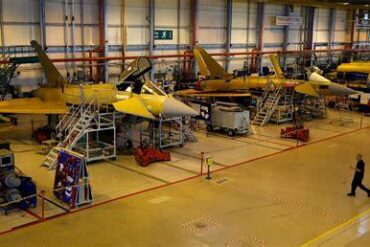
The Eurofighter consortium—including Airbus, BAE Systems, and Leonardo—has proposed significant industrial cooperation involving local manufacturing, maintenance, repair facilities, and component production inside Poland.
Such agreements would strengthen Poland’s domestic aerospace sector while creating skilled employment and reducing long-term dependence on foreign maintenance infrastructure.
Polish officials have openly acknowledged that rebuilding national aircraft manufacturing capability is becoming a strategic objective.
Rather than simply purchasing finished aircraft, Warsaw increasingly seeks participation throughout the production lifecycle.
That ambition aligns naturally with European collaborative defense programs.
Supply Chain Security Matters More Than Ever
European governments have become increasingly focused on defense supply chain resilience.
Maintaining complex fighter aircraft requires continuous access to spare parts, software updates, technical expertise, and depot-level maintenance.
European-produced aircraft offer greater opportunities for localized support, potentially reducing dependence on overseas logistics during prolonged crises.
Some American military systems also contain proprietary components requiring manufacturer involvement for major servicing.
Although such arrangements are common throughout the global defense industry, European governments increasingly prefer greater domestic control over critical military capabilities.
For Poland, situated directly on NATO’s eastern flank, minimizing logistical vulnerability has become a strategic priority rather than merely an economic consideration.
Political Uncertainty Is Influencing Procurement Decisions
Defense acquisitions inevitably reflect political realities alongside technical performance.
Recent political tensions between the United States and several European allies have prompted renewed discussions regarding long-term dependence on American defense equipment.
Within this broader debate, concerns have emerged over export controls, software sovereignty, lifecycle support, and hypothetical restrictions affecting future operations of American-built aircraft.
No public evidence demonstrates the existence of a remote “killswitch” capable of disabling exported fighters, and manufacturers have consistently rejected such claims. Nevertheless, discussions surrounding sovereign control of military systems have encouraged several European governments to examine alternatives that provide greater domestic authority over maintenance, upgrades, and operational autonomy.
These political considerations increasingly influence procurement decisions alongside traditional evaluations of speed, payload, and combat performance.
The Eurofighter Could Become Poland’s Gateway to Sixth-Generation Aviation
Perhaps the strongest long-term argument favoring the Typhoon involves what comes after it.
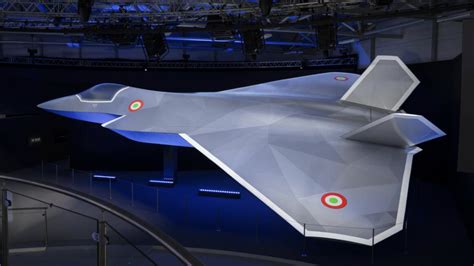
Europe’s Global Combat Air Programme (GCAP) seeks to develop a sixth-generation fighter through cooperation among the United Kingdom, Italy, and Japan.
Many of the companies leading Typhoon production—including BAE Systems and Leonardo—also lead GCAP development.
Should Poland eventually join this ambitious initiative, operating the Eurofighter would provide invaluable industrial experience.
Engineers, technicians, manufacturers, and maintenance organizations would already possess expertise working with advanced European combat aircraft, easing the transition toward sixth-generation technologies.
Choosing the Typhoon therefore becomes more than a fighter purchase.
It becomes an investment in Poland’s future aerospace industry.
The Strategic Choice Extends Beyond Aircraft Performance
Pure performance comparisons often favor the F-15EX in measurable categories such as payload, range, and heavy strike capability. It remains one of the world’s most formidable non-stealth fighters and offers extraordinary flexibility when paired with fifth-generation aircraft.
However, procurement decisions rarely revolve around a single performance statistic.
Poland must evaluate operational requirements, industrial development, alliance strategy, logistics, political risk, technological partnerships, and future defense planning simultaneously.
Viewed through that broader lens, the Eurofighter Typhoon offers several advantages uniquely suited to Poland’s circumstances. Its exceptional climb rate, sustained supercruise capability, rapid interception performance, advanced European weapons integration, industrial cooperation opportunities, and potential pathway into Europe’s sixth-generation fighter ecosystem collectively create a compelling package.
Ultimately, the decision is not simply about selecting between two highly capable aircraft. It reflects Poland’s vision for its future role within NATO, its commitment to strengthening Europe’s defense industry, and its desire to build long-term strategic autonomy while maintaining credible deterrence on the alliance’s eastern frontier.