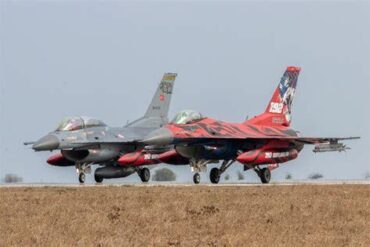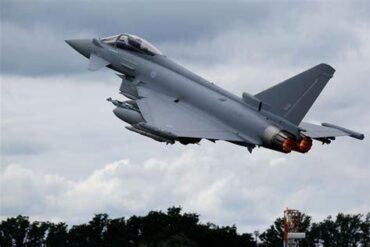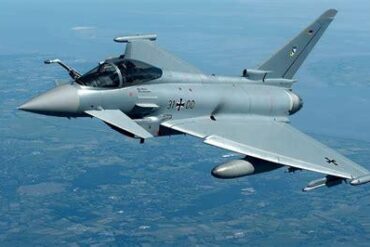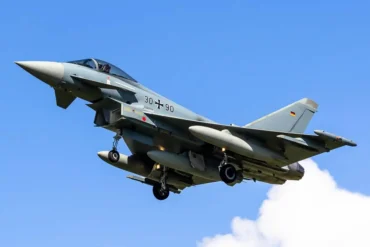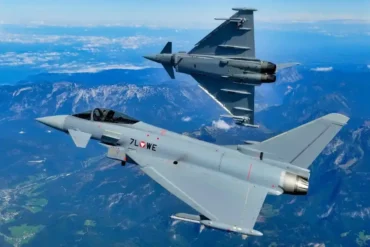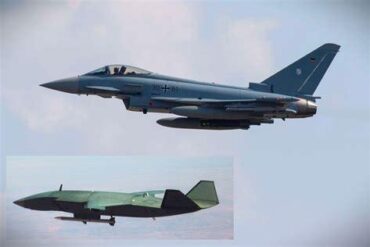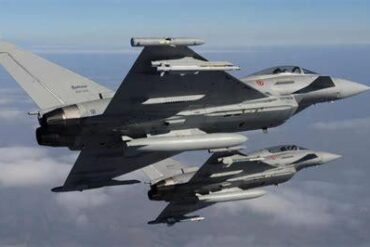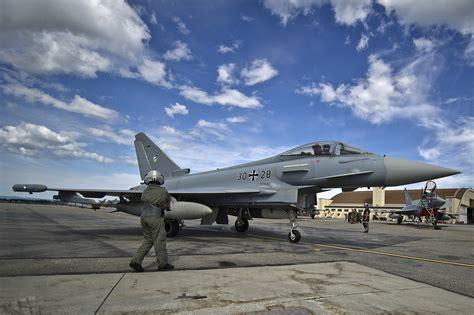
Germany is reportedly preparing to approve the sale of Eurofighter Typhoon jets to Türkiye, marking a dramatic turnaround in a defense saga that has spanned several years. This move, if finalized, would signal a pivotal shift in Berlin’s defense export policy and could redefine power dynamics in NATO’s southern flank. Citing defense sources and high-ranking officials, German newspaper Handelsblatt reported on Thursday that Berlin is ready to lift its longstanding veto against the transaction.
Türkiye has been pressing to modernize its air force since 2022, particularly in the face of growing regional tensions and persistent delays in receiving F-16 fighter jets from the United States. The Eurofighter Typhoon—developed by a multinational consortium including Germany, the United Kingdom, Italy, and Spain—was seen as an optimal alternative. The potential deal reportedly includes 40 aircraft: a mix of older Tranche 1 units from the U.K. and cutting-edge Tranche 4 jets slated for delivery by 2030.
A Political Reversal in Berlin
Germany’s reluctance to export advanced fighter jets to Türkiye had been largely influenced by domestic political dynamics, particularly opposition from members of the former ruling coalition such as the Greens and the Social Democrats. Their concerns centered on human rights issues and regional military tensions, especially in the Eastern Mediterranean. But with a new administration under Chancellor Friedrich Merz taking the reins in late 2024, Berlin appears more aligned with strategic NATO interests.
Sources indicate that intense diplomatic engagement—particularly from the U.K.—played a crucial role in swaying German policy. The U.K. Ministry of Defense formally offered the jets to Ankara in March 2025, but needed unanimous approval from all four consortium nations. The German shift now effectively clears the runway for the export deal to proceed.
Türkiye’s Strategic Imperative
For Türkiye, the Eurofighter acquisition is far more than a technical upgrade; it is a strategic necessity. As the country continues to operate older F-4 Phantoms and legacy F-16s, the prospect of securing 4.5-generation fighters like the Eurofighter becomes essential to maintaining regional air superiority. Turkish President Recep Tayyip Erdogan reaffirmed Türkiye’s commitment to the program during a press briefing following the NATO summit in The Hague, characterizing the talks with Berlin and London as “positive and ongoing.“
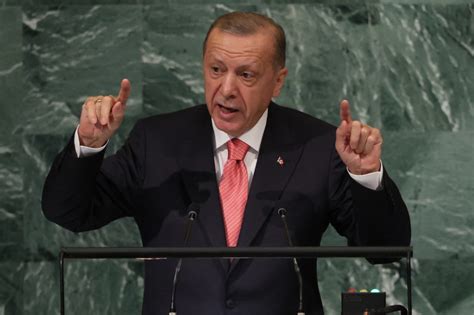
Erdogan also met with Chancellor Merz on the sidelines of the summit. The German leader lauded Türkiye’s role in mediating diplomatic efforts amid the Russia-Ukraine war, suggesting Ankara’s international standing may have favorably influenced Berlin’s evolving stance.
Breakdown of the Proposed Package
According to defense insiders, the Eurofighter package under negotiation includes:
- 20 second-hand Tranche 1 aircraft from the U.K.’s Royal Air Force stock.
- 20 brand-new Tranche 4 jets, representing the latest and most advanced configuration of the Eurofighter platform.
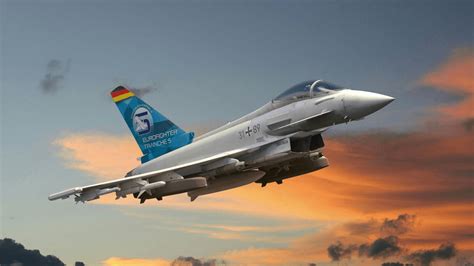
The Tranche 4 variants are expected to feature enhanced avionics, improved radar systems (CAPTOR-E AESA), and extended weapons integration, making them capable of competing with top-tier fighter jets globally. Türkiye has reportedly submitted detailed technical specifications to ensure compatibility with its existing infrastructure and operational doctrines.
A Long Road: Türkiye’s Eurofighter Effort Since 2022
Türkiye’s pursuit of the Eurofighter has been protracted and politically fraught. The timeline of key developments provides a clear view of the evolving situation:
In 2022, Ankara began bilateral discussions with the U.K. and Spain to secure Eurofighters, deliberately bypassing Berlin’s expected opposition. The following year, President Erdogan raised the issue directly with then-Chancellor Olaf Scholz during the U.N. General Assembly in New York, indicating the urgency of Türkiye’s procurement goals.
By November 2024, reports surfaced that Berlin was signaling conditional support for the deal, prompting Türkiye to submit its technical and operational requirements. The U.K. then issued a formal offer in March 2025, which Türkiye began evaluating immediately. Sources confirm that a mixed-fleet approach—combining Tranche 1 and Tranche 4 aircraft—was chosen to balance urgency and long-term capability development.
NATO Dynamics and the Bigger Picture
The Eurofighter deal carries implications that extend far beyond Türkiye’s borders. For NATO, a stronger Turkish Air Force means enhanced deterrence and strike capacity on the alliance’s southeastern perimeter, particularly relevant given ongoing conflicts in the Middle East, the Caucasus, and Eastern Europe. Moreover, as Türkiye remains a critical NATO member, enabling its modernization through European platforms helps reduce Ankara’s military dependence on non-NATO suppliers such as Russia.
The timing of the deal is also telling. Türkiye’s relationship with the United States has been strained by delays in the F-16 procurement, as well as past frictions over the S-400 missile system purchase from Russia. By turning to the Eurofighter consortium, Ankara is sending a clear geopolitical message: it remains committed to NATO interoperability but is unwilling to let political bottlenecks hinder its defense modernization.
Industrial and Technological Spillover
If the deal proceeds, it could bring significant industrial benefits for Türkiye’s defense sector. Turkish Aerospace Industries (TAI) and ASELSAN are expected to engage with Eurofighter consortium members on aspects such as maintenance, training, software integration, and electronic warfare systems. This may lay the groundwork for long-term cooperation in co-development programs, particularly as Türkiye also pushes forward with its TF-X indigenous fighter project.
European defense companies, notably BAE Systems and Airbus, have expressed confidence in Türkiye as a reliable industrial partner. BAE Systems, in particular, has reaffirmed its support for Türkiye’s involvement in the Typhoon ecosystem, describing the country’s operational experience and geographic location as strategic advantages for the Eurofighter platform’s future expansion.
Conclusion: Strategic Realignment in Motion
Germany’s anticipated approval of the Eurofighter sale to Türkiye marks a momentous realignment in European defense cooperation. What once appeared to be a frozen issue is now a fast-moving development with implications for regional stability, NATO cohesion, and transatlantic defense commerce. If the deal is finalized in the coming months, it will signal not only a new era for Türkiye’s air force but also a broader shift in how Europe approaches defense diplomacy in an era of escalating geopolitical complexity.
This decision is more than just a transaction—it’s a strategic endorsement of Türkiye’s evolving defense posture and a recalibration of German foreign policy priorities. As Ankara awaits the formal go-ahead from Berlin, the skies above Europe could soon see a powerful new addition flying under Turkish colors.