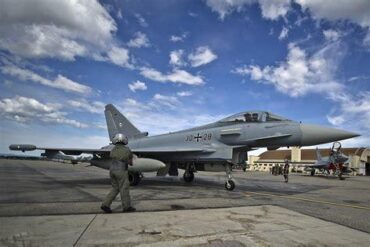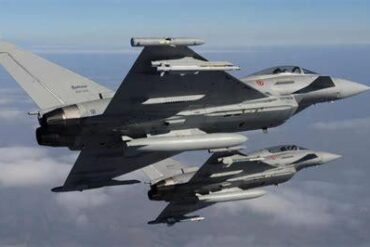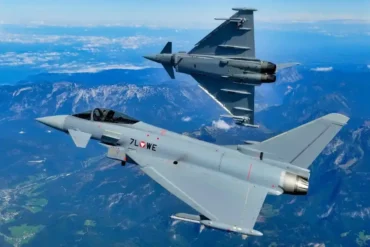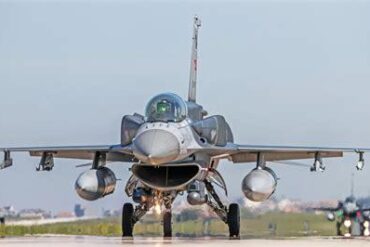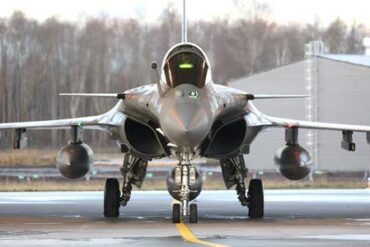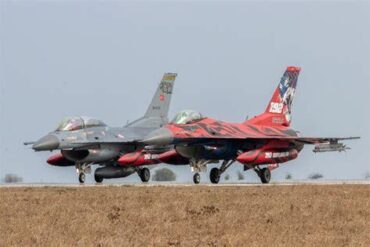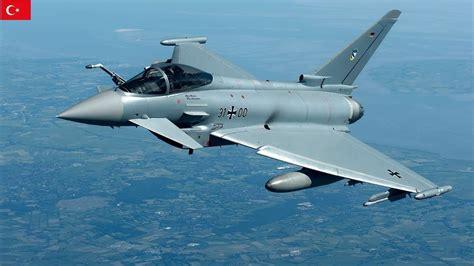
Türkiye’s bid to modernize its air force through the acquisition of Eurofighter Typhoon jets has encountered a significant roadblock: a veto by Germany, one of the core members of the multinational Eurofighter consortium. While the United Kingdom, Italy, and Spain have shown varying degrees of openness to Türkiye’s request for 40 Eurofighter aircraft, Germany’s firm opposition has become a focal point of diplomatic contention, exposing broader political fractures within Europe and shaping the future of Türkiye’s defense strategy.
Origins of the Eurofighter Project and Türkiye’s Strategic Pivot
The Eurofighter Typhoon project traces its origins to the early 1980s, when Europe’s major powers sought autonomy from U.S. defense systems by developing their own multirole combat aircraft. The European Fighter Aircraft (EFA) initiative, officially launched in 1986, brought together the U.K., Germany, Italy, and Spain in a historic defense collaboration. The first test flight occurred in Germany in 1994, and by 2003, deliveries to the German Air Force had commenced. Over time, the aircraft was sold beyond Europe to nations like Saudi Arabia, Kuwait, Qatar, and Oman.
Türkiye’s growing interest in the platform came after tensions with the U.S. over its expulsion from the F-35 fighter jet program, following its purchase of the Russian S-400 air defense system. This left a significant capability gap in Türkiye’s air force modernization efforts. In response, Türkiye pursued multiple avenues — from enhanced cooperation with the U.K. and Italy to accelerating its own indigenous fighter program, KAAN.
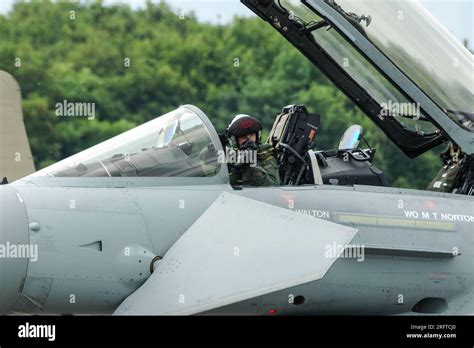
However, despite Türkiye’s intensified negotiations in 2023 and 2024, Germany’s veto blocked any formal progress, effectively stalling the procurement process. This resistance from Berlin, while publicly framed as a values-driven policy, reveals a more layered web of political motivations, regional sensitivities, and domestic lobbying influences.
A Political, Not Just Technical, Veto
Germany’s opposition is not grounded in any technical incompatibility or strategic flaw in the transaction. Rather, it reflects a deeply embedded ideological posture, heavily shaped by Germany’s internal political dynamics and perceptions of Türkiye’s regional and domestic policies. The Scholz-led coalition government, dominated in part by the Green Party, has championed a so-called “values-based foreign policy,” which it uses to justify the halt in arms sales to Ankara.
In practice, this policy has been selectively applied, and Türkiye’s military operations in northern Syria, its posture in the Eastern Mediterranean, tensions with Greece, and concerns about media freedom and opposition rights have all served as rationales for Germany’s reluctance. This diplomatic posture persisted through the Merkel era and has deepened under subsequent administrations.
The situation is further complicated by the transition of the German chancellorship to Friedrich Merz and the Christian Democratic Union (CDU) following the 2025 elections. Yet, despite this shift, the Defense Ministry remains under Social Democratic control due to coalition agreements. This political duality raises uncertainty about which faction truly controls Germany’s arms export policy.
Pressure from Lobbying Groups and Diaspora Dynamics
Germany’s significant Armenian, Greek, and pro-PKK diasporas have long engaged in lobbying efforts against Türkiye, especially within political circles that hold sway over defense and foreign policy. These groups, particularly influential among the Greens and the Left Party, have worked to frame Türkiye’s actions through a highly critical lens.
Their efforts have had tangible effects. By amplifying narratives of authoritarianism, regional aggression, and ethnic oppression, these groups have effectively created an atmosphere in German politics that renders any military cooperation with Türkiye deeply controversial. Public opinion in Germany, already wary of defense exports in general, has been further skewed by strategic perception-building efforts from these lobbies.
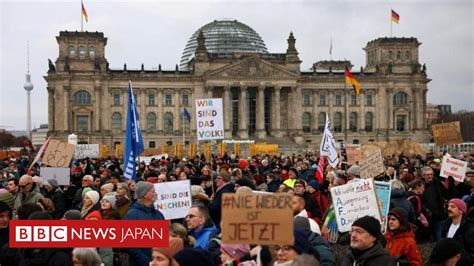
Consortium Fractures and Diplomatic Signaling
Germany’s veto does not only serve as a message to Türkiye—it is also a warning shot to its Eurofighter consortium partners. The U.K., Italy, and Spain all maintain pragmatic and economically beneficial relations with Türkiye, and their readiness to proceed with the deal reflects diverging national interests. Germany’s obstructionism thus acts as a constraint on collective action and underlines its desire to steer the consortium in line with its own geopolitical ethos.
For London and Rome, Türkiye represents a key partner in NATO’s southern flank and an expanding defense market. Germany’s veto challenges this alignment and reveals internal contradictions within the European defense integration project, where political unity is often undermined by national-level ideological disputes.
In diplomatic terms, Germany’s veto is a signal of disapproval, not only of Türkiye’s policies but of its allies’ willingness to look past them. It serves to isolate Türkiye within the consortium and applies pressure on other members to reconsider their own stances.
Türkiye’s Strategic Response: Toward Autonomy
Faced with a blocked pathway to Eurofighter procurement, Türkiye has intensified efforts to develop its own fifth-generation fighter jet, the KAAN. Backed by a strong domestic aerospace industry, including companies like TUSAŞ and ASELSAN, Türkiye is seeking to build an indigenous, fully operational combat aircraft within the next decade.
This strategic pivot is not merely reactive but fits into Türkiye’s broader defense doctrine, which emphasizes sovereignty, resilience, and technological self-sufficiency. Past experiences — from the German Leopard 2 tank spare parts issue to the U.S. CAATSA sanctions — have repeatedly underscored for Türkiye the vulnerabilities of relying on foreign military systems.
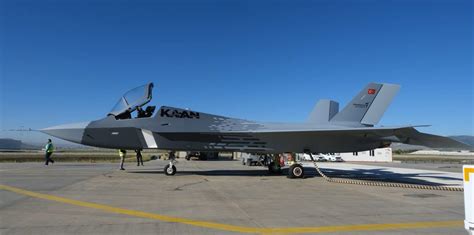
As a result, Germany’s opposition to the Eurofighter deal has only reinforced Türkiye’s trajectory toward defense independence. This is part of a larger reconfiguration of Türkiye’s procurement strategy, marked by investments in unmanned combat aerial vehicles (UCAVs), missile systems, and next-generation radar and avionics.
Implications for NATO and Regional Stability
The tension over the Eurofighter deal reverberates beyond bilateral relations. Within NATO, Türkiye’s estrangement risks undermining alliance cohesion. As one of NATO’s most active members in terms of operational deployments and strategic geography, Türkiye’s exclusion from critical military collaborations raises questions about equitable burden-sharing and alliance solidarity.
Germany’s stance, if perceived as overly moralistic or inconsistent, could drive Türkiye further into alternative defense partnerships, such as increased cooperation with the U.K., Italy, and even non-Western powers like South Korea or Pakistan. Moreover, as regional instability continues in the Middle East, the Caucasus, and the Eastern Mediterranean, isolating Türkiye could yield unintended consequences for Western strategic interests.
Conclusion: Beyond the Aircraft
At its core, Germany’s veto on the Eurofighter sale to Türkiye is not merely about aircraft, but about influence, identity, and ideological direction. It encapsulates the struggle between national interest and value-based diplomacy, between European cohesion and intra-EU divergence.
Türkiye’s assertive posture, its controversial yet strategic choices, and its response to perceived Western double standards are all part of a larger transformation — one where the country is positioning itself as a self-reliant regional power unwilling to compromise on what it sees as its national interests.
Germany, meanwhile, is choosing to stake its position as a moral arbiter within the European defense landscape. Whether this will lead to greater unity or deeper fragmentation within the continent’s security architecture remains to be seen. What is clear, however, is that this veto has already accelerated Türkiye’s departure from traditional dependency models and ushered in a new era of independent capability development and multipolar diplomacy.