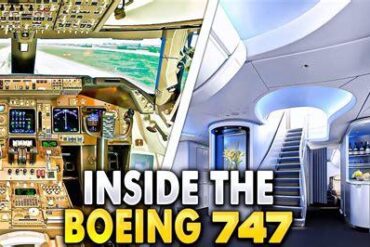
The story of the Boeing 747-100 is not just about an aircraft—it is about a revolution that reshaped global travel, redefined airline economics, and created a symbol so powerful that it became synonymous with aviation itself. Today, that same aircraft—once the pinnacle of engineering ambition—has quietly slipped into a new reality, where its estimated value hovers below $150 million, a striking contrast to its historic prestige.
This dramatic shift is not a simple tale of depreciation. It is a layered narrative involving technological evolution, shifting airline economics, and the relentless march of efficiency that has transformed modern aviation. To understand why the Boeing 747 has reached this point, one must revisit its extraordinary origins and examine how the industry outgrew its most iconic giant.
The Birth of the Jumbo Jet That Changed Aviation Forever
When Boeing began developing the 747 in the mid-1960s, the aviation industry was facing a capacity crisis. Passenger demand was surging, and aircraft like the Boeing 707 were reaching their operational limits. Airlines needed something radically bigger—and they needed it fast.
Enter the 747-100, a bold answer to a challenge posed by Pan Am, which envisioned a future where air travel would become accessible to the masses rather than a luxury reserved for the elite.
The result was nothing short of groundbreaking. The 747-100 introduced a widebody design, twin aisles, and a distinctive upper deck that gave it its unmistakable “hump.” This was not just an aircraft—it was a flying statement of ambition.
With the ability to carry over 350 passengers in a typical configuration, and even more in high-density layouts, the aircraft dramatically lowered the cost per seat. Airlines could now transport more people, more efficiently, across longer distances.
By the time it entered service in 1970, the 747 had already redefined what was possible in commercial aviation.
Engineering Marvel: Inside the Boeing 747-100
The 747-100 was engineered to dominate the skies. Powered by four Pratt & Whitney JT9D turbofan engines, it delivered the thrust required to lift its massive frame across intercontinental distances.
Its specifications still command respect:
- Range of approximately 6,099 miles
- Length exceeding 230 feet
- Wingspan approaching 200 feet
- Passenger capacity reaching up to 452 seats
But the innovation wasn’t limited to raw performance. The aircraft’s upper deck initially served as a luxury lounge, reflecting a time when airlines competed heavily on onboard experience. Passengers could enjoy spacious seating, cocktail bars, and a level of comfort that now feels almost surreal.
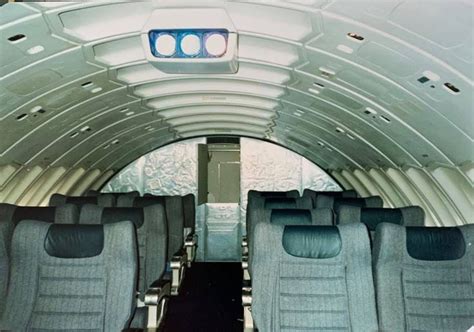
Over time, economics reshaped that vision. Airlines quickly realized that replacing lounges with premium seating generated far more revenue. The upper deck evolved into a business and first-class haven—an early indicator of how profit optimization would eventually redefine aircraft design.
From $25 Million to Modern-Day Reality
When the first 747-100 rolled off the production line in 1969, it carried a price tag of $25 million—a staggering sum at the time. Adjusted for inflation, that equates to roughly $190 million today.
Fast forward to the modern era, and the aircraft’s estimated value—based on the last known data—has fallen to approximately $146.7 million. On paper, that might not seem like a catastrophic drop. But in aviation terms, it represents a profound shift.
To put this into perspective, the later Boeing 747-8 carries a list price exceeding $400 million. Even accounting for typical airline discounts, the gap illustrates just how far the original model has slipped in relative value.
The reasons are not mysterious—they are structural.
The 747-100 is now obsolete in operational terms. Its four engines consume significantly more fuel than modern twin-engine aircraft. Maintenance costs are higher. Spare parts are harder to source. And its passenger configuration no longer aligns with today’s revenue-maximizing cabin strategies.
In short, the aircraft that once democratized air travel has become economically inefficient in a hyper-competitive industry.
Why the Boeing 747-100 Became Economically Outdated
The decline in value is not a reflection of failure—it is the inevitable outcome of progress. Aviation has entered an era where efficiency outweighs grandeur.
Modern aircraft like the Boeing 777X are designed with:
- Fewer engines (typically two instead of four)
- Advanced composite materials
- Lower fuel consumption per seat
- Enhanced range capabilities
These improvements allow airlines to operate long-haul routes with significantly lower costs. In comparison, the 747-100 represents a legacy design philosophy, one that prioritized scale over efficiency.
Additionally, route dynamics have changed. Airlines increasingly favor point-to-point travel rather than hub-and-spoke systems. Smaller, more flexible aircraft can serve these routes more effectively than a massive jumbo jet requiring consistently high load factors.
This shift has reduced the practical need for aircraft like the 747-100, further eroding its market value.
The Golden Age of Jumbo Jet Operators
Despite its current valuation, the 747-100 once ruled the skies with unmatched authority. Major airlines across the globe embraced the aircraft, turning it into a symbol of international travel.
Carriers such as Japan Airlines, Qantas, and United Airlines built extensive fleets around the 747 platform.
Japan Airlines, in particular, pushed the aircraft to its limits. At its peak, it operated more than 65 Boeing 747s, many configured for high-density domestic routes. These flights connected major cities like Tokyo and Sapporo, demonstrating the aircraft’s versatility beyond long-haul international travel.
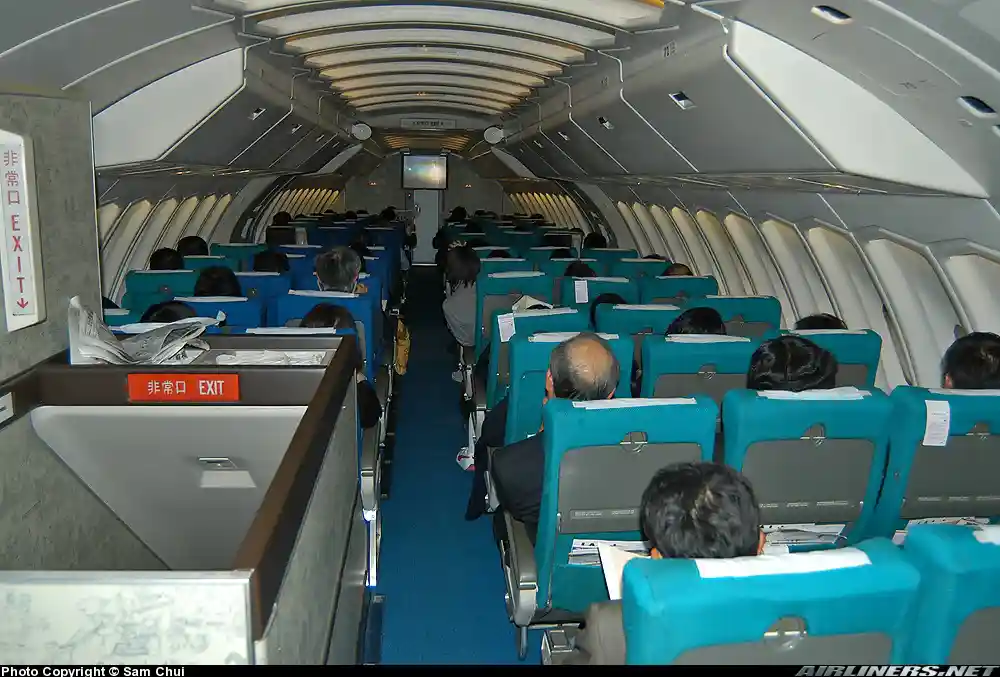
Qantas, meanwhile, used the 747 as the backbone of its long-haul network, especially on the legendary Kangaroo Route linking Australia to Europe. The aircraft became synonymous with global connectivity, bridging continents in a way that had never been done before.
These airlines did not just operate the 747—they built their global identities around it.
A Complex Safety Record in a Turbulent Era
The legacy of the 747 is not without its darker chapters. Over its operational history, the aircraft experienced 64 hull losses, resulting in more than 3,700 fatalities.
Some of the most infamous incidents include:
- The tragic destruction of Pan Am Flight 103 bombing
- The catastrophic runway collision during the Tenerife airport disaster
- The loss of South African Airways Flight 295
While these events significantly impacted public perception, it is crucial to understand that many were caused by external factors, including terrorism and human error, rather than inherent flaws in the aircraft itself.
The 747 operated during a period when aviation safety standards were still evolving. Its long service life meant it was present during some of the industry’s most challenging years.
The Final Passenger Flights and Quiet Retirement
By the late 2010s, the era of the passenger 747 was drawing to a close. Airlines began retiring their fleets, replacing them with more efficient aircraft.
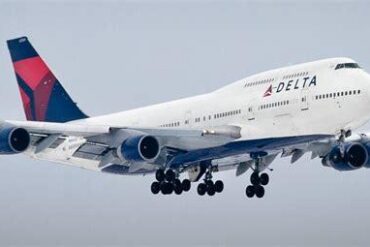
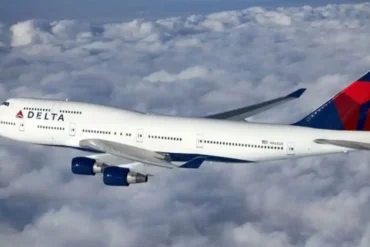
One of the most symbolic moments came when Delta Air Lines operated its final 747 passenger flight in December 2017. The aircraft, registered as N666US, completed a farewell journey that celebrated decades of service.
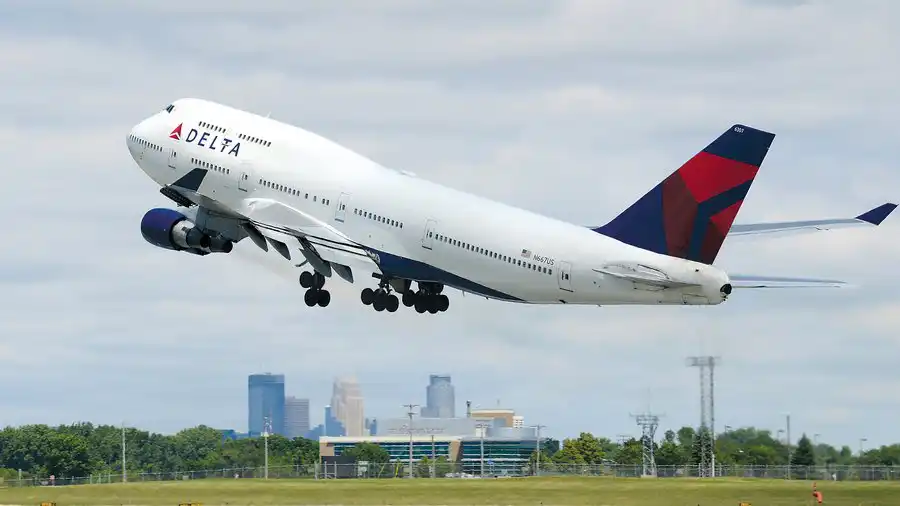
The retirement was more than operational—it was emotional. For pilots, crew, and passengers alike, the 747 represented a golden age of aviation, one defined by scale, elegance, and ambition.
Today, only a handful of airlines—including Lufthansa, Air China, and Korean Air—continue to operate the aircraft in limited passenger roles.
The End of Production and the Rise of New Giants
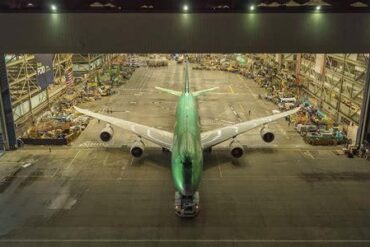
In 2023, Boeing officially ended production of the 747, closing a chapter that spanned more than half a century. A total of 1,574 aircraft were built across all variants—a testament to its enduring impact.
The aircraft’s spiritual successor is not a direct replacement but a philosophical evolution. The aviation industry has shifted toward aircraft like the Airbus A380 and the Boeing 777X, each representing different interpretations of high-capacity travel.
The A380 embraced the 747’s legacy of scale, introducing a full double-deck design. Meanwhile, the 777X focuses on efficiency, leveraging advanced aerodynamics and twin-engine performance.
Neither, however, has fully replicated the cultural impact of the 747.
Why the Boeing 747-100 Still Matters Today
Despite its declining value, the 747-100 remains invaluable in a different sense. It represents a turning point in aviation history—a moment when air travel transitioned from exclusivity to accessibility.
Its influence can still be seen in:
- Modern widebody aircraft layouts
- Long-haul route planning
- Airline revenue models
- Passenger expectations for comfort and space
More importantly, it redefined what people believed was possible. The idea of boarding a massive aircraft and crossing oceans in comfort was once extraordinary. Today, it is routine—thanks largely to the groundwork laid by the 747.
A Legacy That Outlives Its Market Value
The fact that a Boeing 747-100 is now valued below $150 million is not a sign of decline—it is a reflection of how far aviation has progressed.
Aircraft are tools, and tools evolve. What remains constant is the legacy they leave behind.
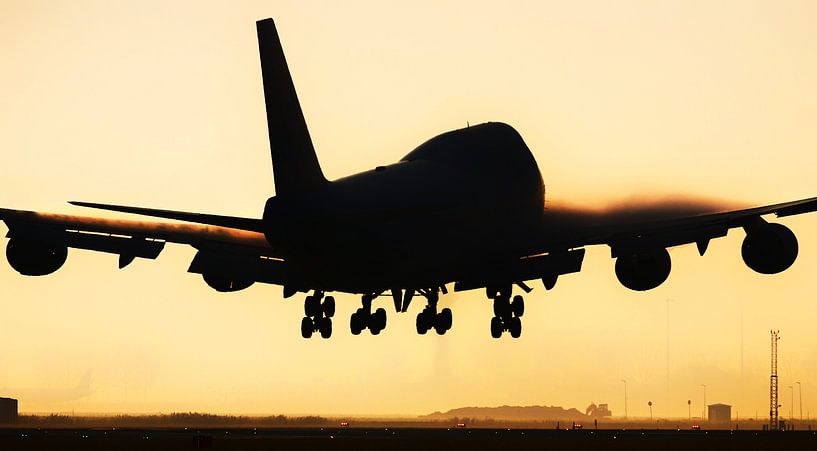
The 747’s legacy is not measured in dollars but in impact. It opened the skies to millions, connected distant continents, and became an enduring symbol of human ingenuity.
Even as newer aircraft take its place, the “Queen of the Skies” continues to hold a unique position—one that no balance sheet can fully capture.
And that is why, despite its reduced market price, the Boeing 747-100 remains one of the most valuable icons in aviation history.