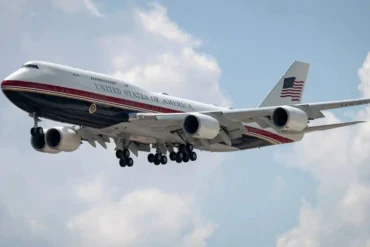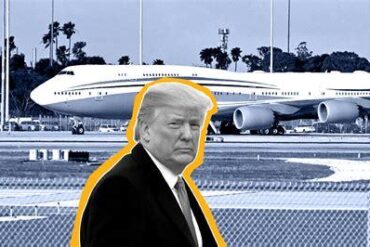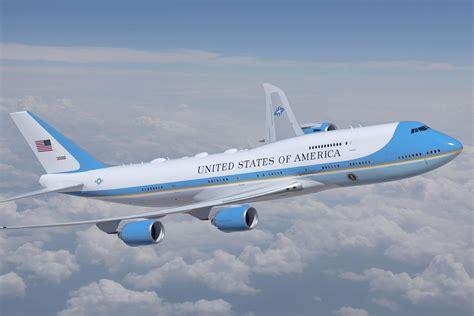
President Donald Trump’s decision to return from the NATO summit aboard one of the long-serving VC-25A Air Force One aircraft instead of the newly acquired Boeing 747-8 has drawn significant attention after reports indicated that the U.S. Secret Service recommended the change for security reasons. Although Trump publicly described the decision as being made “for old time’s sake,” multiple reports suggest the aircraft swap was driven by concerns that the interim presidential jet lacks several of the critical defensive systems found aboard the existing Air Force One fleet.
The controversy centers on the former Qatari government Boeing 747-8, which has been undergoing modifications after its transfer to the U.S. government. While the aircraft has received extensive upgrades to support presidential operations, officials familiar with the conversion reportedly stated that it still does not offer the same level of protection provided by the current VC-25A aircraft. That distinction becomes particularly important during international travel, especially when presidential flights operate near regions experiencing military tensions or elevated security threats.
The existing Air Force One fleet has spent decades evolving into one of the world’s most secure aircraft. Beyond serving as airborne transportation, each aircraft functions as a highly protected command center capable of supporting the President during national emergencies. These capabilities extend well beyond luxury interiors, encompassing encrypted communications, hardened electronic systems, sophisticated radar protection, and highly classified defensive technologies designed specifically for presidential missions.
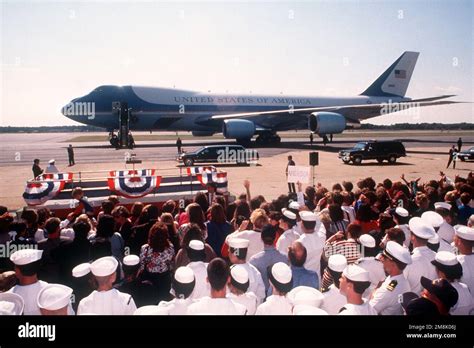
Why The Secret Service Preferred The Original Air Force One
According to officials briefed on the aircraft’s conversion program, the interim 747-8 has not yet received every security enhancement installed aboard the two aging VC-25A aircraft currently serving as Air Force One. Among the most notable concerns are reports that the aircraft lacks certain advanced anti-missile defense systems, capabilities considered essential whenever the President travels internationally.
These defensive technologies remain highly classified, but aviation experts have long acknowledged that Air Force One incorporates sophisticated countermeasure systems capable of detecting and responding to incoming missile threats. Such systems are viewed as indispensable because the aircraft routinely transports not only the President but also senior government officials, military advisors, communications staff, journalists, and security personnel.
The reported recommendation from the Secret Service reflects the agency’s long-standing responsibility to minimize every identifiable security risk. Even if an aircraft satisfies basic transportation requirements, presidential travel demands far higher standards than those applied to conventional military aircraft. Every mission undergoes extensive planning, with aircraft capabilities representing only one element of a broader security framework.
The Interim Boeing 747-8 Faces Questions Over Its Retrofit
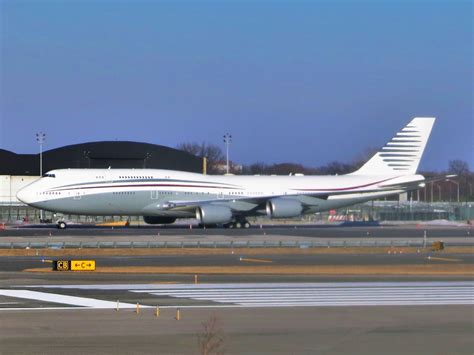
The former Qatari Boeing 747-8 was accepted by the Department of Defense before being assigned for extensive conversion work under the supervision of the U.S. Air Force. Defense contractor L3Harris was selected to perform much of the aircraft’s modification program, transforming the luxury airliner into an aircraft capable of supporting presidential operations.
Despite those upgrades, lawmakers repeatedly questioned whether the compressed timeline would allow engineers to install every required communications, defensive, and operational system. Initial estimates suggested a complete presidential conversion could require up to four years while costing well over $1 billion, illustrating the extraordinary complexity involved.
Unlike commercial VIP aircraft, presidential transports require completely redesigned electrical systems, secure communications infrastructure, military-grade redundancy, electromagnetic protection, and classified defense equipment. Many of these modifications require extensive structural changes rather than simple equipment installation, making accelerated schedules particularly challenging.
International Flights Demand Maximum Defensive Capability
Security analysts noted that the timing of Trump’s overseas travel heightened concerns regarding the aircraft’s defensive readiness. Flights departing from regions experiencing heightened geopolitical tensions naturally receive greater scrutiny because threat assessments differ substantially from routine domestic operations.
Several political observers publicly questioned the President’s explanation for flying separately from the interim aircraft. While Trump stated the newer jet would remain behind so military personnel could tour it, commentators suggested the more plausible explanation involved operational security rather than public relations.
Former officials have similarly indicated that international presidential travel requires every available defensive capability. Even if intelligence agencies assess direct threats as unlikely, presidential aviation doctrine generally favors maximum protection rather than acceptable minimum standards.
This conservative approach explains why Air Force One missions often involve multiple support aircraft, fighter escort planning when necessary, advance logistics teams, secure communications networks, and extensive coordination among military and intelligence agencies before every overseas trip.
Lawmakers Previously Warned Against Rushing The Conversion
Concerns surrounding the interim aircraft did not emerge only after the NATO summit. Members of Congress previously expressed reservations that political pressure to deliver a replacement aircraft quickly could result in compromises during the conversion process.
Senator Tammy Duckworth was among those urging caution, warning against cutting corners involving operational security. Her concerns reflected broader questions surrounding whether the aircraft could realistically receive every classified modification within an accelerated schedule while still meeting the demanding standards traditionally associated with Air Force One.
Because many presidential systems remain classified, government agencies have declined to discuss specific capabilities publicly. That limited transparency has fueled ongoing speculation regarding exactly which features have—or have not—been installed aboard the interim aircraft.
Former Air Force Officials Suggest Time Was The Biggest Obstacle
Perhaps the strongest indication that the aircraft remains a temporary solution came from former Air Force Secretary Frank Kendall, who reportedly stated that there simply was not enough time to incorporate every traditional Air Force One modification before placing the aircraft into service.
According to Kendall, the aircraft likely lacks portions of the full suite of security, communications, and mission support systems carried aboard the current VC-25A fleet. His comments align with previous Air Force statements acknowledging that engineers made tradeoffs involving “less commonly used mission sets” during the retrofit process, although officials declined to identify precisely which capabilities were omitted.
Those remarks reinforce the reality that presidential aircraft are among the most technologically sophisticated airplanes ever constructed. Their value lies not only in transporting the President but also in ensuring uninterrupted command capability under virtually any circumstance.
The Interim Air Force One Remains A Bridge Rather Than A Permanent Replacement
The controversy ultimately highlights the enormous challenge of replacing one of the world’s most specialized aircraft. While the modified Boeing 747-8 represents a significant upgrade over its original VIP configuration, it appears to remain an interim solution rather than a full successor to the existing Air Force One fleet.
Until the next-generation presidential aircraft enter full operational service, the decades-old VC-25A fleet continues to provide the benchmark for presidential aviation security. Their unmatched combination of hardened communications, classified defensive technology, and mission flexibility explains why, despite their age, they remain the preferred choice whenever maximum protection is required.
The reported recommendation from the Secret Service illustrates a longstanding principle of presidential security: when uncertainty exists regarding protective capability, agencies overwhelmingly favor the platform with the most proven and comprehensive defense systems. In the demanding environment of presidential air travel, reliability and survivability remain more important than introducing a newer aircraft before every critical capability has been fully integrated.