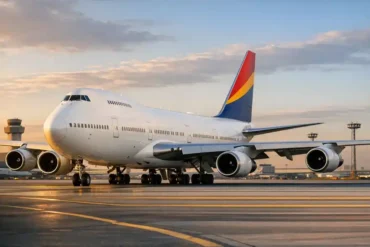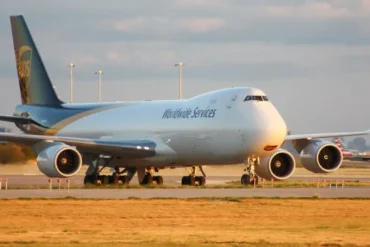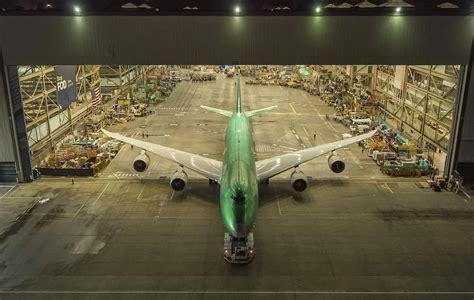
The Boeing 747-100, once hailed as the queen of the skies, has now become a rare and nearly forgotten relic of aviation history. Despite being one of the most significant breakthroughs in commercial air travel, its market value has plummeted—now estimated at less than $150 million. This article dives deep into the 747-100’s legacy, technological milestones, and the reasons behind its declining valuation.
The Birth of the Jumbo Jet Era
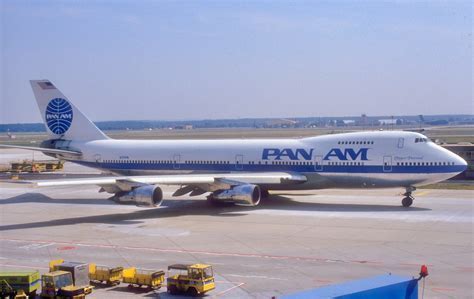
In the mid-1960s, aviation demand was soaring. Airlines sought an aircraft that could transport more passengers at lower costs. Responding to Pan American World Airways’ (Pan Am) request, Boeing initiated the design of a larger, long-range jetliner. The result was the Boeing 747-100, the first-ever widebody aircraft with a twin-aisle cabin and an upper deck.
The prototype rolled out in 1968, and on January 22, 1970, Pan Am operated the maiden commercial flight from New York JFK to London Heathrow, marking the beginning of a revolution in global air travel.
Game-Changing Design and Specifications
At 231 feet long with a wingspan of 195 feet, the 747-100 dwarfed any aircraft of its time. Powered by four Pratt & Whitney JT9D-3A turbofan engines, it carried up to 452 passengers in an all-economy configuration. Its innovative hump-backed upper deck gave it a distinct silhouette, initially intended as a luxurious lounge space.
Key Specs of the Boeing 747-100:
- Range: 6,099 miles
- Passenger Capacity: 366 (3-class), up to 452 (economy)
- Cruise Speed: Mach 0.84 (around 575 mph)
- Engines: 4 × Pratt & Whitney JT9D-3A
Its unmatched size and long-haul capability made international travel more affordable and accessible, ushering in an era where crossing oceans became routine.
From Sky Titan to Market Relic
When the 747-100 debuted, it carried a $25 million price tag—a staggering sum in the 1970s. Adjusted for inflation, that equates to around $190 million today. Yet recent data from Aero Corner suggests that in 2019, a 747-100 was valued at only $146.7 million, a figure that has likely declined further due to obsolescence and lack of service demand.
Why the depreciation? Unlike newer jets, the 747-100:
- Lacks fuel efficiency
- Does not meet modern noise regulations
- Requires high maintenance costs
- Is no longer in passenger service
In short, it has become a collector’s piece, rather than a commercial asset.
The Decline in Numbers and Usage
Boeing manufactured only 167 747-100s, with most retired, scrapped, or repurposed for non-commercial uses. Today, very few remain intact—let alone operational. Major operators like United Airlines, American Airlines, Air China, Qantas, and Iran Air have long phased out this variant.
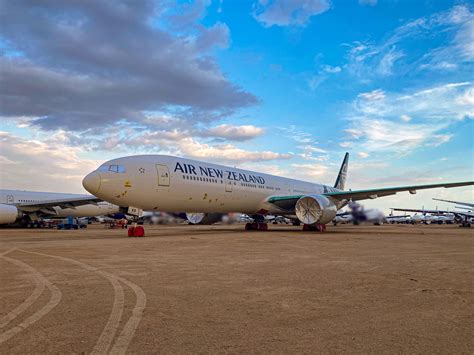
A handful of airframes are preserved in museums or serve as static displays. Others have been dismantled for parts or stored in desert graveyards, where they await uncertain fates.
The Rise of Later 747 Variants
Though the 747-100 laid the groundwork, Boeing refined the model over decades. Below is a breakdown of subsequent passenger variants:
| Variant | Delivered Units |
|---|---|
| 747-100 | 168 |
| 747-200 | 229 |
| 747-300 | 56 |
| 747-400 | 442 |
| 747SP | 45 |
| 747-8 | 48 |
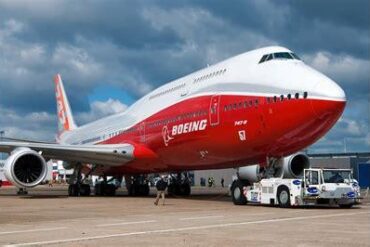
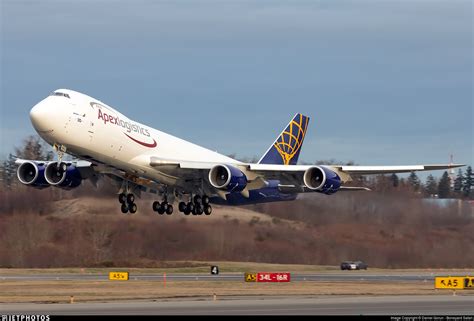
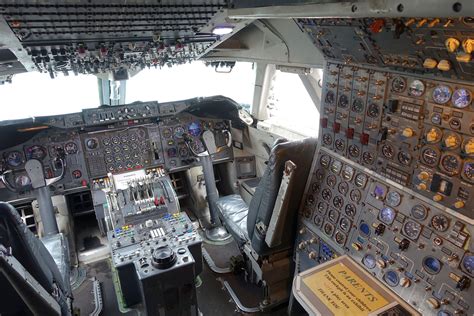
The 747-400 became the most popular and enduring model. Its extended range, better fuel economy, and modernized cockpit made it a staple for global long-haul routes until being gradually replaced by more efficient twin-engine aircraft.
Safety Record and Notorious Incidents
Despite its success, the 747 family—particularly the earlier variants—was involved in several tragic accidents. The 747-100, due to its long service life and operational span during a turbulent geopolitical era, was a part of some of aviation’s darkest chapters:
- Pan Am Flight 103 (1988): Bombed over Lockerbie, Scotland – 270 fatalities
- Tenerife Disaster (1977): Runway collision between two 747s – 583 fatalities
- South African Airways Flight 295 (1987): Crashed into the Indian Ocean – 159 fatalities
These events, while not rooted in mechanical faults of the aircraft, contributed to public perception challenges and regulatory scrutiny.
Major Operators and Their Fleet Legacies
Some airlines built their identities around the 747. Here’s a look at the most influential operators:
Japan Airlines (JAL)
At its peak, JAL operated over 65 747s, including 747-100s in high-density domestic layouts. Their retirement in 2011 marked the end of an era for Japanese aviation.
Qantas
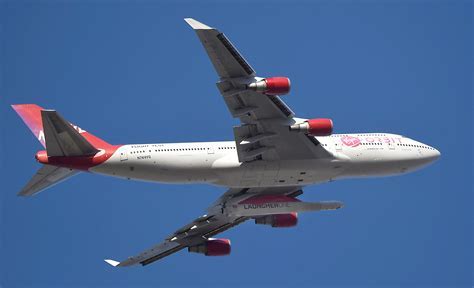
Australia’s flag carrier used the 747 for nearly five decades, linking Australia to the U.S., Europe, and Asia. It bid farewell to the aircraft in 2020 with ceremonial flights and emotional tributes.
Pan Am
The 747’s launch customer, Pan Am’s sky-blue livery became synonymous with international travel in the jet age. Pan Am embraced both the -100 and -200 variants until its eventual collapse in 1991.
Where Can You Still See a 747-100 Today?
Although virtually extinct from active duty, aviation enthusiasts can still spot preserved 747-100s at select locations:
- Delta Flight Museum, Atlanta (ATL): Hosts a retired Delta 747-400, not -100, but representative of the lineage.
- Pima Air & Space Museum, Tucson, Arizona: Houses one of the earliest 747-100s.
- The Museum of Flight, Seattle: Features a prototype 747 in classic Boeing colors.
These static displays serve as educational artifacts and tributes to the aircraft’s once-global presence.
A Legacy Etched in Aviation History
Even as the last 747 rolled off Boeing’s Everett assembly line in January 2023, the aircraft’s legacy remains unparalleled. It changed air travel forever—democratizing intercontinental flight, reshaping airport infrastructure, and inspiring future widebodies like the Airbus A380 and the Boeing 777X.
The 747-100 in particular was the spark that lit the revolution. While it no longer holds monetary value in today’s aviation market, its cultural and historical worth is immense. No dollar figure can truly quantify what the first jumbo jet meant to millions of passengers and the airline industry.
Final Thoughts: The Price of Greatness
With a current valuation under $150 million, the Boeing 747-100 stands as a poignant reminder that even revolutionary machines can lose their commercial worth. But its legacy—etched in aviation history books, runways, and the collective memory of an era—is priceless.
As newer aircraft take to the skies with smarter engines and greater efficiencies, they do so on the wings of the giant that once ruled the clouds.