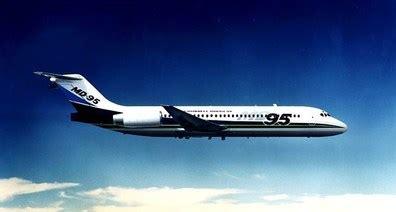
In the early 1990s, as airlines recalibrated for a post–Cold War marketplace and fuel efficiency began to eclipse brute size as the industry’s dominant obsession, McDonnell Douglas set its sights on a deceptively simple goal: build the perfect 100-seat jet. The result was the McDonnell Douglas MD-95, an aircraft conceived not as a revolution, but as a precise instrument—purpose-built for short-haul, high-frequency routes that larger narrowbodies were beginning to outgrow in cost efficiency.
It was not designed to compete head-to-head with the Boeing 737 or the Airbus A320. Instead, the MD-95 targeted a gap: the space between aging DC-9 fleets and oversized mainline jets. The concept was elegant. Keep it lean. Keep it efficient. Modernize the systems. Refine the engines. Deliver a workhorse.
By the time it reached the runway, however, the aviation industry had changed dramatically. A merger would erase its original identity. Market forces would limit its sales. And yet, the airplane refused to vanish. Today, history remembers the MD-95 by another name: the Boeing 717.
The Strategic Vision Behind the MD-95
The MD-95 did not emerge from thin air. Its DNA stretched back to the early 1960s, to the Douglas DC-9, one of the most successful short-haul jets ever built. The DC-9 family had evolved into the MD-80 and MD-90, stretching capacity and refining aerodynamics. But as the fuselage grew longer and engines grew larger, something subtle happened: the sweet spot of the original 100-seat market began to drift away.
In the early 1980s, McDonnell Douglas studied what was informally referred to as the “DC-9-90,” an attempt to modernize the smaller end of the family. That concept stalled in favor of the MD-87. Yet the underlying market logic remained sound. Airlines still needed a right-sized aircraft—something larger than a regional jet, but smaller and more economical than a 737-700.
By 1992, the project resurfaced under internal designations such as the MD-87-105 before being publicly unveiled as the MD-95 at the Paris Air Show. This was positioned explicitly as a next-generation replacement for aging DC-9-30s, aircraft that had proven nearly indestructible but were no longer competitive in fuel burn or noise compliance.
The strategy was conservative yet calculated. Rather than gamble on radical aerodynamics or untested materials, McDonnell Douglas focused on modern avionics, improved systems integration, and, critically, a new engine.
The Rolls-Royce BR715: A Quiet Power Revolution
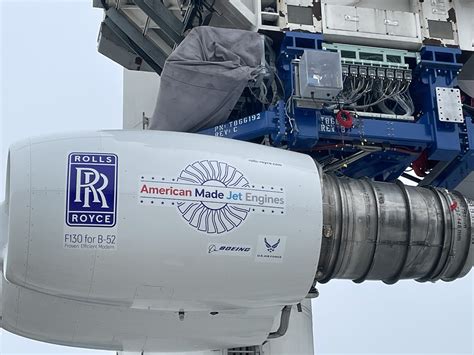
The heart of the MD-95 was the Rolls-Royce BR715, a high-bypass turbofan developed specifically for the aircraft. It represented a decisive break from earlier DC-9 and MD-80 powerplants. The BR715 promised lower fuel consumption, reduced noise footprint, and improved reliability.
Noise mattered enormously in the 1990s. Airports were tightening restrictions. Communities were increasingly vocal. A quieter engine was not just an operational advantage—it was political insurance.
ValuJet, the ambitious low-cost carrier that would later become AirTran Airways, saw the opportunity. In October 1995, the airline placed an order for 50 aircraft, with options for another 50. The deal was valued at over $1 billion and gave the program its commercial lifeline.
The MD-95 had beaten competitors including the Airbus A319 and Boeing 737-600. Airbus reportedly hesitated to offer certain load-factor guarantees. McDonnell Douglas seized the moment.
Yet even with a launch customer, momentum remained fragile. Orders beyond ValuJet were scarce. Production had not yet scaled when a seismic shift reshaped the aerospace landscape.
The 1997 Merger That Changed Everything
On August 1, 1997, Boeing completed its merger with McDonnell Douglas. What had begun as a consolidation of two aerospace giants became one of the defining corporate transactions of the 20th century.
Officially, McDonnell Douglas became a Boeing subsidiary. In practical terms, Boeing’s identity dominated the new entity. Its commercial portfolio—anchored by the 737, 747, 767, and 777—remained the flagship lineup. McDonnell Douglas’ strongest contributions lay in defense programs such as the F-15 Eagle, F/A-18 Hornet, and AH-64 Apache.
The MD-95 entered Boeing’s catalog at an awkward moment. It was neither a legacy 737 nor an emerging widebody. It occupied a niche Boeing had never fully prioritized.
Rebranding followed swiftly. The MD-95 became the Boeing 717, a name that had once been reserved for a military derivative of the 707. It was the only McDonnell Douglas commercial aircraft to survive the merger in active production.
Enter the Boeing 717: A Reborn Identity
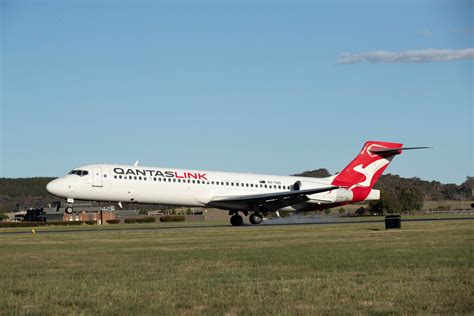
The newly christened Boeing 717 took its first flight in 1998. Certification followed quickly, and the first delivery to AirTran Airways occurred in 1999. Operationally, the aircraft proved exactly what its designers had intended: efficient, reliable, and perfectly suited for dense short-haul routes.
Pilots appreciated the advanced cockpit. Maintenance crews valued the aircraft’s rugged systems. Airlines noted its fast turnaround capability—an essential metric for profitability in high-cycle operations.
Yet internal dynamics complicated its future. The 717 competed indirectly with Boeing’s own 737-600, a model that was already struggling to find buyers. Marketing resources favored the 737 family. The 717 was positioned carefully, almost cautiously, as a specialist rather than a mainstream solution.
Then came September 11, 2001.
The post-9/11 downturn devastated airline finances. Fleet plans were frozen. Expansion halted. Orders evaporated across the industry. For a niche aircraft with limited backlog, the shock was profound.
A Short Production Run, A Long Operational Life
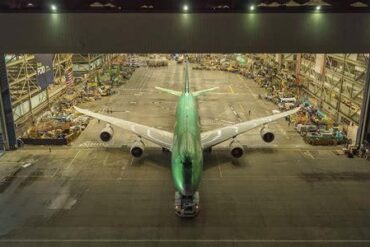
Production of the Boeing 717 ended in 2006 after 156 aircraft had been built. By industry standards, this was modest. Compared to thousands of 737s or A320s, it was a footnote.
But production numbers tell only part of the story.
In service, the 717 developed a reputation that bordered on affectionate. Airlines that operated it tended to operate it hard. The aircraft excelled in environments demanding multiple daily cycles—short hops, quick turns, minimal ground time.
AirTran Airways became its primary operator through the 2000s. When Southwest Airlines acquired AirTran, it faced a fleet philosophy dilemma. Southwest standardized exclusively on the 737. The 717 did not fit.
Rather than absorb it, Southwest arranged for Delta Air Lines to take over the fleet.
Delta Air Lines and the 717 Renaissance
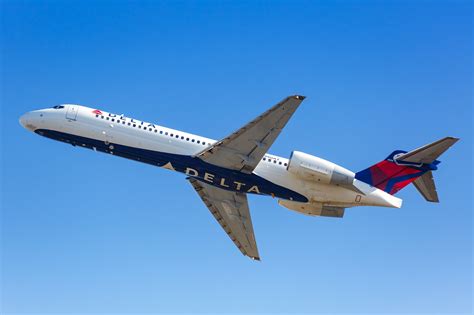
Delta’s first Boeing 717 flight took place in October 2013. For Delta, the aircraft was not a misfit—it was a strategic solution. The airline was phasing out 50-seat regional jets, which had become economically inefficient due to fuel prices and pilot scope clauses.
The 717 offered roughly 110 seats—ideal for upgauging routes without overwhelming demand. It retained excellent short-field performance and could thrive on tightly scheduled domestic networks.
As of early 2026, 91 Boeing 717s remain active, with Delta operating the overwhelming majority. The aircraft became particularly common at Atlanta, Delta’s largest hub, where high-frequency domestic flying defines the operation.
Passengers often do not notice it. There is no glamorous branding campaign. No marketing mythology. The 717 simply works.
Hawaiian Airlines and the Interisland Specialist
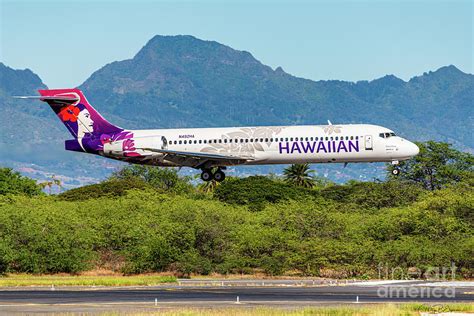
While Delta dominates the continental United States, Hawaiian Airlines carved out a distinct second life for the 717 in the Pacific. Operating between islands such as Oahu, Maui, Kauai, and the Big Island requires an aircraft optimized for extremely high cycle counts.
Flights are short—sometimes under 30 minutes. Landings and takeoffs accumulate rapidly. Structural durability matters more than long-haul range.
The Boeing 717’s lineage from the DC-9 family proved advantageous. Its robust airframe handled repeated pressurization cycles gracefully. Its performance on short runways aligned perfectly with island operations.
Hawaiian maintains a fleet of 19 Boeing 717s dedicated to this role. In that environment, the aircraft feels less forgotten and more indispensable.
Why the Boeing 717 Never Became a Bestseller
The reasons behind the 717’s limited sales are complex but interconnected.
Timing was brutal. The merger shifted corporate priorities. Internal competition with the 737 diluted marketing focus. The post-9/11 downturn shrank demand precisely when the program needed expansion.
Additionally, the 100-seat market itself evolved. Regional jets grew larger. The Embraer E-Jet family entered service in the mid-2000s, offering similar capacity with lighter structures and strong economics. Airbus later introduced the A220, a clean-sheet design optimized for exactly the niche the 717 once occupied.
In hindsight, the 717 sat at an inflection point. It was modern, but not revolutionary. Efficient, but not transformative. It arrived just before the industry redefined what “right-sized” truly meant.
The Airbus A220 and the Succession Question
If the MD-95 was a refined descendant of the DC-9, the Airbus A220 represents the clean-sheet successor to the 100–130 seat market. Originally developed as the Bombardier CSeries, the A220 combines advanced aerodynamics, composite materials, and next-generation Pratt & Whitney geared turbofan engines.
Delta has already begun integrating A220s into its fleet, signaling a gradual replacement path for the 717. The A220 offers longer range, superior fuel burn, and greater cabin flexibility while preserving the economics of high-frequency flying.
In Hawaii, replacement decisions remain open. Alaska Air Group, Hawaiian’s parent company, has suggested 737 variants could eventually assume the role. Yet cycle-heavy interisland flying may favor aircraft closer in size and mission profile to the 717.
The Embraer E2 family also occupies this competitive space, reflecting how the niche once defined by the MD-95 now attracts multiple specialized designs.
The Legacy of the MD-95 and Boeing 717
The story of the McDonnell Douglas MD-95, reborn as the Boeing 717, is not one of failure. It is a story of timing, corporate transformation, and market evolution.
It proved that a carefully optimized 100-seat jet could deliver exceptional reliability and operational efficiency. It validated the Rolls-Royce BR715 engine in commercial service. It bridged the lineage from the original DC-9 into the 21st century.
Its production run was short. Its presence in popular aviation culture is minimal. Yet in Atlanta and Honolulu, its engines still hum daily, carrying passengers who may never realize they are flying on one of the last descendants of a 1960s design philosophy.
Aviation history tends to celebrate giants—the 747, the 777, the A380. The Boeing 717 occupies a quieter chapter. It did not reshape global travel. It did not dominate order books.
But it endured.
And in an industry where survival often defines success, that endurance may be its most compelling achievement.