Canada’s modern dependence on foreign fighter jets did not begin with the F-35 debate, nor did it emerge from a lack of talent or ambition. It began with a single decision that still echoes through Canadian politics, industry, and national identity. Long before stealth coatings and sensor fusion became buzzwords, Canada was already building a fighter jet so advanced it frightened allies, confused enemies, and unsettled its own government.
The Avro Arrow was not merely an aircraft. It was a statement of intent. It declared that Canada could design, build, and deploy a world-leading interceptor without permission or patronage. When it was canceled, the shock was not just economic or technological. It was psychological. A country that had briefly touched aerospace greatness stepped back into dependence, and it has never quite escaped the shadow of that retreat.
Today, as Ottawa weighs whether to complete its purchase of American-made F-35s under intense U.S. pressure, the Arrow’s ghost has returned with uncomfortable clarity. The questions are no longer academic. Was the Arrow truly obsolete? Was it unaffordable? Or was it quietly strangled by geopolitics, alliance politics, and fear of Canadian independence in the skies?
The Cold War context matters because the Arrow was born into urgency, not luxury. In the early 1950s, Canada occupied a uniquely dangerous position on the world map. Soviet bombers crossing the Arctic would reach Canadian airspace before anywhere else in North America. Detection was one problem. Interception was another entirely. The Royal Canadian Air Force understood that warning alone meant nothing without an aircraft capable of climbing faster, flying higher, and hitting harder than anything the Soviets could throw westward.
Existing fighters were simply not up to the task. The CF-100 Canuck, though reliable and proudly Canadian, had reached the limits of its design. No amount of incremental improvement could turn it into the kind of interceptor required to meet a Mach-era threat. The Air Force needed something radical, not evolutionary. That realization led to Specification AIR 7-3, one of the most demanding fighter requirements ever issued by a Western air force.
The numbers were audacious. Mach 1.5 at 50,000 feet within five minutes of takeoff. A combat radius sufficient to defend vast northern approaches. Rapid turnaround times that assumed continuous alert duty. Short runway capability suitable for Canada’s dispersed bases. When Canada surveyed foreign designs, the conclusion was blunt: nothing existed that could do the job. If the aircraft was to exist at all, Canada would have to invent it.
Avro Canada was the obvious choice, though even that decision carried risk. The company had an impressive pedigree, having produced wartime legends like the Lancaster bomber and postwar breakthroughs such as the CF-100 and the C-102 Jetliner. Yet the Arrow would be something else entirely. It demanded not just manufacturing skill but scientific courage. Aerodynamics at the edge of known theory. Materials that pushed metallurgy forward. Electronics that blurred the line between pilot and machine.
From the beginning, the Arrow program behaved like a moonshot before the Moon became fashionable. Engineers developed a fly-by-wire system decades ahead of its time, replacing mechanical linkages with electronic signals to control flight surfaces. They integrated a real-time navigational computer when most aircraft still relied on analog instruments and human calculation. The airframe itself used advanced alloys to withstand heat and stress at sustained supersonic speeds.
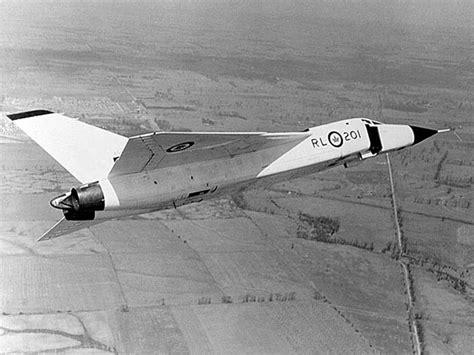
The aircraft’s size shocked observers. At nearly 78 feet long, the Arrow was larger than many fighters that would follow, including the later F-4 Phantom. Its delta wing was not aesthetic bravado but aerodynamic necessity, optimized for high-speed stability and climb performance. Everything about the aircraft communicated purpose. It was not designed to dogfight. It was designed to sprint upward, intercept bombers, fire, and disappear back into the cold.
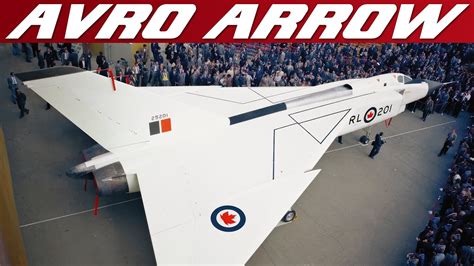
The Arrow’s first public rollout on October 4, 1957 should have been a triumph. Instead, it became a footnote to history when the Soviet Union launched Sputnik on the same day. The psychological effect of Sputnik cannot be overstated. Overnight, the strategic conversation shifted from bombers to missiles. The Arrow was suddenly being judged not against Soviet aircraft, but against the idea of obsolescence itself.
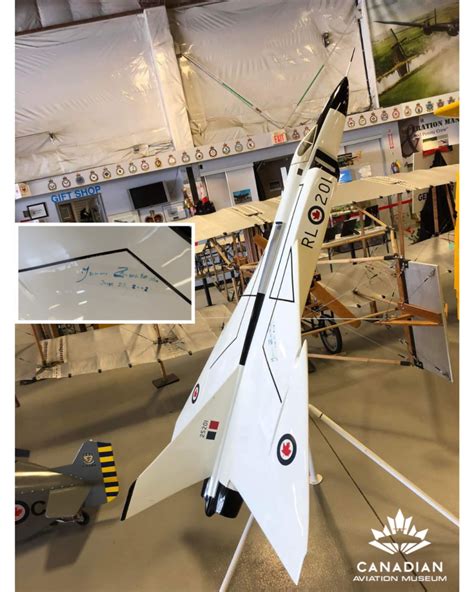
Yet the aircraft refused to cooperate with its critics. When it flew on March 25, 1958, piloted by Janusz Żurakowski, it performed magnificently. By its third flight, it was already supersonic. Test pilots praised its handling. Engineers fixed early landing gear issues quickly. By early 1959, the Arrow had effectively completed its test program and was ready for operational evaluation.
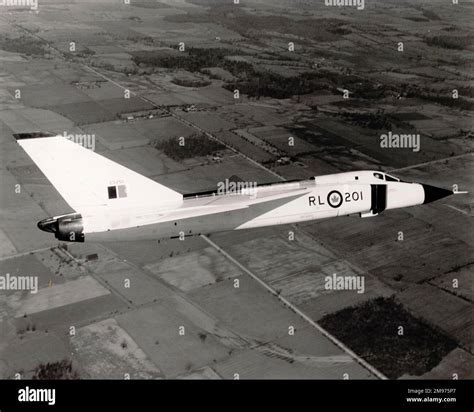
Crucially, the prototypes flying at the time were not even the Arrow’s final form. The Mk 1 aircraft used interim Pratt & Whitney J75 engines, powerful but never intended as the end state. The true heart of the Arrow was the Orenda Iroquois, a Canadian-designed engine lighter, stronger, and more advanced than anything comparable in the West. Two Mk 2 aircraft were built with these engines, representing a genuine production-ready configuration.
This was not a program spiraling out of control. It was converging. Costs were high, but so were the stakes. Canada was not just building an airplane. It was building an ecosystem of engineers, machinists, suppliers, and scientists. More than 14,000 highly skilled workers were directly employed. Entire communities depended on the program. More importantly, Canada was accumulating something priceless: sovereign capability.
Then came politics. The 1957 election brought John Diefenbaker’s Conservatives to power, and with them came a mandate to rein in spending. The Arrow, expensive and complex, became an easy symbol of alleged Liberal excess. At the same time, Canada entered into NORAD with the United States, formally integrating its air defense into a continental framework dominated by Washington.
Missiles changed everything. Or at least, they were said to. The rise of intercontinental ballistic missiles led American strategists to emphasize radar networks and missile defense systems over interceptor fleets. The logic was seductive: why build fighters to stop bombers that might soon be irrelevant? Canada was told it could not afford both missiles and jets. The choice was framed as pragmatic inevitability.
On February 20, 1959, that framing became policy. Without warning, without transition, the Arrow was canceled. The order went further than termination. All prototypes were to be destroyed. All blueprints cut up. All tooling scrapped. It was not enough to stop the program. It had to be erased.
The speed and severity of the destruction shocked even those who accepted the cancellation. Allies expressed interest in the aircraft for research purposes. The United States wanted examples. Britain wanted data. Both were refused. Within months, Canada had obliterated physical proof that the Arrow ever existed. The decision ensured there could be no reversal, no resurrection, no uncomfortable questions later.
The human cost was immediate. Thousands of engineers lost their jobs overnight. Many moved south, where their expertise fueled American aerospace and space programs. Former Arrow engineers later worked on NASA’s Mercury, Gemini, and Apollo missions. Canada did not lose talent because it lacked talent. It lost it because it abandoned ambition.
The mystery deepened as rumors emerged that not all Arrows were destroyed. Careful examination of dismantling photographs suggested discrepancies. The RL-202 prototype appeared to vanish from the record. Journalist June Callwood reported hearing an aircraft take off on the day of cancellation. Air Marshal Wilfred Curtis, a senior Arrow advocate, refused for years to confirm or deny whether one jet escaped.
Artifacts began to surface in unexpected places. Ejector seats appeared in the United Kingdom. Documents surfaced decades later, hidden by Avro draftsman Ken Barnes rather than destroyed. Each discovery fueled speculation that parts, or perhaps an entire aircraft, had been quietly spirited away to preserve what the government wanted forgotten.
One eyewitness account described an unmarked white delta-wing aircraft landing at an RAF base in Kent in the 1960s. No official record confirms it. No official record denies it either. The absence of evidence became part of the legend.
Beyond mystery lies suspicion. Many Canadians remain convinced that the United States had little interest in seeing the Arrow succeed. The aircraft threatened to outperform American designs. It challenged the assumption that advanced aerospace must flow south to north. The idea that Washington nudged Ottawa toward cancellation is not provable, but it is persistent.
The joke that “the best thing that ever happened to America was the cancellation of the Arrow” endures because it contains an uncomfortable grain of truth. After 1959, Canada never again attempted to build a front-line fighter. It became a buyer, not a builder. Dependency replaced autonomy, and dependency shapes behavior.
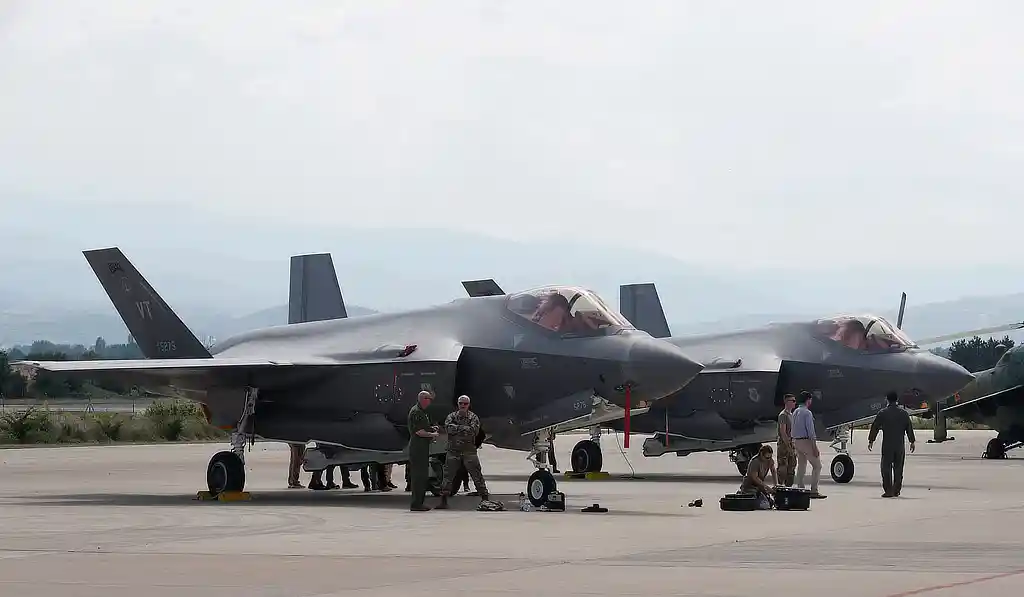
That reality frames the modern F-35 debate with brutal clarity. Canada committed to buying 88 aircraft but has paid for only 16. As Ottawa explores alternatives like Sweden’s Gripen or France’s Rafale, U.S. officials have responded with barely veiled threats. The suggestion that NORAD could be altered. The implication that American jets might patrol Canadian airspace if Canada does not comply.
This is not abstract geopolitics. It is leverage enabled by history. A country without an indigenous fighter program negotiates from weakness. A country that once destroyed its own masterpiece now finds itself told what it must buy to remain a “reliable partner.”
The tragedy of the Arrow is not that it was canceled. Governments cancel programs all the time. The tragedy is that it was canceled absolutely, violently, and without imagination. No effort was made to scale it back, export it, or evolve it. The choice was not between the Arrow and nothing. It was between sovereignty and convenience. Convenience won.
France made a different choice. Sweden made a different choice. Both accepted short-term cost for long-term independence. Both now operate world-class fighter programs tailored to their strategic needs. Canada, by contrast, debates whether it can say no to a foreign supplier without risking alliance punishment.
Whether the Arrow was sabotaged or merely sacrificed may never be conclusively answered. What is clear is that its cancellation reshaped Canada’s strategic posture for generations. The loss was not just an aircraft, but a belief in national capability. Once that belief is broken, rebuilding it becomes far harder than designing any jet.
Somewhere between the hangars of Malton and the runways of Kent, the Arrow became more than metal. It became a symbol of what Canada chose not to be. The question facing the country today is whether that choice will be repeated, or finally confronted.