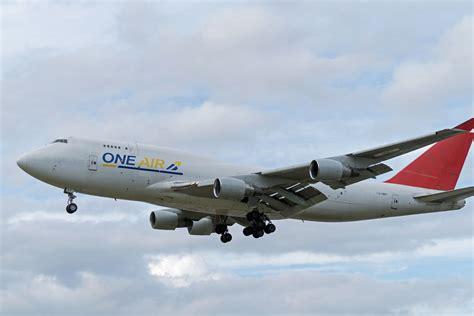
The Boeing 747, often celebrated as the crown jewel of passenger aviation, owes its iconic stature not to the whims of commercial airlines, but to a far more pragmatic and ambitious vision rooted in military logistics and freight efficiency. Its debut on February 9, 1969, signaled a new era of widebody travel, yet the aircraft was never originally intended to ferry hundreds of passengers across continents. Instead, the 747’s design was a strategic response to the United States Air Force’s desire for a massive, long-range transport capable of moving oversized cargo. This intersection of military foresight and commercial ambition created an aircraft whose legacy would transcend the skies and redefine aviation itself.
Before the 747 became a symbol of international air travel, Boeing’s engineers were engrossed in the CX-Heavy Logistics System (CX-HLS) project—a military initiative aimed at developing an aircraft capable of carrying extremely large and heavy equipment over vast distances. Competing against giants such as Lockheed, Douglas, General Dynamics, and Martin Marietta, Boeing’s proposal was ultimately rejected in favor of Lockheed’s C-5 Galaxy. Yet the effort was far from wasted. The research, engineering ingenuity, and preliminary designs conceived for the military contract became the blueprint for what would later evolve into the 747, embedding the aircraft with a cargo-first mentality even as it embarked on a commercial career.
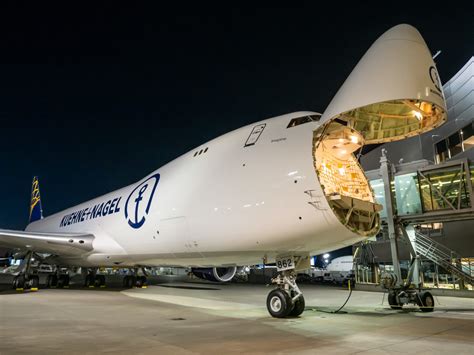
The most visually striking feature of the 747—the hump—was born out of necessity rather than luxury. Placing the cockpit above the main deck allowed the nose to remain unobstructed, enabling the loading of massive freight directly through the front of the aircraft. This nose door would become a defining element for the 747 freighter variants, allowing it to transport items that would not fit in any conventional cargo plane. The upper deck, now associated with executive lounges and premium passenger cabins, was initially a compromise to maintain operational versatility and maximize the aircraft’s freight potential. At the time, industry experts speculated that supersonic jets would soon dominate long-haul passenger flights, which meant Boeing prudently hedged its bets: if commercial passenger demand waned, the 747 would thrive as a freighter.

Joe Sutter, the chief engineer often hailed as the “father of the 747,” was instrumental in transforming Boeing’s military-inspired concept into a commercially viable aircraft. With prior experience on the 707, 727, and 737, Sutter brought a rare combination of technical expertise and visionary insight. He navigated the challenge of creating an aircraft large enough to satisfy burgeoning airline demand while remaining economically and operationally feasible. Guided partly by Pan Am’s insistence on larger aircraft, Sutter’s team experimented with multiple configurations, considering capacities of 250, 300, and 350 passengers. The eventual design adopted a widebody configuration with twin aisles, establishing a new standard for long-haul comfort and efficiency while preserving the aircraft’s cargo-handling capabilities.
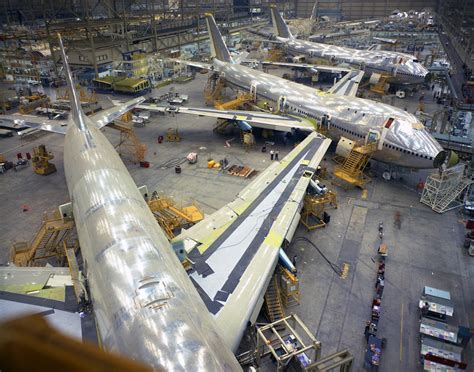
Constructing the 747 required a monumental effort beyond engineering alone. Boeing built the Everett factory—the largest building in the world by volume—to accommodate the massive airframe. Skepticism ran high; could a plane of such unprecedented size even fly? The first 747 rolled out in September 1968, just 28 months after Sutter and his team had begun work in earnest, marking a triumph of engineering audacity and project management.
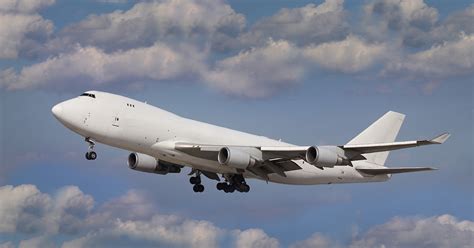
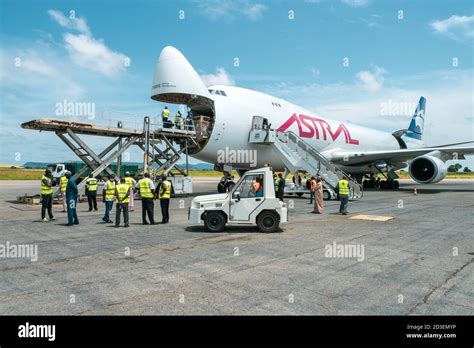
While the 747 is often remembered for its passenger luxury, its true legacy lies in its unparalleled cargo capabilities. Today, freighter versions of the aircraft—particularly the 747-400F and 747-8F—remain highly coveted in global logistics. With capacities ranging from 120 to 140 tonnes, these freighters can carry oversized freight across continents with unmatched efficiency. The design considerations for cargo, from the nose door to the widebody layout, were not retrofitted—they were integral from the outset. Ground crews rely on the nose-loading mechanism to manage awkward and lengthy cargo, utilizing a sophisticated system of latches, pins, and mechanical controls to ensure that pallets and oversized loads are loaded safely and securely. Such features have kept the 747 indispensable in freight operations long after passenger airlines have largely retired their fleets.
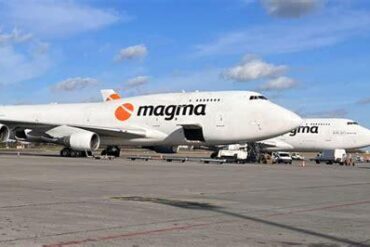
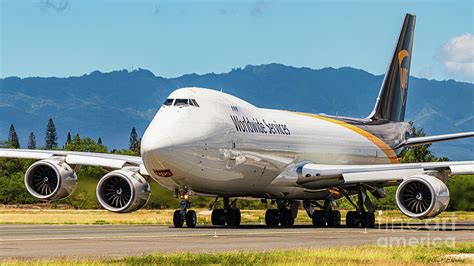
Despite the decline in passenger operations, several cargo airlines continue to operate large 747 fleets. Atlas Air leads globally with 65 aircraft, followed by UPS Airlines, Cargolux, Kalitta Air, and Cathay Pacific. These operators benefit from the aircraft’s unique nose-loading capabilities, high payload capacity, and proven reliability, often opting for older aircraft to balance cost and operational efficiency. Even as Boeing has ceased production of the 747, the aircraft remains central to global air freight, sometimes converted from retired passenger versions to continue its legacy as a cargo workhorse.
The 747’s evolution from military-inspired blueprint to passenger sensation and finally to cargo legend underscores the adaptability of its original design. The widebody layout, twin-aisle cabin, and hump were not mere aesthetic choices; they were engineered responses to functional requirements that would ensure the aircraft’s relevance across decades. As supersonic transport flirted with the promise of the future, the 747 quietly cemented its place as a versatile, durable, and operationally flexible aircraft that could thrive in both passenger and freight markets.
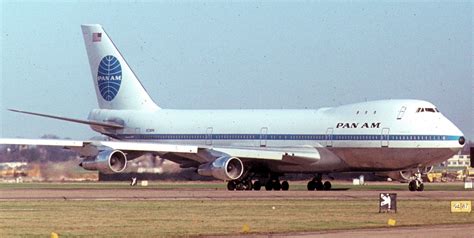
The commercial passenger variant of the 747 entered service with Pan Am in January 1970, instantly transforming global travel. Airlines could now transport larger numbers of passengers farther than ever before, creating economies of scale and facilitating international tourism and business. The 747 became synonymous with long-haul travel, earning nicknames like “Queen of the Skies” for its majestic presence and operational reliability. Yet beneath this glamorous image lay the original cargo-centric philosophy: the aircraft was built to last, adaptable, and ready to pivot to freight operations should passenger demand decline.
The design philosophy of the 747 also anticipated future technological and logistical shifts. Standardized freight containers could fit side by side on the main deck, while the upper deck allowed for a versatile mix of passenger and cargo operations. This dual-purpose design proved critical in the decades to follow, particularly as airlines faced competition from more fuel-efficient twinjets. The freighter variants thrived on routes demanding large-volume payloads, such as transpacific and Europe-Asia corridors, where their sheer capacity outweighed newer aircraft’s efficiency advantages. In effect, the 747 was future-proofed, its longevity built into its very DNA.
The legacy of the 747 extends beyond its physical design; it shaped airline strategy, airport infrastructure, and the global economy. Airports had to expand terminals, runways, and taxiways to accommodate the aircraft’s size. Airlines had to rethink scheduling, maintenance, and crew training. The introduction of the 747 catalyzed growth in international trade and tourism, illustrating how a single aircraft could influence an entire industry. The foresight embedded in its cargo-oriented design ensured that the 747 remained a backbone of both passenger and freight operations, capable of adaptation long after supersonic transport failed to dominate the skies.
Even as commercial passenger airlines phased out the 747, the aircraft continues to hold cultural and operational significance. Its hump remains an enduring symbol of aviation innovation, and its freighter variants are central to global logistics networks. The ability to load oversized cargo through the nose, coupled with exceptional payload capacities, has kept the aircraft indispensable for specialized transport. For instance, aerospace components, humanitarian aid, and industrial machinery are regularly transported using 747 freighters, showcasing the aircraft’s ongoing relevance in niche but critical operations.
The Boeing 747’s story is a testament to the power of visionary engineering, adaptability, and strategic foresight. From its origins in military logistics to its rise as a commercial icon and eventual dominance in cargo operations, the 747 embodies the principle that design with versatility and purpose can transcend intended markets. While most passengers remember the 747 for comfort, luxury, and its distinctive hump, its enduring impact lies in its functionality, resilience, and capacity to carry humanity’s ambitions—both literally and figuratively—across the skies.
In conclusion, the Boeing 747 was never merely a passenger jet; it was a multifaceted engineering triumph, meticulously designed to navigate the uncertain future of aviation. Its military-inspired blueprint, combined with Joe Sutter’s visionary leadership, allowed it to serve simultaneously as a passenger marvel and a cargo titan. Its hump, widebody design, nose-loading capability, and structural adaptability were deliberate choices that ensured operational longevity across decades. Today, even as airlines shift toward more fuel-efficient aircraft, the 747 remains a cornerstone of air freight, proving that foresight, innovation, and functionality are the true measures of aviation greatness.