The triumph of the Apollo Moon landings often overshadows a quieter, more unsettling truth: every mission carried the looming possibility of catastrophe. Beneath the polished surface of televised launches and historic lunar steps, engineers and planners worked relentlessly on contingency scenarios that bordered on the unthinkable. Among them was a little-known concept—a daring and deeply flawed idea to rescue astronauts stranded in lunar orbit.
During the height of the space race, NASA’s ambitions were matched only by the risks involved. Unlike emergencies aboard low-Earth orbit platforms, where rapid evacuation is possible, the Moon presented a stark and unforgiving distance. Any failure—mechanical, navigational, or human—could leave astronauts isolated with no immediate lifeline. It was within this high-stakes environment that a bold proposal emerged: a single-pilot rescue mission using a modified Command and Service Module (CSM).
The concept, developed by North American Aviation, revolved around transforming the standard Apollo spacecraft into a specialized rescue vehicle. This “rescue CSM” would be capable of launching on short notice, piloted by a lone astronaut tasked with docking to a stranded Lunar Module. The idea was elegant in theory: minimal crew, rapid deployment, and a focused objective—retrieve survivors and bring them home.
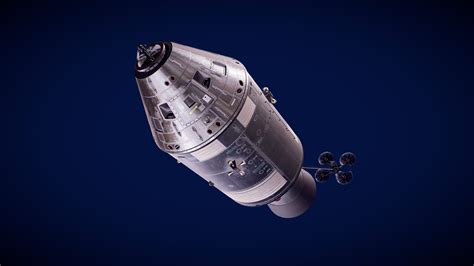
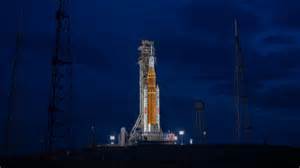
What made this proposal particularly intriguing was its emphasis on adaptability and speed. The rescue module would include modifications such as expanded interior space to accommodate additional crew and extended oxygen supply systems. Engineers envisioned umbilical connections that would allow rescued astronauts to tap into the CSM’s life support, ensuring they could survive the return journey. Meanwhile, a Saturn V rocket would remain on standby, effectively acting as a launch-ready lifeline.
Yet, beneath the surface of this seemingly heroic solution lay a cascade of unanswered questions. The proposal offered little clarity on how stranded astronauts would endure the waiting period before rescue. Oxygen and food supplies aboard the Lunar Module were severely limited, and survival would depend on precise rationing under extreme stress. The clock, in such a scenario, would not just be ticking—it would be racing.
The Engineering Gamble Behind a One-Man Lunar Rescue
The notion of sending a single astronaut on a solo journey to the Moon introduced a new layer of risk that NASA could not ignore. Spaceflight, even under ideal conditions, demands redundancy and teamwork. Removing those safeguards placed extraordinary pressure on the individual pilot, who would be responsible for navigation, docking, and mission execution without assistance.
Financial considerations added another dimension to the debate. North American Aviation estimated that developing an initial set of rescue modules would cost approximately $86 million, a figure that, while modest compared to the broader Apollo budget, did not account for the operational complexities. Maintaining a constant state of launch readiness, training specialized crews, and ensuring mission synchronization would require sustained investment and logistical precision.
Why NASA Walked Away From the Plan
Ultimately, NASA concluded that the rescue concept, while imaginative, was not viable. The agency recognized that the time required to prepare and launch a rescue mission could exceed the survival window of stranded astronauts. Even with rapid mobilization, the vast distance between Earth and the Moon imposed unavoidable delays.
Moreover, the inherent dangers of a solo lunar mission compounded the uncertainty. A rescue attempt could easily become a second crisis, doubling the stakes rather than resolving them. NASA’s decision reflected a broader philosophy: risk mitigation through mission design, rather than reliance on last-minute interventions.
Instead of pursuing the rescue CSM, engineers focused on improving the reliability of existing systems. Redundant components, rigorous testing, and procedural safeguards became the foundation of Apollo’s safety strategy. The emphasis shifted from rescue to prevention—a choice that would prove critical in missions like Apollo 13, where survival depended on ingenuity rather than external intervention.
A Legacy of Unbuilt Lifelines
Decades later, the idea of in-space rescue remains as complex as ever. Despite advancements in technology, the fundamental challenges—distance, timing, and resource constraints—persist. Modern space agencies have, in many cases, moved away from dedicated rescue missions altogether, deeming them prohibitively expensive and operationally impractical.
This abandoned plan serves as a powerful reminder of the razor-thin margin between success and disaster in space exploration. It highlights the extraordinary foresight of engineers who dared to imagine solutions for worst-case scenarios, even when those solutions never left the drawing board.
In the end, the true safety net of the Apollo program was not a standby rocket or a lone rescuer hurtling through space. It was the relentless pursuit of precision, preparation, and resilience—the invisible architecture that made humanity’s first steps on the Moon possible.