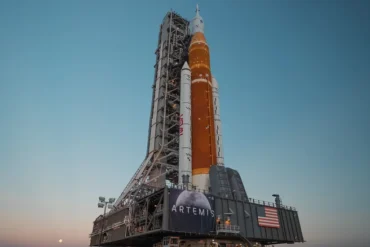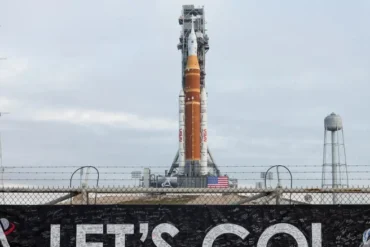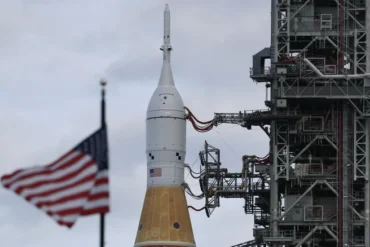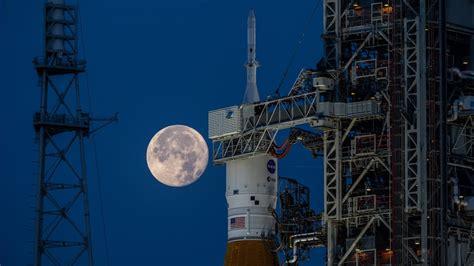
NASA’s Artemis II mission was meant to mark a triumphant return to deep space—a crewed journey around the Moon, the first of its kind in half a century. Instead, the spotlight has shifted from celebration to concern. A recurring liquid hydrogen leak during pre-launch operations has forced NASA to delay liftoff, raising technical and strategic questions about the reliability of the Space Launch System (SLS) and the broader Artemis campaign.
The delay is not merely a scheduling inconvenience. It strikes at the core of NASA’s most ambitious human spaceflight program since Apollo. Artemis II is designed to validate life support systems, deep-space navigation, and the Orion spacecraft’s performance under crewed conditions. A persistent hydrogen leak threatens more than timelines—it tests confidence in the architecture meant to carry astronauts safely beyond Earth orbit.
The Wet Dress Rehearsal That Exposed a Critical Flaw
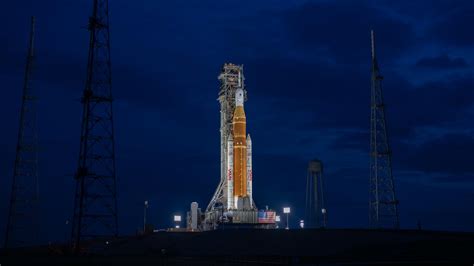
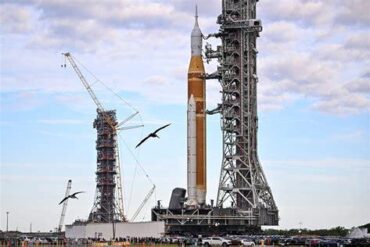
On January 31, 2026, NASA initiated a wet dress rehearsal at Kennedy Space Center, a full-scale simulation of launch procedures that includes loading cryogenic propellants into the rocket. This rehearsal is designed to surface precisely the kinds of issues that could jeopardize an actual launch. In this case, it did exactly that.
During propellant loading, engineers detected a liquid hydrogen leak at the interface where fuel is transferred into the rocket. Liquid hydrogen, stored at approximately minus 253 degrees Celsius, is notoriously difficult to handle. Its molecules are so small they can escape through microscopic gaps in seals and fittings. When leaks occur, they are not trivial inconveniences—they are potentially dangerous events, as hydrogen is highly flammable and can form explosive mixtures with air.
NASA teams halted the flow of propellant, adjusted procedures, and attempted to resume fueling. For a brief moment, it appeared the issue was mitigated. Then the leak reappeared during countdown practice. Ultimately, engineers terminated the rehearsal early. What was supposed to be a procedural confirmation turned into a red flag.
A Troubling Echo of Artemis I
The situation feels familiar. Artemis I, the uncrewed precursor mission launched in November 2022, faced similar hydrogen leak complications. Those issues were severe enough to push its launch from spring to late fall. Despite corrective actions taken after Artemis I, the recurrence of hydrogen leaks during Artemis II suggests that the underlying vulnerability may not be fully resolved.
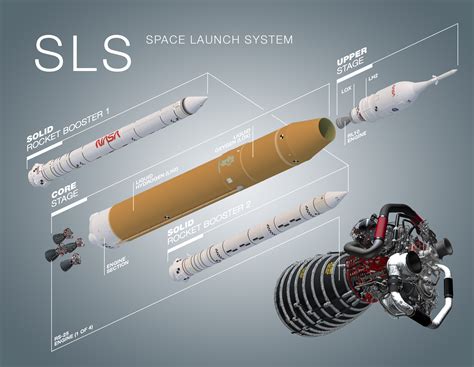
The SLS core stage uses liquid hydrogen and liquid oxygen to power its four RS-25 engines. These engines are proven hardware, derived from the Space Shuttle program, but integrating them into a new launch architecture presents engineering complexities. Interfaces between ground systems and rocket hardware must maintain perfect sealing under extreme temperature differentials and pressure changes. Even slight material contraction or expansion can compromise integrity.
That Artemis II is experiencing a near-identical issue introduces uncomfortable comparisons. If hydrogen leakage becomes a pattern rather than an anomaly, it could influence long-term operational planning and confidence in the SLS infrastructure.
More Than Just a Fuel Leak
While the hydrogen issue dominated headlines, it was not the only complication during the rehearsal. Engineers also encountered temporary audio communication losses and pressurization concerns involving the crew module hatch. Each of these problems, individually manageable, collectively reinforces the reality that Artemis II is navigating the unforgiving environment of complex system integration.
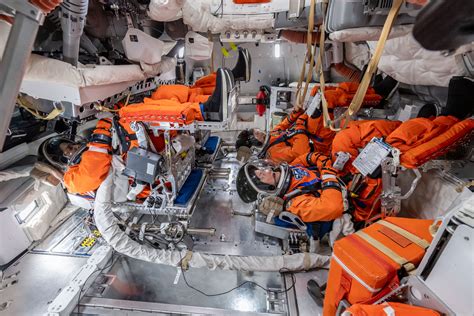
Meanwhile, the crew—Reid Wiseman, Victor Glover, Christina Koch, and Jeremy Hansen—had already entered a pre-launch quarantine. With the February 8, 2026 launch window abandoned, they were released from isolation. The psychological rhythm of launch preparation, particularly after years of training, is disrupted when delays occur. Spaceflight has always demanded patience, but human factors remain part of the equation.
NASA’s Response and Strategic Implications
NASA Administrator Jared Isaacman confirmed that the agency is now targeting March 2026 as the earliest possible launch window. His public statement emphasized a familiar but critical principle: safety overrides schedule. That stance is not rhetoric. The memory of past tragedies in human spaceflight ensures that NASA operates with extreme caution when anomalies appear.
However, repeated delays have ripple effects. Artemis II is not an isolated mission; it is a foundational step toward Artemis III, which aims to land astronauts on the lunar surface in 2028. Further down the roadmap lies Artemis IV, envisioned as the beginning of a lunar orbital platform. Every delay compresses margins, reallocates budgets, and strains political momentum.
Hydrogen leaks may seem like technical minutiae, but they sit at the intersection of engineering precision and programmatic credibility. The Artemis architecture depends on repeatable, reliable launch capability. If hydrogen handling continues to present challenges, NASA may need to reexamine ground systems, sealing technologies, or operational procedures in more systemic ways.
Why Liquid Hydrogen Is So Difficult to Contain
Liquid hydrogen’s appeal lies in its efficiency. It delivers exceptional performance as a rocket propellant, producing high specific impulse—the measure of how effectively a rocket uses fuel. But its advantages come with engineering trade-offs:
- Extremely low temperature requirements, demanding robust insulation and thermal management.
- Tiny molecular size, allowing it to escape through imperfections invisible to the naked eye.
- High flammability, requiring strict safety protocols during fueling.
Handling hydrogen is a balancing act between thermodynamics and mechanical tolerances. Materials shrink under cryogenic temperatures. Seals designed at ambient conditions must perform flawlessly under extremes. In a system as large and complex as the SLS, even a minute misalignment can escalate into a measurable leak.
The Broader Stakes for Artemis
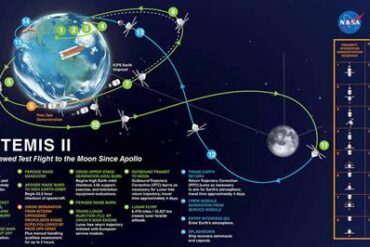
Artemis II is more than a mission; it is a demonstration of operational readiness for sustained lunar exploration. The four-person crew will undertake a 10-day journey around the Moon, testing Orion’s systems in deep space and validating procedures that future lunar landings will rely upon. Any uncertainty in launch reliability casts a long shadow over those ambitions.
History shows that early phases of major space programs often encounter friction. Apollo faced setbacks before achieving its lunar triumphs. The Space Shuttle program underwent years of refinement. In that context, hydrogen leaks are not signs of collapse but of iteration. Yet iteration has costs—financial, political, and psychological.
If March 2026 proves viable, NASA can reinforce confidence that the hydrogen issue is manageable. If delays extend further, comparisons to Artemis I’s prolonged postponement will intensify.
The Moon has waited fifty years for humanity’s return. Artemis II’s liquid hydrogen leak may be a technical obstacle, but it represents something larger: the delicate choreography required to push human exploration forward. Spaceflight is unforgiving of haste. The success of Artemis hinges not on speed, but on precision.