The Artemis II mission marks one of the most significant milestones in modern space exploration. For the first time since the Apollo 17 mission in 1972, astronauts are once again traveling toward the Moon as part of NASA’s ambitious Artemis program. While the mission represents technological progress and renewed lunar exploration, one of the most fascinating questions many people ask is simple: how fast does the Artemis II rocket travel?
The answer reveals the astonishing engineering behind NASA’s Space Launch System (SLS) and the Orion spacecraft, two technologies designed to carry humans farther into space than any modern system before them. Achieving the speeds necessary to escape Earth’s gravity and reach lunar orbit requires tremendous power, precise navigation, and extraordinary engineering precision.
Understanding the top speed of the Artemis II rocket not only highlights the capabilities of the SLS but also demonstrates the immense challenges involved in sending humans beyond low Earth orbit.
The Launch Power Behind Artemis II
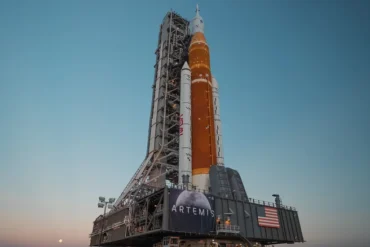
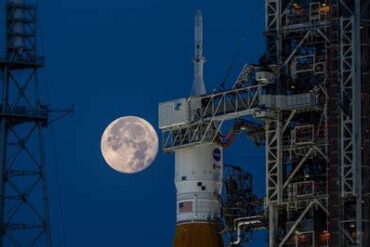
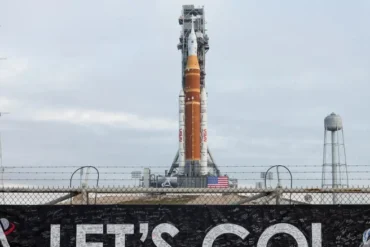
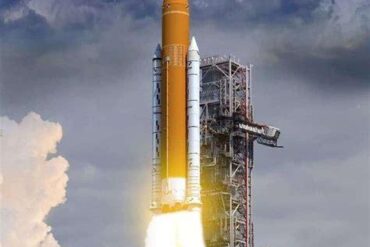
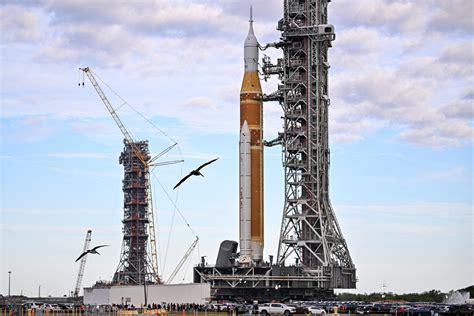
The Artemis II mission begins with the thunderous liftoff of the Space Launch System, the most powerful rocket NASA has ever built. Standing approximately 322 feet tall, the rocket generates an incredible 8.8 million pounds of thrust at launch, pushing the massive vehicle off the launch pad and through Earth’s dense lower atmosphere.
This thrust is produced by a combination of four RS-25 engines powered by liquid hydrogen and liquid oxygen, along with two solid rocket boosters mounted on either side of the core stage. The boosters provide the majority of the initial lift during the first minutes of the flight.
As the rocket climbs, it must fight against Earth’s gravitational pull, atmospheric drag, and the inertia of its enormous mass. During this phase, the spacecraft steadily accelerates as the boosters detach and the rocket transitions toward orbital velocity.
The acceleration is gradual but relentless. Within minutes, the vehicle transitions from a stationary position on the launch pad to speeds that exceed anything experienced in conventional aviation.
The Top Speed Required to Reach the Moon
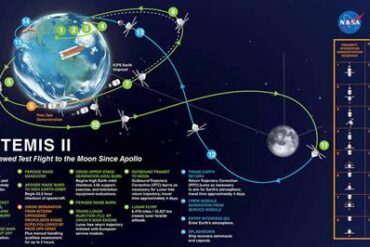
The top speed of the Artemis II rocket during its journey toward the Moon reaches approximately 24,500 miles per hour (39,400 km/h) relative to Earth. This velocity is essential for escaping Earth’s gravitational influence and setting the Orion spacecraft on its trajectory toward the lunar environment.
For context, this speed is difficult to comprehend using everyday comparisons. The F-35 Lightning II fighter jet, one of the fastest operational military aircraft, reaches a maximum speed of roughly 1,200 mph. The Artemis II spacecraft travels more than 20 times faster.
Interestingly, this velocity closely mirrors the speed achieved during earlier lunar missions. The Apollo 13 spacecraft reached approximately 24,247 mph, showing that while rocket technology has evolved dramatically, the physics required to reach the Moon remains fundamentally the same.
Peak Velocity Near the Moon
Although the spacecraft initially accelerates to reach lunar transfer velocity, its highest measured speed relative to Earth occurs later in the mission.
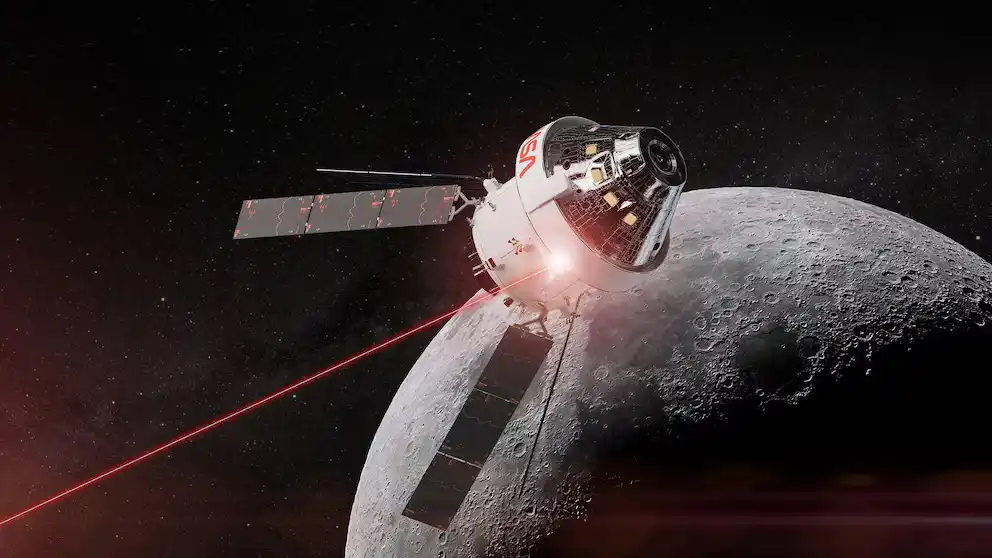
At its closest approach during the lunar flyby, Artemis II reached about 60,863 miles per hour relative to Earth. This incredible velocity results from the gravitational dynamics of both the Earth and the Moon acting on the spacecraft as it travels through space.
However, speed in space depends heavily on the frame of reference being used. When measured relative to the Moon, the spacecraft was traveling at approximately 3,139 mph during its closest approach.
This difference illustrates an important principle of orbital mechanics: speed is not absolute in space. Instead, it depends on the object used as the reference point for measurement.
Reentry Speeds During the Return to Earth
The final dramatic phase of the mission occurs when the Orion spacecraft reenters Earth’s atmosphere. After completing its lunar flyby and returning toward Earth, Orion accelerates again due to the planet’s gravity.
During atmospheric entry, the spacecraft reaches speeds of around 25,000 miles per hour before encountering the upper atmosphere. At this stage, the heat shield becomes critical, protecting the crew capsule from the extreme temperatures created by friction with atmospheric particles.
Temperatures during this phase can exceed 5,000 degrees Fahrenheit, making the heat shield one of the most vital safety components of the spacecraft.
As Orion descends deeper into the atmosphere, air resistance rapidly slows the spacecraft. Large parachutes deploy in sequence, allowing the capsule to make a controlled splashdown in the ocean, completing the mission safely.
Why Artemis II Speed Matters for Future Missions
The remarkable speeds reached during the Artemis II mission represent more than just engineering achievement—they demonstrate humanity’s renewed capability to conduct deep-space exploration with astronauts onboard.
These velocities are necessary to accomplish several critical mission objectives:
- Escaping Earth’s gravitational pull
- Reaching the Moon within a practical travel time
- Returning safely through Earth’s atmosphere
Artemis II also serves as a crucial stepping stone for upcoming missions. The experience gained from this flight will inform the development of Artemis III and future lunar landings, as well as long-term plans for human exploration of Mars.
By mastering the physics of high-speed space travel and ensuring spacecraft durability at extreme velocities, NASA continues to push the boundaries of what is possible.
The Artemis program proves that even decades after the Apollo era, human spaceflight still thrives on innovation, courage, and the relentless pursuit of exploration.