In the golden era of 1980s television, a handful of shows stood out not merely for their action or storytelling, but for the unforgettable vehicles that captured viewers’ imaginations. Among them, Airwolf became an instant icon — a sleek, black, futuristic helicopter tearing through the sky with stealth, firepower, and speed that rivaled even modern-day combat aircraft. But behind this high-tech marvel was a real-world machine: the Bell 222, a twin-engine civilian helicopter that quietly made aviation history before becoming immortalized on screen.
The Rise of Airwolf: A Helicopter Icon is Born
Premiering in 1984, Airwolf was part spy thriller, part action series, and part military fantasy. The show centered on a secret, experimental aircraft developed by a covert U.S. government agency called The Firm. Flown by the brooding, violin-playing pilot Stringfellow Hawke — played by Jan-Michael Vincent — the aircraft could evade radar, break the sound barrier, and destroy enemy targets with laser precision.
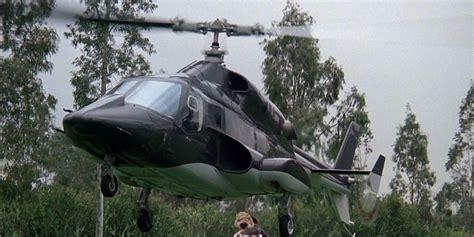
What set Airwolf apart was its helicopter, portrayed as a weaponized prototype far beyond any military capabilities of the time. In fiction, the Airwolf was a black ops project equipped with twin .50 caliber side-mounted machine guns, air-to-air and air-to-surface missiles, stealth cloaking, and even hypersonic flight capability. It could tap into enemy communications, remain invisible to radar, and deliver surgical strikes in hostile territory.
Yet behind all the fictional upgrades was a machine very much grounded in reality — and that machine was the Bell 222A.
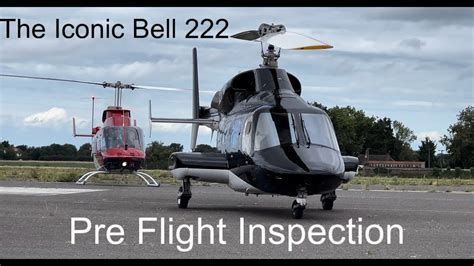
Bell 222: America’s Trailblazing Twin-Turbine Civil Helicopter
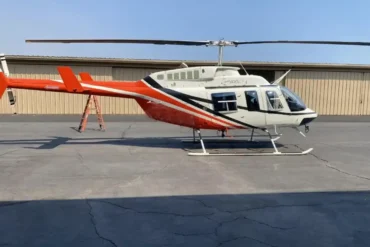
When Airwolf premiered in the mid-1980s, the Bell 222 had already made a name for itself as a cutting-edge civilian aircraft. Developed by Bell Helicopter Textron, the 222 was the first light twin-turbine helicopter designed and manufactured in the United States. Certified by the Federal Aviation Administration (FAA) in 1979, its maiden flight occurred in 1980, setting new benchmarks for what light helicopters could achieve.
One of its greatest distinctions was that it became the first helicopter certified for IFR (Instrument Flight Rules) by the FAA. This certification meant that the aircraft could be flown in poor visibility or inclement weather using only its onboard instruments — a vital leap in aviation safety and reliability.
Under the sleek lines and executive-friendly design of the Bell 222 beat the heart of innovation:
- Engines: Twin Lycoming/Honeywell LTS101-650C-3 turboshaft engines, providing ample power and redundancy.
- Speed: Cruising speeds around 135 knots (155 mph) with a range of over 370 nautical miles.
- Crew and Capacity: Typically flown by one or two pilots with room for up to 5-6 passengers.
- Avionics: Fully IFR-capable flight deck, autopilot, and navigation systems tailored for corporate and medevac missions.
The version used in Airwolf was the Bell 222A, a slight evolution of the original model. While visually nearly identical, it offered refinements in engine output and avionics performance that made it ideal for cinematic use and high-altitude flying.
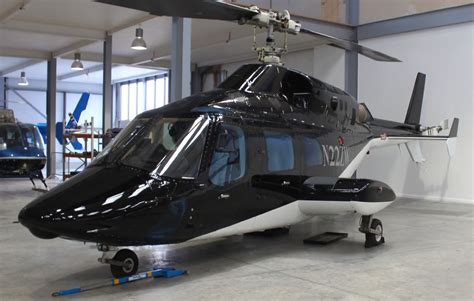
Transforming the Bell 222 into Airwolf
While the Bell 222A was already a marvel of 1980s aviation, Hollywood needed more than a civilian helicopter to sell the fantasy of a covert, supersonic attack craft. The Airwolf production team, led by creator Donald P. Bellisario, turned to JetCopters Inc., a Los Angeles-based aviation firm, to customize the helicopter for the series.
The transformation included:
- Faux weaponry: Cannons and missile launchers installed in retractable pods.
- New paint scheme: A sleek matte-black exterior with a shark-like nose profile.
- Modified nose cone: Altered for a more aggressive silhouette on screen.
- Interior shots: An elaborate cockpit mock-up with futuristic displays and panels for filming close-ups.
In aerial sequences, the Bell 222A demonstrated real-world performance, but Hollywood trickery — including miniature models, special effects, and composite editing — added illusions of hypersonic flight and cloaking ability. The fictional specs of Airwolf far exceeded anything the Bell 222 could truly perform, but the aircraft’s agility and aesthetics made the illusion believable.
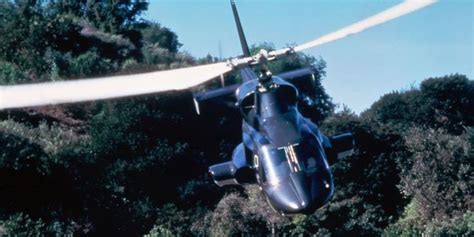
The Real Aircraft Behind the Legend: Registration N3176S
The actual Bell 222A helicopter used in the show carried the registration number N3176S, and it was among the last 222A models produced. It remained under the ownership of JetCopters during the show’s production and saw continued use after the series ended in 1987.
Shortly thereafter, the helicopter was sold to a German air ambulance operator, Hubschrauber-Sonder-Dienst, where it was registered as D-HHSD. This marked the beginning of its civilian medevac career, far removed from the fictional warfare and espionage of its TV past.
Tragic End: The Airwolf Helicopter’s Final Mission
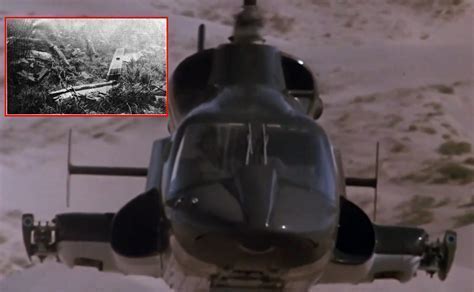
On June 6, 1992, the former Airwolf helicopter was tasked with a life-saving mission: transporting a burn victim from Cologne to Berlin. The flight, operating in poor weather, was returning to Schönefeld Airport when it tragically crashed into a forest-covered mountaintop.
All three people on board — the pilot, a doctor, and a paramedic — perished in the crash. This somber ending served as a painful counterpoint to the thrilling, invincible image of Airwolf on screen. It was a reminder that even the most iconic machines, once separated from the cinematic lens, face the same limitations and dangers of real-world aviation.
A History Marked by Innovation — and Risk
The Bell 222 was undeniably a technological trailblazer, but its operational history has not been without concern. According to the Aviation Safety Network, over 70 incidents involving the Bell 222 were reported between 1982 and 2019. Causes ranged from mechanical failure to pilot error and adverse weather — common risk factors in rotary aviation.
Yet for many, the legacy of the Bell 222 is not one defined by statistics or tragedy, but by the indelible cultural memory it created through Airwolf. Its silhouette, distinctive rotor sounds, and cinematic presence left an imprint on generations of aviation enthusiasts and casual viewers alike.
Bell 222 Today: A Rare but Respected Relic
Production of the Bell 222 series ended in 1991, with just 188 units ever built. Of those, only 59 remain in active service as of 2024, mostly in private fleets, medevac roles, or as corporate transports. The platform has since been succeeded by advanced versions like the Bell 230 and Bell 430, which offer enhanced powerplants, composite rotors, and modern avionics.
Still, among collectors and aviation history buffs, the Bell 222 — and especially the aircraft once known as Airwolf — remains a sought-after legend. Models and memorabilia are in high demand, and fan conventions continue to celebrate the show’s legacy decades after its cancellation.
Conclusion: The Real Legacy of Airwolf’s Helicopter
While Airwolf soared into the realm of science fiction with its portrayal of a futuristic war machine, the Bell 222A provided the very real bones beneath the beast. As the first American light twin-turbine helicopter, the 222 was already revolutionary long before Hollywood took notice. Its transformation into a pop-culture icon reflects the enduring power of good storytelling, visual design, and the blending of reality with fiction.
Today, the Bell 222 isn’t just a helicopter — it’s a symbol of innovation, a television legend, and a sobering reminder of the line between cinematic illusion and real-world aviation.