Outer space remains one of humanity’s most unforgiving environments, where survival hinges on overcoming the absence of even the most basic resources. For decades, oxygen has been one of the greatest logistical challenges for sustained missions beyond Earth. Transporting breathable air from Earth is costly and inefficient, especially for long-term habitation. Now, NASA is pushing the boundaries of innovation with a groundbreaking experiment that could redefine how humans live and work on the Moon.
Harnessing Lunar Regolith for Oxygen Production
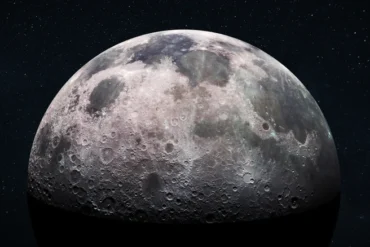
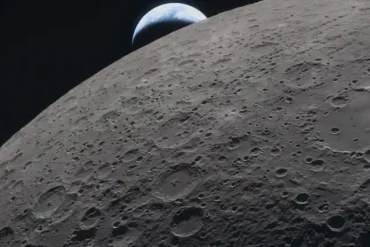
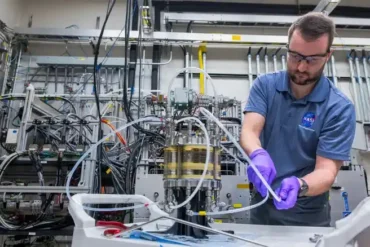
At the heart of this breakthrough lies lunar regolith—the fine, dusty soil that blankets the Moon’s surface. Rich in oxygen-bearing minerals, this seemingly lifeless material holds immense untapped potential. NASA’s Carbothermal Reduction Demonstration (CaRD) program has successfully tested a prototype system designed to extract oxygen directly from this soil using concentrated solar energy.
The process is both elegant and complex. A specialized reactor heats lunar regolith to extreme temperatures until it melts. Carbon is then introduced, triggering a chemical reaction with silicate minerals to produce carbon monoxide gas. This gas is captured and processed through a downstream system that separates and converts it into usable oxygen. What was once inert dust becomes a life-sustaining resource through precise engineering and controlled chemistry.
From Concept to Simulated Reality
Unlike previous laboratory-only experiments, the CaRD system represents a critical leap forward. It was tested in a simulated lunar environment, closely replicating the harsh conditions found on the Moon’s surface. This step is essential because theoretical success does not always translate into operational viability in space.
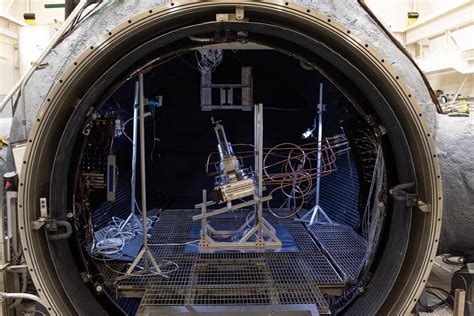
The demonstration validated not only the feasibility of carbothermal reduction but also its scalability. Engineers believe that once fully developed, the system could produce multiple times its own mass in oxygen annually. This efficiency transforms it from a scientific curiosity into a cornerstone technology for future lunar missions.
Fueling a Sustainable Lunar Presence
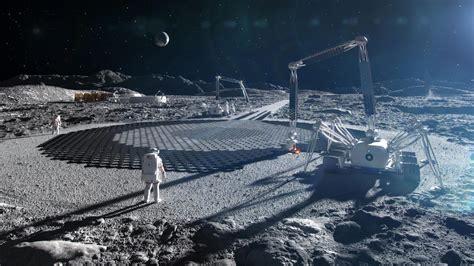
Oxygen is not just for breathing—it is also a critical component of rocket propellant. By producing oxygen on the Moon, NASA opens the door to establishing refueling stations beyond Earth. Spacecraft could land, replenish their supplies, and launch deeper into space without relying entirely on Earth-based resources.
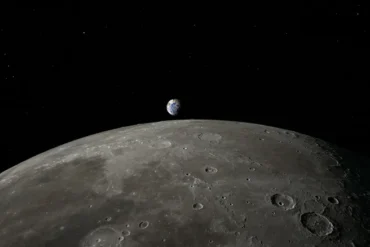
This capability dramatically reduces mission costs and complexity. A lunar outpost equipped with oxygen production technology could support extended stays, scientific research, and even commercial activity. The Moon, once a distant destination, begins to resemble a strategic hub for interplanetary travel.
Beyond the Moon: Mars and Deep Space Applications
The implications extend far beyond lunar exploration. Regolith is not unique to the Moon; it exists on Mars and other celestial bodies. The same carbothermal process could theoretically be adapted to Martian soil, enabling astronauts to generate oxygen, water, and even methane fuel directly on-site.
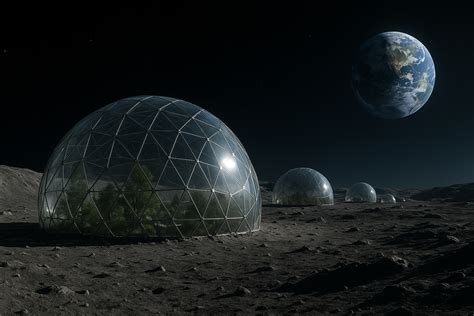
This adaptability is crucial for missions to Mars, where transporting resources from Earth is even more challenging. By leveraging local materials, future explorers could achieve a level of self-sufficiency previously thought unattainable. The ability to produce water and methane further enhances mission sustainability, supporting both life support systems and propulsion needs.
A Turning Point in Space Exploration Technology
NASA’s CaRD experiment marks a pivotal moment in the evolution of space exploration. It demonstrates that the resources needed for survival and expansion may already exist on other worlds, waiting to be unlocked through innovation. The Moon is no longer just a destination—it is becoming a proving ground for technologies that will carry humanity deeper into the cosmos.
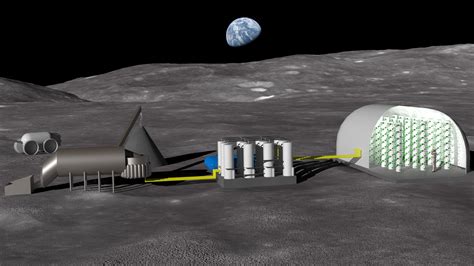
As these systems mature, the vision of permanent human presence beyond Earth moves from speculation to inevitability. Oxygen derived from lunar soil is more than a scientific achievement; it is a foundation for the next era of exploration, where humanity no longer merely visits space—but begins to live there.