The Race to Find Water at the Moon’s South Pole Enters a New Era
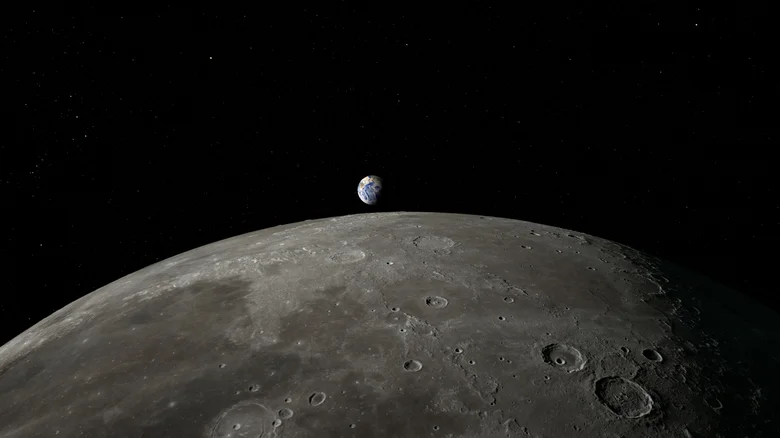
The Moon has once again become the focal point of global space exploration, and China is positioning itself at the forefront of one of the most important scientific quests of the modern era: finding accessible water on the lunar surface. Through its ambitious Chang’e-7 mission, China aims to conduct the first direct search for usable water resources in the Moon’s mysterious south polar region, a location widely regarded as the most valuable real estate beyond Earth.
As international interest in establishing a permanent human presence on the Moon intensifies, the discovery and utilization of lunar water could fundamentally reshape how humanity explores space. Rather than merely demonstrating technological prowess, China’s upcoming mission seeks to identify resources that could support future settlements, scientific research stations, and deep-space missions.
The significance of this objective extends far beyond national prestige. Water is the cornerstone of long-term survival in space, making every potential ice deposit at the lunar south pole a strategic asset for the future of human exploration.
For decades, scientists suspected that frozen water existed within the Moon’s permanently shadowed craters. Recent observations and remote sensing data have strengthened that belief, revealing compelling evidence that substantial ice reserves may be trapped in regions untouched by sunlight for billions of years. The challenge now is no longer proving water exists—it is determining exactly where it is, how much is available, and whether it can be extracted efficiently.
Why Lunar Water Is the Key to Permanent Moon Bases
Transporting supplies from Earth remains one of the greatest obstacles facing space exploration. Every kilogram launched into orbit requires significant energy, cost, and logistical planning. Water, despite being essential for survival, is one of the heaviest resources astronauts must carry.
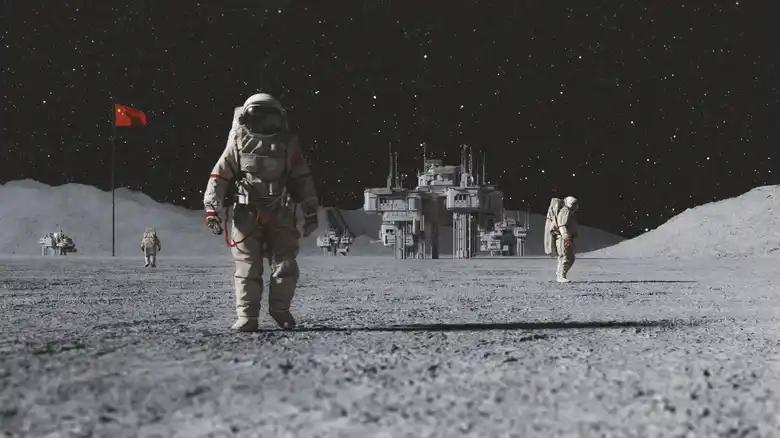
If water ice can be harvested directly on the Moon, future crews could dramatically reduce dependence on Earth-based resupply missions. Processed lunar water could provide drinking supplies, support food production systems, generate breathable oxygen, and even be converted into hydrogen and oxygen rocket fuel.
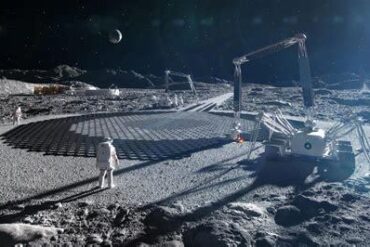
This concept, known as in-situ resource utilization, is rapidly becoming a cornerstone of lunar exploration strategies. Instead of treating the Moon as a temporary destination, agencies increasingly view it as a self-sustaining outpost capable of supporting continuous human activity.
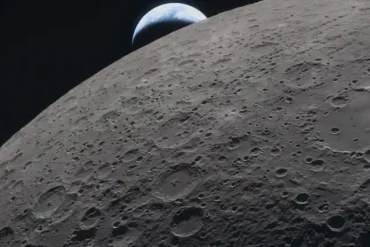
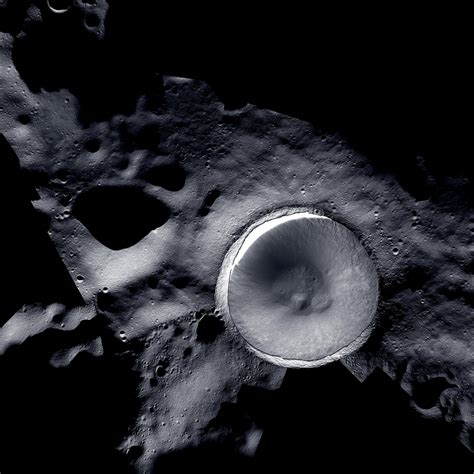
The lunar south pole is especially attractive because some crater interiors remain in permanent darkness. Temperatures in these regions can plunge to extraordinarily low levels, allowing ice deposits to remain stable for immense periods of time. These natural cold traps may preserve valuable water resources that future explorers can access and process.
The potential benefits extend beyond lunar habitation. Water-derived fuel produced on the Moon could support missions to Mars and beyond, creating a stepping stone for deeper exploration throughout the Solar System.
Chang’e-7 and China’s Expanding Lunar Ambitions
China’s Chang’e program has steadily advanced from orbital reconnaissance to increasingly sophisticated surface operations. Each mission has expanded the nation’s capabilities and demonstrated a growing mastery of lunar technologies.
The upcoming Chang’e-7 mission represents another major milestone. Building upon the achievements of previous missions, including the successful far-side landing conducted by Chang’e-6, the new spacecraft is designed to investigate some of the Moon’s most scientifically valuable terrain.
Mission planners are reportedly targeting areas near the famous Shackleton Crater, one of the most studied locations at the lunar south pole. Although the final landing site has not been officially confirmed, the region remains a prime candidate because of its proximity to permanently shadowed areas believed to contain water ice.
Achieving this objective requires extraordinary precision. Engineers are pursuing landing accuracy measured within approximately 100 meters or better, an impressive feat given the hazardous terrain, extreme lighting conditions, and navigation challenges associated with polar operations.
Advanced Instruments Designed to Detect Lunar Ice
Chang’e-7 will carry a sophisticated suite of scientific instruments specifically selected to identify and analyze potential water-bearing locations.
Among its key technologies are a high-resolution mapping camera, a wide-band infrared spectrum analyzer, and a hyperspectral imaging system capable of detecting subtle mineralogical signatures associated with water ice. Together, these instruments will provide detailed observations of the lunar environment and help scientists pinpoint promising targets for closer investigation.
The mission will also deploy a lunar seismograph capable of monitoring moonquakes and internal geological activity. Meanwhile, specialized terrain-mapping equipment will generate detailed topographic data to support future exploration efforts.
One of the mission’s most innovative features is its mobility strategy. Because sunlight reaches the lunar south pole at extremely low angles, solar-powered operations present unique challenges. To overcome these limitations, Chang’e-7 is designed to move between illuminated locations, effectively following available sunlight while maintaining operational efficiency.
Drilling Into the Future of Space Exploration
Perhaps the most critical phase of the mission will occur after landing, when the spacecraft begins direct surface investigations. Chang’e-7 is expected to relocate to relatively undisturbed terrain and drill beneath the lunar surface in search of frozen water deposits.
These subsurface samples could provide crucial information about the concentration, purity, and accessibility of lunar ice. Such data would influence future mission planning, infrastructure development, and resource extraction strategies.
The implications are enormous. Future lunar settlements, scientific laboratories, energy systems, and even proposed nuclear-powered facilities could depend on local water resources for long-term viability. Confirming a reliable supply would remove one of the largest barriers to establishing a permanent human presence beyond Earth.
As the global competition to explore and utilize the Moon accelerates, Chang’e-7 stands poised to play a defining role. Its search for water is more than a scientific experiment—it is a mission that could determine how humanity lives, works, and expands into space during the decades ahead.