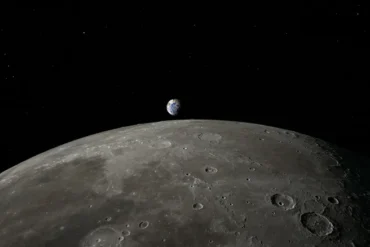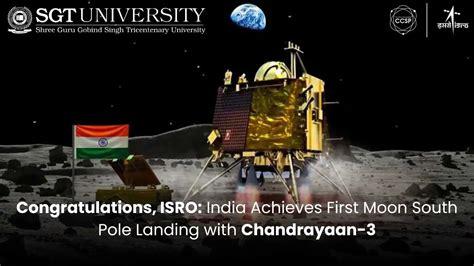
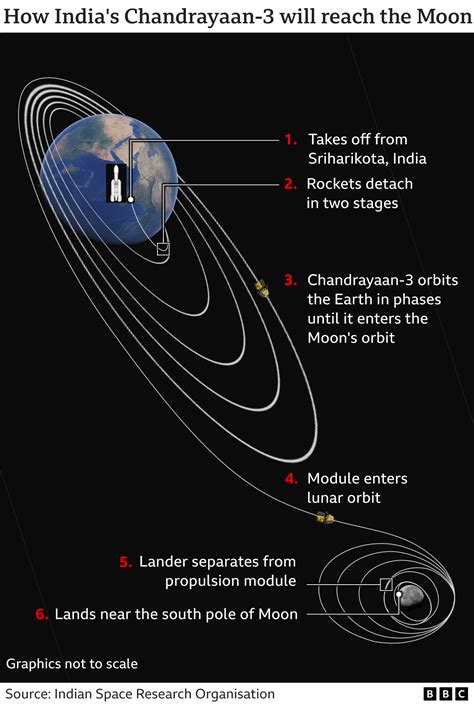
India has secured a historic place in space exploration after successfully landing the Chandrayaan-3 spacecraft near the moon’s south pole, becoming the first nation ever to reach the region intact. The milestone landing took place on 23 August at approximately 13:32 BST, marking one of the most important achievements in modern lunar exploration and a defining moment for the Indian Space Research Organisation (ISRO).
The successful mission instantly elevated India into an elite group of nations capable of controlled lunar landings. Before Chandrayaan-3, only the United States, China, and the former Soviet Union had managed to place spacecraft safely on the moon. Yet none had successfully touched down in the difficult and scientifically valuable southern polar region.
The achievement came only days after Russia’s Luna-25 mission crashed while attempting a similar landing, underscoring the complexity and danger of operating near the moon’s south pole. The terrain is uneven, communication challenges are severe, and sunlight conditions create extreme navigational difficulties. India’s precise execution demonstrated remarkable advances in guidance systems, autonomous landing technology, and mission planning.
Why the Moon’s South Pole Matters to Global Space Exploration
The moon’s south pole has become one of the most sought-after destinations in space science because of its permanently shadowed craters. Scientists believe these dark regions contain significant deposits of frozen water ice, preserved for billions of years in temperatures cold enough to prevent evaporation.
This water could transform future lunar missions. Extracted ice may eventually provide:
- Drinking water for astronauts
- Oxygen for breathable air
- Hydrogen and oxygen for rocket fuel
These resources are considered essential for creating a permanent human presence on the moon. Instead of repeatedly transporting supplies from Earth at enormous cost, future missions could potentially use lunar materials directly on site.
Researchers also believe the ice may preserve ancient chemical records linked to the moon’s volcanic history and even clues about how water reached Earth billions of years ago. That possibility gives Chandrayaan-3 enormous scientific importance beyond national prestige.
Chandrayaan-3 Strengthens India’s Position as a Space Power
The Chandrayaan-3 mission represents far more than a technological triumph. It reflects India’s emergence as a major force in affordable and efficient space exploration. ISRO has built an international reputation for completing ambitious missions at comparatively low cost while maintaining impressive engineering reliability.
The spacecraft’s name translates to “moon vehicle” in Hindi and Sanskrit, symbolizing India’s growing connection to deep-space exploration. Following the landing, Indian Prime Minister Narendra Modi praised the mission as a victory for the entire country, describing it as proof of the determination and energy of a modern India overcoming enormous challenges.
Over the next two weeks after landing, Chandrayaan-3 was scheduled to conduct multiple scientific experiments on the lunar surface. These include spectrometer-based studies examining the moon’s mineral composition, temperature conditions, and surface characteristics. The rover and lander are designed to gather valuable environmental data that could support future robotic and human missions.
The success also carries geopolitical significance. Space exploration has increasingly become a symbol of technological influence and national capability. By reaching the moon’s south pole first, India demonstrated that advanced space achievements are no longer limited to a handful of superpowers with massive budgets.
A Defining Moment in the New Lunar Race
The Chandrayaan-3 landing arrives during a renewed international race toward the moon. Governments and private companies are increasingly focused on lunar exploration as preparation for deeper missions into space, including future journeys to Mars.
The moon is now viewed not merely as a destination but as a strategic platform for long-term scientific operations, resource extraction, and technological development. India’s success may accelerate international cooperation and competition simultaneously, particularly regarding access to the lunar south pole and its potential reserves.
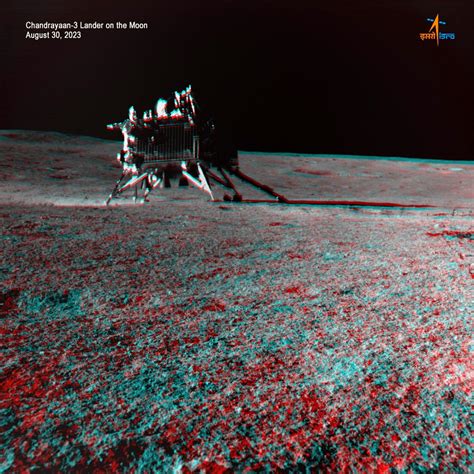
India’s achievement has already inspired millions worldwide, particularly across developing nations seeking proof that scientific ambition and innovation can compete on the global stage. The mission combined precision engineering, national pride, and scientific discovery into a moment that reshaped the future of lunar exploration.
With Chandrayaan-3 safely operating on the moon’s south pole, India has not only entered a new era for its own space program but has also changed the direction of humanity’s return to the moon.