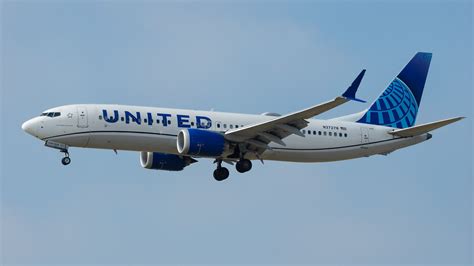
The air travel industry marked a monumental leap forward as United Airlines officially launched its first-ever direct commercial route between the United States and Greenland, connecting Newark Liberty International Airport to Nuuk, the capital of Greenland. This pioneering route, operated with a Boeing 737 MAX 8, reshapes the landscape of transatlantic aviation, positioning Greenland not only as a logistical bridge over the Arctic but as a newly accessible frontier for adventurous global travelers.
A Historic Milestone in Arctic Aviation
United’s inaugural flight, numbered UA80, marks the first scheduled commercial air service ever by a U.S. carrier to the remote Arctic island. Touching down in Nuuk after a smooth sub-four-hour journey from Newark, the flight was more than a simple transit—it was a strategic assertion of capability, innovation, and vision. United becomes the first North American airline to permanently bridge the Arctic Circle with the continental U.S., elevating Nuuk’s standing from isolated Nordic capital to international gateway.
This route’s launch comes amid a resurgence in transatlantic travel post-pandemic, where global travelers now seek routes beyond the routine paths to London, Paris, or Rome. Greenland, with its dramatic fjords, calving glaciers, and Inuit heritage, represents a compelling alternative for those hungry for untouched landscapes and cultural depth.
Why Nuuk? The Rise of Off-the-Beaten-Path Demand
Unlike traditional travel routes aimed at business corridors or beach vacations, this new link was cultivated with a specific kind of traveler in mind. Experiential tourism—defined by deeper cultural immersion and environmental authenticity—is on the rise. United, always keen on first-mover advantage, has tapped into this surge of interest in lesser-known destinations.
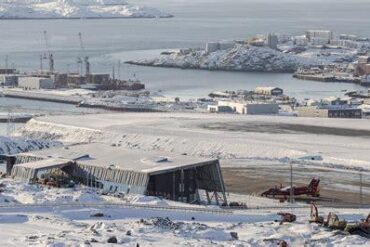
Nuuk, nestled on Greenland’s southwestern coast, is a city of stark contrast: ancient traditions meet modern infrastructure, and the midnight sun casts its glow on snow-capped peaks even in midsummer. With climate-conscious travelers seeking regions with raw, untamed beauty and cultural integrity, Greenland checks every box.
The city also offers logistical ease as a gateway for eco-tourism, scientific research, and even geopolitical interests in the rapidly transforming Arctic. The demand may be niche, but its strategic value is undeniable.

The Role of the Boeing 737 MAX 8: Transforming Transatlantic Norms
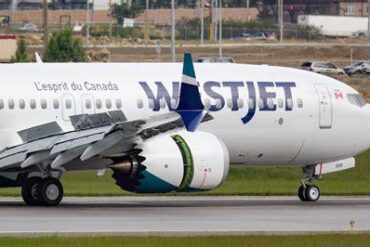
What makes this route viable is not just the vision—but the aircraft. The Boeing 737 MAX 8, with its fuel-efficient design and extended range, represents a paradigm shift in how airlines approach long-haul, low-density destinations. With seating for 166 passengers across three cabin classes, including domestic first, Economy Plus, and standard economy, it brings long-haul comfort to routes that previously lacked commercial viability.
Historically, transatlantic operations required widebody jets like the Boeing 777 or 787. But these jets are ill-suited for thinner, emerging markets where passenger numbers are moderate yet consistently interested. Enter the narrowbody revolution—airlines can now operate “long and thin” routes profitably, paving the way for cities like Nuuk to enter global air networks.
United’s commitment to this evolution is further underlined by its upcoming integration of the Airbus A321XLR, promising even greater range and cost-efficiency.
Strategic Expansion in Global Network Development
United’s Greenland move is part of a larger canvas. Recent network expansions have included Ulaanbaatar, Mongolia, and Madeira, Portugal—each representing underserved markets with unique cultural or natural appeal. These choices demonstrate United’s post-pandemic recalibration, moving away from simply restoring capacity to innovating where demand and novelty intersect.
Travelers are no longer content with just reaching a destination—they want to be among the first to arrive somewhere new. United, therefore, has chosen markets that create emotional and social capital for its passengers, offering them stories to tell and experiences worth the miles.
The Political and Economic Significance of U.S.–Greenland Ties
This new route carries implications far beyond tourism. Greenland, while part of the Kingdom of Denmark, holds increasing geopolitical relevance due to its Arctic location, mineral resources, and strategic proximity to North America and Europe. Direct U.S. air service is a soft power asset, strengthening bilateral relations through connectivity, commerce, and cultural exchange.
Moreover, local Greenlandic authorities have expressed optimism about the route’s potential to stimulate the tourism economy, create aviation-related jobs, and reduce travel dependency on Denmark. Until now, most international flights to Nuuk were routed through Copenhagen, adding cost and complexity to North American journeys.
This new route brings Greenland into the North American tourism orbit, and its success could prompt further collaborations between Greenlandic tourism boards and American travel agencies.
Operational Challenges and Climate Considerations
Operating flights to Greenland, particularly to an airport like Nuuk, is not without operational complexities. The airport’s runway length and Arctic weather demand highly skilled flight crews and precise scheduling. Furthermore, Greenland’s environment presents unique challenges and responsibilities. United has emphasized its use of fuel-efficient aircraft to minimize emissions and align with Greenland’s strong environmental protections.
With the Arctic ecosystem under global scrutiny due to climate change, this route also opens dialogue about sustainable aviation practices. United has a chance to set precedents in eco-sensitive air travel, potentially investing in carbon offset programs or green tourism partnerships specific to Greenland.
United’s Calculated Risk: A Competitive Differentiator
While some may view the Newark–Nuuk service as a publicity move, it fits squarely within United’s pattern of innovative, calculated risk-taking. In a landscape where many carriers simply restore pre-pandemic operations, United is choosing new paths, new cities, and new demographics.
Nuuk is unlikely to deliver the passenger volumes of London or Frankfurt, but its high-value niche audience is a different kind of asset. Business travelers in Arctic industries, researchers, eco-tourists, and bucket-listers now have a direct path—and United gets the credit for unlocking it.
This kind of brand equity—being the first and being different—can’t be replicated through price wars or generic route competition.
Looking Ahead: A Template for Remote Route Strategy
The Newark–Nuuk service could well become a blueprint for future Arctic and sub-Arctic connections. With the arrival of next-gen narrowbody jets, cities like Reykjavík (via regional airports), Tromsø, Iqaluit, or even Svalbard could see their own commercial links to the U.S.
Airlines like United will be watching how this Greenland experiment unfolds—how it performs across seasonal cycles, how local infrastructure scales, and how travelers respond. If successful, the route might evolve into a year-round service, or even see expansion to other Greenlandic cities like Ilulissat or Kangerlussuaq.
In many ways, the Newark–Nuuk flight is not just a story of a plane route—it’s the story of an airline redefining what modern global aviation can look like.
Conclusion: A New Chapter in Global Air Connectivity
The commencement of United Airlines’ nonstop Newark–Nuuk service marks a new chapter not only in aviation but in global connectivity, tourism, and Arctic diplomacy. By launching this route, United is connecting more than just two airports—it’s bridging cultures, landscapes, and imaginations.
As passengers step off UA80 into the crisp Greenlandic air, they’re not just arriving—they’re participating in history, as part of a flight path that may well redefine the future of air travel to the world’s most remote and beautiful places.