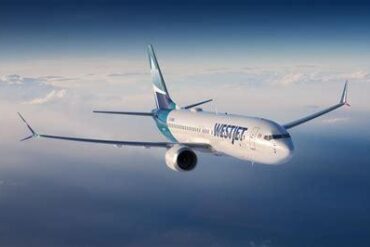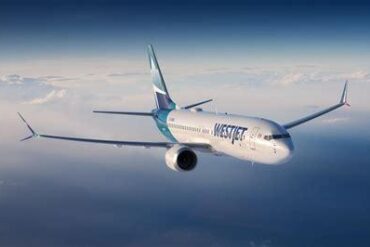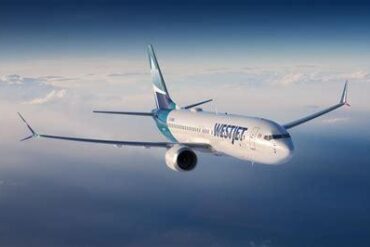
In a bold move that redefines the boundaries of narrow-body aircraft operations, WestJet has officially inaugurated its longest-ever transatlantic route using the Boeing 737 MAX 8, connecting Calgary (YYC) in Alberta, Canada, to Dublin (DUB), Ireland. The flight, clocking in at 7 hours and 20 minutes, marks a significant milestone for both the airline and the broader low-cost transatlantic market. This launch showcases not only the technical prowess of the 737 MAX 8 but also WestJet’s evolving strategic ambitions in long-haul aviation.

Calgary to Dublin: A New Chapter in WestJet’s Transatlantic Strategy
The launch of this route comes as WestJet continues to expand its international network, positioning Calgary as a major hub for global connections. Unlike its earlier Europe-bound services that typically originated from Toronto or Halifax, this new service cements Calgary International Airport as a transatlantic gateway, reinforcing the airline’s commitment to decentralizing Canadian aviation.
The airline is betting big on the viability of point-to-point narrow-body operations across the Atlantic—a concept long questioned due to fuel range, passenger comfort, and payload limitations. But the 737 MAX 8, with its enhanced range and fuel efficiency, is proving to be the aircraft capable of bridging mid-size markets across the ocean without the need for wide-body jets.
Why the Boeing 737 MAX 8?
WestJet’s decision to deploy the 737 MAX 8 on such an extended mission underscores the aircraft’s performance credibility. Capable of flying over 6,500 km, the MAX 8 boasts CFM International LEAP-1B engines, improved aerodynamics, and advanced avionics that make it uniquely qualified for medium-haul international routes.
Key performance enhancements include:
- Fuel efficiency gains of 14% over previous generation 737s
- Lower emissions, aligning with WestJet’s sustainability goals
- Extended range, enabling nonstop service from western Canada to Europe
The MAX 8’s relatively small passenger capacity compared to wide-bodies also reduces financial risk for routes with fluctuating demand while maintaining service to markets like Dublin, which have strong leisure and VFR (visiting friends and relatives) traffic.

A Passenger Experience Engineered for Efficiency and Comfort
Flying across the Atlantic on a narrow-body jet used to mean compromise—less legroom, fewer amenities, and a subpar overall experience. But WestJet’s configuration of the MAX 8 challenges that notion. The aircraft offers:
- Premium cabin with larger seats and enhanced service
- WestJet Connect in-flight entertainment system with complimentary Wi-Fi access
- LED lighting and quieter cabins, designed to reduce jet lag and fatigue
The MAX 8 may not offer the spaciousness of a 787 Dreamliner, but its smart cabin ergonomics and upgraded onboard services aim to deliver an experience that competes confidently on comfort, especially for leisure travelers and budget-conscious flyers.
WestJet’s Growing European Footprint
This Calgary-Dublin route is only part of a broader transatlantic strategy. WestJet has also been steadily ramping up its presence in the European market with destinations including London Gatwick, Paris Charles de Gaulle, Rome Fiumicino, and Barcelona-El Prat.
The airline has been deliberate in pursuing a blend of wide-body and narrow-body operations based on route demand and economics. While its Boeing 787 Dreamliners handle high-traffic destinations from Eastern Canada, the MAX 8 fleet allows WestJet to target underserved or seasonally volatile markets where larger aircraft may not be economically viable.
Strategic Timing and Market Positioning
WestJet’s Dublin service comes at a moment when many carriers are still recovering from post-pandemic turbulence. With European demand steadily rebounding, especially for summer 2025, WestJet is seizing the opportunity to establish itself in key transatlantic corridors before competitors saturate the market.
The timing also capitalizes on Ireland’s strong diaspora community in Canada. Dublin is a popular European entry point for Canadians, and this route provides a nonstop option that saves several hours compared to connecting flights via Toronto or Montreal.

Operational Considerations: Weather, Fuel, and Payload
Flying a narrow-body jet across the Atlantic isn’t just a numbers game. The MAX 8’s performance on the Calgary-Dublin route will be continuously evaluated based on weather patterns, jet stream impacts, and payload constraints. WestJet is likely implementing meticulous ETOPS (Extended-range Twin-engine Operational Performance Standards) compliance to ensure safety and schedule reliability.
Fuel loads are carefully calculated with contingency reserves for diversions, headwinds, and alternates. While westbound return flights may face stronger jet streams and require fuel stops in some extreme weather scenarios, the MAX 8’s real-world performance has proven more robust than originally anticipated.
Economic and Environmental Implications
Flying a 737 MAX 8 transatlantic is also a play for lower operating costs and reduced environmental impact. Compared to wide-bodies like the 767 or A330, the MAX burns significantly less fuel and has lower CO₂ emissions per seat.
This allows WestJet to:
- Keep fares competitive in the low-cost long-haul segment
- Attract environmentally conscious travelers
- Meet or exceed sustainability benchmarks, including ICAO’s CORSIA requirements
With aviation under increasing scrutiny for its carbon footprint, this narrow-body model represents a step toward more sustainable long-haul travel.
The Bigger Picture: WestJet’s Vision for the Future
This route is more than a single point-to-point flight—it’s a proof of concept for the next chapter in transatlantic aviation. WestJet is actively exploring additional MAX 8 destinations in Europe that could be served from Canadian cities beyond the traditional eastern gateways.
Markets such as Manchester, Amsterdam, and even Lisbon could be feasible with further range optimization and favorable scheduling. As aircraft technology continues to advance, we may see a new map of transatlantic routes emerge, driven by fuel-efficient, right-sized aircraft rather than legacy hub-and-spoke systems.
Conclusion: A New Era of Efficiency and Reach
WestJet’s inaugural 7h 20m Calgary-to-Dublin service aboard the Boeing 737 MAX 8 is a defining moment for the airline and the broader low-cost carrier model. It exemplifies how technological advancements in aircraft design can unlock new economic possibilities and reshape route planning.
As the world gradually shifts toward more efficient aviation, this milestone proves that single-aisle jets are no longer confined to domestic or regional operations. With the MAX 8, WestJet is charting a bold course into the future of transatlantic travel—one that emphasizes accessibility, sustainability, and strategic agility.
Whether this signals a broader industry trend or remains a specialized strategy unique to WestJet, one thing is clear: the narrow-body revolution has truly crossed the Atlantic.