China’s latest leap in space science is not about rockets or landers, but about something far more fundamental: time itself. As lunar missions stretch from days into months and years, keeping clocks aligned between Earth and the Moon has become a critical challenge. With its newly unveiled lunar timekeeping system, China has moved decisively into the spotlight, offering the first publicly released framework designed to keep lunar clocks astonishingly precise for centuries.
The new system reflects a broader shift in the modern space race. While spectacular launches capture headlines, the infrastructure that supports long-term habitation is where real leadership emerges. Accurate timekeeping underpins navigation, communications, autonomous vehicles, and scientific experiments. On the Moon, where gravity subtly reshapes the flow of time, Earth-based standards are no longer sufficient.
Developed by researchers at the Purple Mountain Observatory, the software package known as LTE440 introduces a rigorously defined method for tracking lunar time and continuously synchronizing it with Earth time. Published in Astronomy and Astrophysics and released openly on GitHub, the system demonstrates both technical confidence and strategic transparency. According to its creators, LTE440 can maintain accuracy within tens of nanoseconds for the next 1,000 years, an achievement that places it among the most precise timekeeping models ever proposed for space.
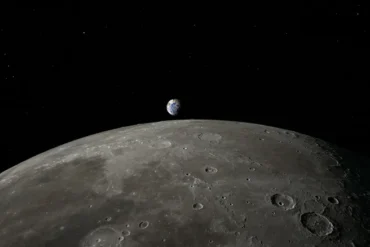
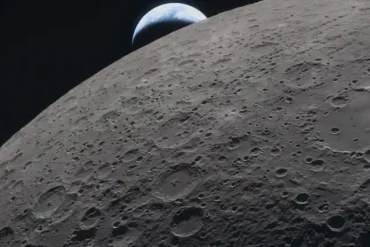
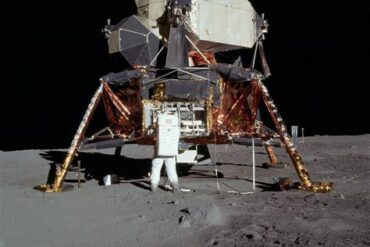
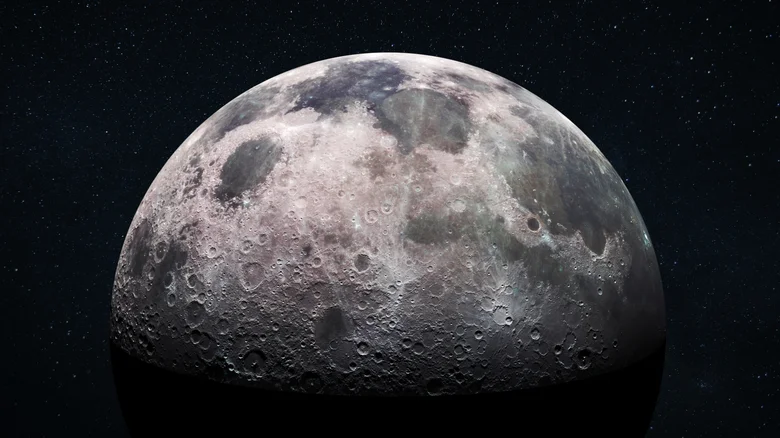
At the heart of the problem lies physics rather than politics. Due to the Moon’s weaker gravity, time runs faster there than on Earth, a phenomenon predicted by Einstein’s theory of general relativity. Over a single Earth day, a lunar clock gains roughly 58 microseconds. During short missions like Apollo, the discrepancy was negligible. Over long-duration operations, however, those microseconds accumulate into navigation errors, communication delays, and systemic desynchronization.
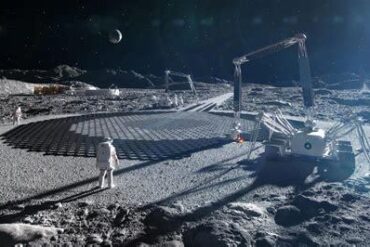
Future lunar exploration will depend on GPS-like navigation systems operating on or around the Moon. Precision landings, autonomous rovers, resource mapping, and crew coordination all require a shared temporal reference. Without a dedicated lunar standard, each system risks drifting out of alignment, undermining safety and efficiency. LTE440 addresses this by mathematically modeling relativistic effects and orbital dynamics, ensuring consistent time signals across the lunar surface.
China’s move also places pressure on other space agencies. NASA is developing its own Coordinated Lunar Time standard, but it has yet to release a comparable public framework. While geopolitical tensions may limit formal cooperation, the mathematics behind timekeeping remains universal. The open availability of LTE440 means its equations and methods can be scrutinized, tested, and potentially adapted by scientists worldwide.
The contrast with recent Western setbacks is difficult to ignore. As experimental spacecraft struggle and policy directives shift, China is quietly building the foundations for sustained lunar presence. Timekeeping may lack the drama of a launch, but it defines whether a lunar base functions smoothly or descends into operational chaos.
Ultimately, this breakthrough underscores a deeper truth about space exploration. The next era will be won not only by who reaches the Moon, but by who can live, work, and operate there reliably. By mastering lunar time, China has claimed a decisive advantage in shaping humanity’s long-term future beyond Earth.