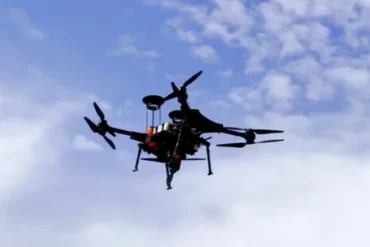
India has made a resounding statement in the arena of unmanned aerial warfare with the successful test of its latest hybrid combat drone, Rudrastra. Developed by Solar Defense and Aerospace Limited, this groundbreaking platform merges vertical takeoff and landing (VTOL) capability with high endurance and precision strike functions—offering the Indian military a powerful new edge on modern battlefields. The recent successful trials of Rudrastra mark not just a technological milestone, but a pivotal moment in India’s pursuit of strategic self-reliance under the Atma Nirbhar Bharat initiative.
A Milestone for India’s Indigenous Defense Ecosystem
On June 11, 2025, Rudrastra took to the skies for its highly anticipated trial. According to defense insiders, it maintained a stable real-time video transmission over a 50-kilometer radius, returning safely to its launch site after completing an extended surveillance and combat simulation mission. The drone’s total operational radius exceeded 170 kilometers, with an endurance time of approximately 90 minutes—a figure that positions it competitively against global counterparts.
The highlight of the test was a mid-altitude deployment of an anti-personnel warhead, which executed a successful air burst detonation. The explosion occurred just above ground level, scattering lethal shrapnel over a broad area and meeting every benchmark for tactical effectiveness. The trial confirmed Rudrastra’s combat-readiness and its capability to deliver pinpoint precision strikes in varied terrain conditions.

This successful demonstration not only cements Rudrastra’s place in India’s defense roadmap but also signals the nation’s rapid evolution as a hub of homegrown military technology. As global drone warfare grows more complex, platforms like Rudrastra offer India multi-dimensional combat flexibility, allowing operations in contested zones without risking human lives.
Hybrid VTOL Design: Engineering a Combat Game-Changer
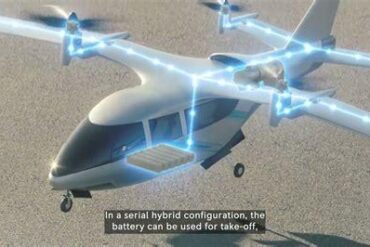
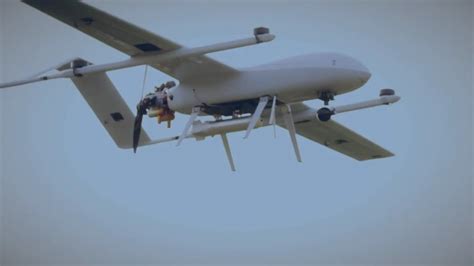
Rudrastra’s core strength lies in its hybrid VTOL design, combining the vertical lift advantages of helicopters with the aerodynamic efficiency of fixed-wing drones. This dual capability allows it to operate from confined or rugged terrains—ranging from dense urban landscapes to high-altitude military posts over 5,000 meters.
The platform is engineered for:
- High-endurance ISR (Intelligence, Surveillance, and Reconnaissance) missions
- Tactical payload delivery with precision-guided munitions
- Loitering capabilities in high-threat zones
- Stealth and low radar signature for survivability in contested airspace
Solar Defense’s proprietary propulsion and navigation systems provide the drone with remarkable aerodynamic stability, even during extended loiter missions in extreme climates. These features are crucial as the Indian Army continues to expand its footprint across the Himalayan frontier and desert battlefields.
Precision Strike Capabilities: Smart Payload, Smarter Results
The heart of Rudrastra’s combat functionality is its modular payload bay, which accommodates a range of mission-specific munitions. During the June test, the drone deployed a precision-guided anti-personnel warhead that detonated mid-air to maximize area impact while minimizing structural collateral.
Such an airburst detonation technique increases battlefield effectiveness against enemy combatants concealed in foliage or trenches. It signifies India’s growing capability in smart warfare solutions, integrating drone intelligence with lethal outcomes. This success ensures India’s growing ability to execute surgical strikes with minimal footprint, a vital strategic asset amid evolving asymmetric warfare doctrines.
Strategic Implications: Atma Nirbhar Bharat in Action
The Rudrastra project is not just a technological innovation—it’s a political and strategic statement. As India pursues the goal of self-reliant defense production, Rudrastra’s success represents the effectiveness of government policy and private sector synergy. With Solar Defense and Aerospace Limited at the helm, the platform showcases what is possible when domestic R&D meets mission-critical defense requirements.
This drone is also a rebuttal to the notion that high-end drone capabilities must be imported. By crafting a system from the ground up that meets the Indian Army’s unique geographical and strategic needs, Rudrastra elevates indigenous innovation to front-line deployment. The success encourages further investment into local defense startups and accelerates India’s transition into a defense tech exporter.
Beyond Rudrastra: Counter-Drone Systems Taking Shape
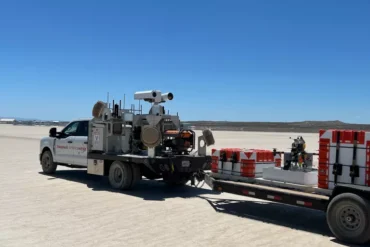
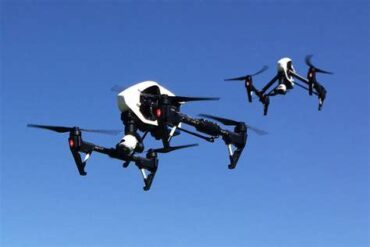
Rudrastra’s unveiling follows close on the heels of another critical success by Solar Defense—the hard kill counter-drone system trialed in Odisha just a month earlier. This ground-based platform demonstrated the ability to detect, track, and neutralize rogue drones, including swarms, up to 2.5 kilometers away using unguided micro rockets.
With a 20-meter lethal blast radius, this system complements Rudrastra by securing ground assets and forward-operating bases from aerial threats. Its rugged design and low-cost deployment model make it ideal for rapid rollouts across India’s varied topography—from the heat-scorched plains of Rajasthan to the ice-clad peaks of Ladakh.
Redefining Modern Warfare: The Rise of Smart Combat Ecosystems
India’s strategic future is being shaped not just by individual platforms, but by the integration of autonomous combat systems into a unified smart warfare ecosystem. Rudrastra, in this sense, is more than a drone—it’s a node in a larger network of AI-driven decision-making tools, automated surveillance, and precision kinetic response units.
This approach is increasingly important in a global security landscape where state and non-state actors employ drone swarms, cyber tools, and hybrid strategies. By combining offensive and defensive unmanned systems under a single development pipeline, India aims to maximize strategic agility while reducing long-term dependency on foreign tech suppliers.
Battlefield Versatility: From Urban Warfare to High-Altitude Operations
A defining feature of Rudrastra is its adaptability across terrains. India’s diverse battle environments—from jungle warfare in the Northeast to high-altitude standoffs with China—demand platforms that can pivot effortlessly between roles. The VTOL capacity ensures rapid vertical lift from cramped or elevated launch zones, while its fixed-wing transition allows long-range cruise missions with minimal energy expenditure.
This versatility makes Rudrastra an ideal candidate for roles such as:
- Border reconnaissance and adversary tracking
- Targeted elimination of insurgent hideouts
- Communication relay in disaster-struck areas
- Night surveillance with infrared capability
Future Roadmap: Scaling Production and Export Potential
Solar Defense is reportedly already in discussions to scale up production for Rudrastra following the success of its trials. The Indian Army is expected to induct an initial batch for forward-deployed battalions operating in high-conflict zones. Parallel talks are underway to explore export options to Southeast Asian and Middle Eastern allies—regions where hybrid drone warfare is becoming increasingly relevant.
India’s defense export ambitions have traditionally lagged behind its production capacity. Rudrastra, however, could change that narrative by providing a cost-effective, combat-proven alternative to Western UAV systems. The potential for interoperability with existing NATO-aligned C4ISR (Command, Control, Communications, Computers, Intelligence, Surveillance, and Reconnaissance) systems adds further value for prospective buyers.
Conclusion: A Sonic Boom in India’s Defense Renaissance
Rudrastra is not just a drone—it is the loud, unmistakable roar of India’s emergence as a sovereign military innovator. As the geopolitical chessboard becomes increasingly unpredictable, such technologies promise to keep India a few moves ahead. Whether serving as a reconnaissance scout, a strike vector, or a deterrent platform, Rudrastra embodies the future of battlefield autonomy and resilience.
With projects like Rudrastra and its counter-drone sibling, India is steadily forging a defense force that is not only equipped for today’s threats but also primed for the warfare of tomorrow.