In a transformative leap for Sino-Pakistani defense cooperation, Pakistan has finalized a $4 billion arms deal with the Libyan National Army (LNA), headlined by the sale of 16 JF-17 Thunder multi-role fighter jets. This move not only marks Pakistan’s largest-ever defense export, but also solidifies China’s burgeoning military footprint in the MENA region, offering a low-cost, sanction-free alternative to Western and Russian arms.
Strategic Partnership in a Divided Libya
Libya remains a fractured nation, split between two rival administrations. On one side, the UN-backed Government of National Unity (GNU) governs from Tripoli; on the other, the Government of National Stability, supported by Field Marshal Khalifa Haftar and the LNA, commands much of the east and south, including vital oil-producing regions.
Despite a United Nations arms embargo in place since 2011, the LNA has moved forward with this substantial arms agreement. While this raises eyebrows in international circles, Haftar’s forces have repeatedly operated in gray zones, often receiving equipment from allies such as the UAE, allegedly bypassing restrictions.
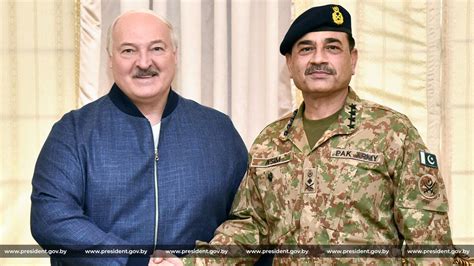
Pakistani officials defend the agreement by highlighting the absence of direct sanctions against the LNA or Haftar himself. This pragmatic interpretation has enabled the completion of a comprehensive military contract, which includes:
- 16 JF-17 Thunder fighter jets
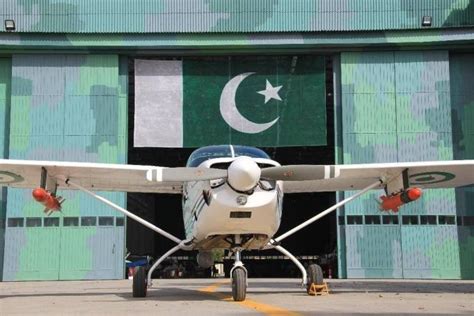
- 12 Super Mushak trainer aircraft
- Provisions for joint military manufacturing
- Equipment spanning land, sea, and air forces
- Agreements on collaborative training programs
The JF-17 Thunder: From South Asia to North Africa
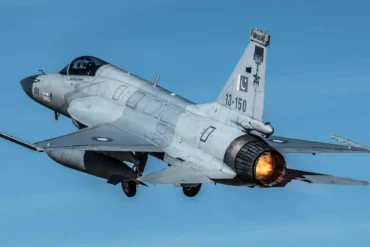
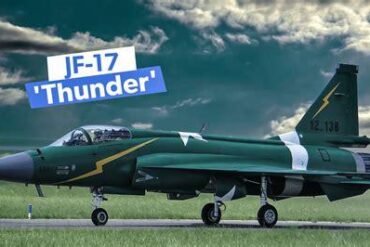
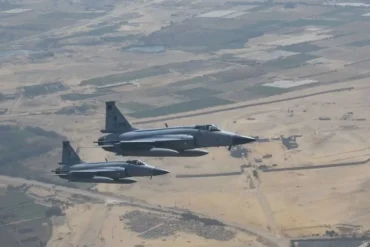
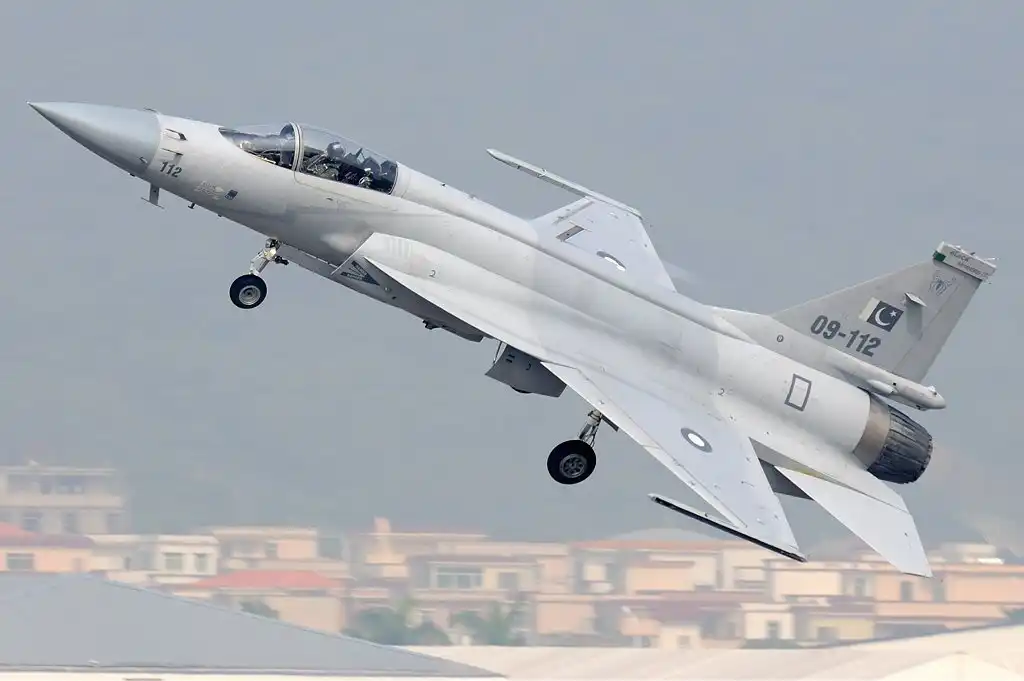
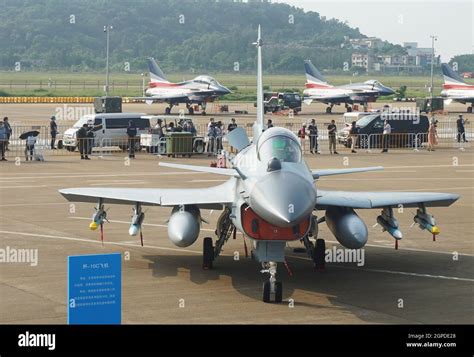
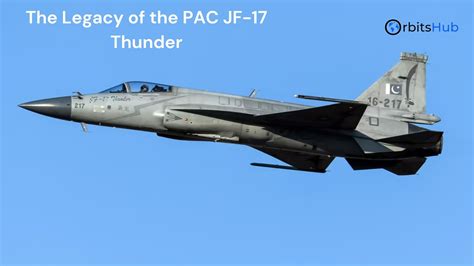
At the core of this deal is the JF-17 Thunder, a fourth-generation, single-engine, lightweight multi-role aircraft co-developed by the Pakistan Aeronautical Complex and China’s Chengdu Aircraft Corporation. Once dismissed as a budget alternative to legacy systems, the JF-17 has now emerged as a battle-tested workhorse.
It made headlines in May 2025, when Pakistani and Indian Air Forces clashed in a rare aerial confrontation. India’s Air Marshal A.P. Singh claimed that several JF-17s were destroyed alongside F-16s. However, Pakistan did not confirm these losses. The battle, regardless of outcomes, provided the JF-17 with its first direct engagement against high-performance fighters like the Su-30 MKI and Rafale, enhancing its combat credibility.
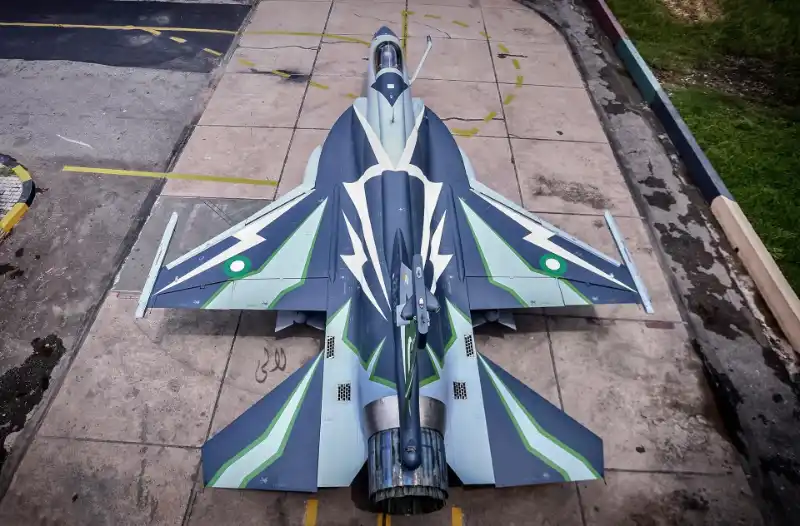
Libya’s air force, long dependent on Soviet-era MiG-23s, MiG-29s, and Su-24s, has been in desperate need of modernization. The JF-17 Block III variant—likely the model selected in the Libyan deal—offers an array of modern features:
- KLJ-7A AESA radar for enhanced tracking and fire control
- PL-15 Beyond-Visual-Range missiles with up to 300 km range
- Missile Approach Warning Systems (MAWS) and EW suite
- Increased use of composite materials for reduced radar signature
- Wide-Angle Smart HUD and improved cockpit avionics
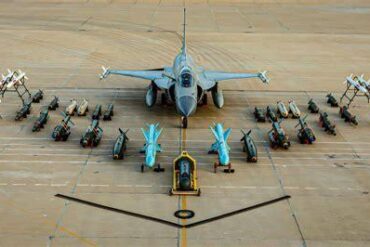
Its seven hardpoints support a combination of Chinese weapons, including PL-5 AAMs, LS-6 glide bombs, YJ-83 subsonic, and YJ-12 supersonic anti-ship missiles. With a maximum speed of Mach 1.6, a service ceiling of 50,000 feet, and over 7,000 lbs of ordinance capacity, it offers performance that meets the demands of vast and volatile territories like Libya.
Beyond Airpower: A Comprehensive Defense Package
While the JF-17 dominates headlines, the agreement also includes 12 Super Mushak trainers, enabling the LNA to develop pilot proficiency in-house. Moreover, the contract spans across the Libyan defense spectrum—naval systems, ground equipment, and military manufacturing know-how.
By offering training and production collaboration, Pakistan positions itself not just as an arms exporter but as a strategic defense partner. This model echoes China’s Belt and Road Initiative playbook—military exports tied to broader strategic ties.
China’s Expanding Influence in MENA Through Arms Diplomacy
The Libya deal is not an isolated case, but part of China’s long-term military strategy to penetrate markets traditionally dominated by the U.S. and Russia. The Ukraine conflict has undermined Russian exports, while U.S. arms sales often come with political strings and risk of sanctions. China and Pakistan fill the void.
Middle Eastern and North African countries such as Egypt, Iran, Saudi Arabia, and the UAE have shown increasing interest in Chinese fighters like the FC-31 stealth jet and J-10C, which Beijing markets as capable, versatile, and unburdened by CAATSA constraints.
Moreover, China’s offerings are frequently coupled with financial incentives, technology transfer, and flexible payment terms—factors that appeal to resource-strapped or diplomatically isolated buyers.
According to Amine Ayoub, a Moroccan Middle East Forum fellow, this represents a “South-South cooperation model,” bypassing the political preconditions typical of Western military contracts. The JF-17 sale to Libya exemplifies how non-Western powers are reshaping global arms supply chains.
Rewriting the Rules of Arms Embargoes
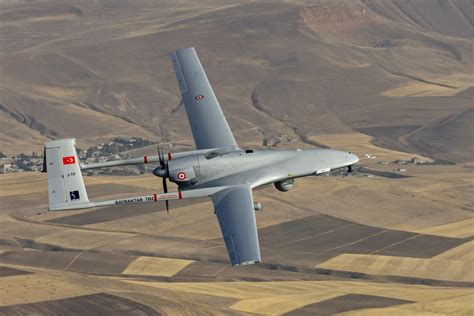
Despite the clear violation—or at best, circumvention—of the UN arms embargo, critics find it hard to condemn the deal unilaterally. The Government of National Unity (GNU) in Tripoli has itself procured Bayraktar TB2 drones, Akinci UAVs, and Hurkus-C attack aircraft from Turkey in recent years.
In this context, the LNA’s acquisition of JF-17s reflects an ongoing regional arms race, with factions arming themselves to protect territorial gains. The absence of direct sanctions against Haftar, paired with the precedent of foreign-supplied drones and trainers to GNU, provides plausible justification from Pakistan’s perspective.
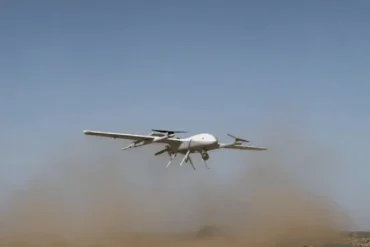
Furthermore, the LNA has already operated Chinese Wing Loong II drones, allegedly delivered via the UAE, suggesting an existing military-industrial interface with Beijing. The JF-17 contract simply institutionalizes this cooperation at a higher level.
The JF-17: A Symbol of Pakistan’s Defense Autonomy
With prior export orders from Nigeria, Myanmar, and Azerbaijan, the Libyan deal gives the JF-17 platform geopolitical legitimacy. More importantly, it strengthens Pakistan’s position as an independent defense exporter—one that is:
- Cost-competitive
- Free from Western conditions or sanctions
- Capable of technology transfer
- Backed by Chinese industrial muscle
This transition is crucial for Islamabad, which seeks to diversify its defense revenue streams and assert autonomy in foreign policy. It is also a rebuttal to critics who once dismissed Pakistani military exports as limited to small arms or ammunition.
Operational Value for Libya’s LNA
The JF-17’s flexibility suits Libya’s fragmented security architecture. The aircraft’s low maintenance requirements, affordable operating costs, and multirole capability make it an ideal tool for:
- Armed overwatch and ISR for ground forces
- Rapid interdiction missions in vast desert regions
- Quick scramble capability against regional threats
Additionally, with radar jamming pods, infrared targeting sensors, and precision munitions, the JF-17 provides a combat-tested deterrent against aerial and ground incursions.
Implications for Regional Security and Western Influence
The JF-17 deal is emblematic of shifting allegiances in global arms politics. As China steps into the vacuum left by a war-entangled Russia and a condition-laden America, its partnership with Pakistan becomes the spearhead of military diplomacy.
The Libyan contract represents more than just fighter jets—it is an assertion of a new global order in arms trade, one where cost-efficiency, political neutrality, and operational performance outweigh ideological alignment.
For Western powers, the spread of Chinese-origin combat systems into volatile zones like Libya poses a strategic concern. It challenges traditional influence, undermines UN enforcement regimes, and blurs lines between state and non-state military capability.
Conclusion: JF-17’s MENA Emergence Is a Wake-Up Call
The $4 billion arms deal between Pakistan and the LNA is not merely a sale—it is a signal. A signal that Chinese-Pakistani defense cooperation is entering a phase of strategic maturity. A signal that developing nations are no longer passive consumers of Western or Russian technology. And above all, a signal that the JF-17 Thunder, once written off as a budget fighter, has thundered into relevance as a cornerstone of geopolitical realignment in the MENA region.