Iraq’s renewed focus on rebuilding credible airpower has entered a decisive phase as Baghdad formally explores the acquisition of Pakistan’s JF-17 Thunder fighter jet, signaling a potential strategic shift away from exclusive reliance on the F-16IQ. The move reflects a deeper reassessment of operational readiness, sustainment constraints, and long-term force development as Iraq seeks to modernize its air force while navigating financial, political, and logistical realities that have shaped its defense posture for more than a decade.
The interest was formally conveyed during senior-level air force talks held in Baghdad on January 10, 2026, when Pakistan Air Force Chief of Air Staff Air Chief Marshal Zaheer Ahmed Baber Sidhu met Lieutenant General Staff Pilot Mohanad Ghalib Mohammed Radi Al-Asadi, Commander of the Iraqi Air Force. While the visit emphasized institutional cooperation, training, and operational coordination, the JF-17 Thunder emerged as the centerpiece of Iraq’s exploratory discussions, underscoring Baghdad’s intent to diversify its combat aircraft portfolio rather than pursue isolated purchases.
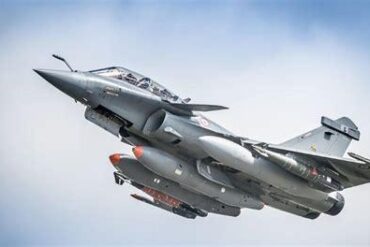
This engagement follows a broader pattern in which Iraq is reassessing its aviation requirements beyond counterterrorism missions, placing greater emphasis on air sovereignty, pilot regeneration, and sustainable multirole capability. The timing is notable, coming amid regional air force recapitalization and Iraq’s parallel exploration of Western platforms such as the French Rafale, highlighting a deliberate strategy to weigh multiple suppliers and operational philosophies.
The diplomatic framing of the talks also carried symbolic weight. Pakistan emphasized long-standing religious, cultural, and historical ties with Iraq, presenting the JF-17 not as a transactional sale but as part of a comprehensive partnership encompassing pilot training, maintenance support, and institutional development. This approach resonated with Iraqi leadership, which has struggled to rebuild technical depth and human capital after decades of conflict and disruption.
Iraq’s current reliance on the F-16IQ has provided a foundation for reestablishing fighter operations, yet persistent challenges have constrained the fleet’s effectiveness. Sustainment complexities, dependence on U.S. approval chains, and limitations in weapons integration have affected operational availability, prompting Iraqi planners to seek complementary platforms that can reduce single-supplier dependency while expanding mission flexibility.
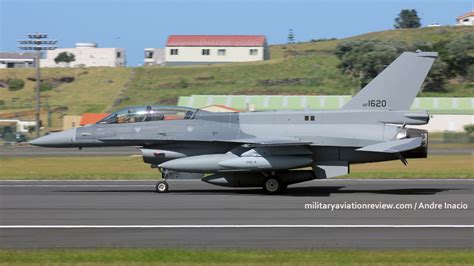
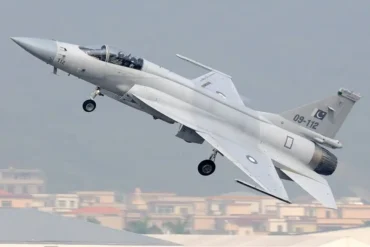
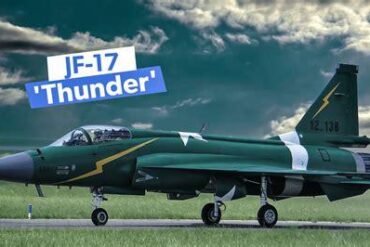
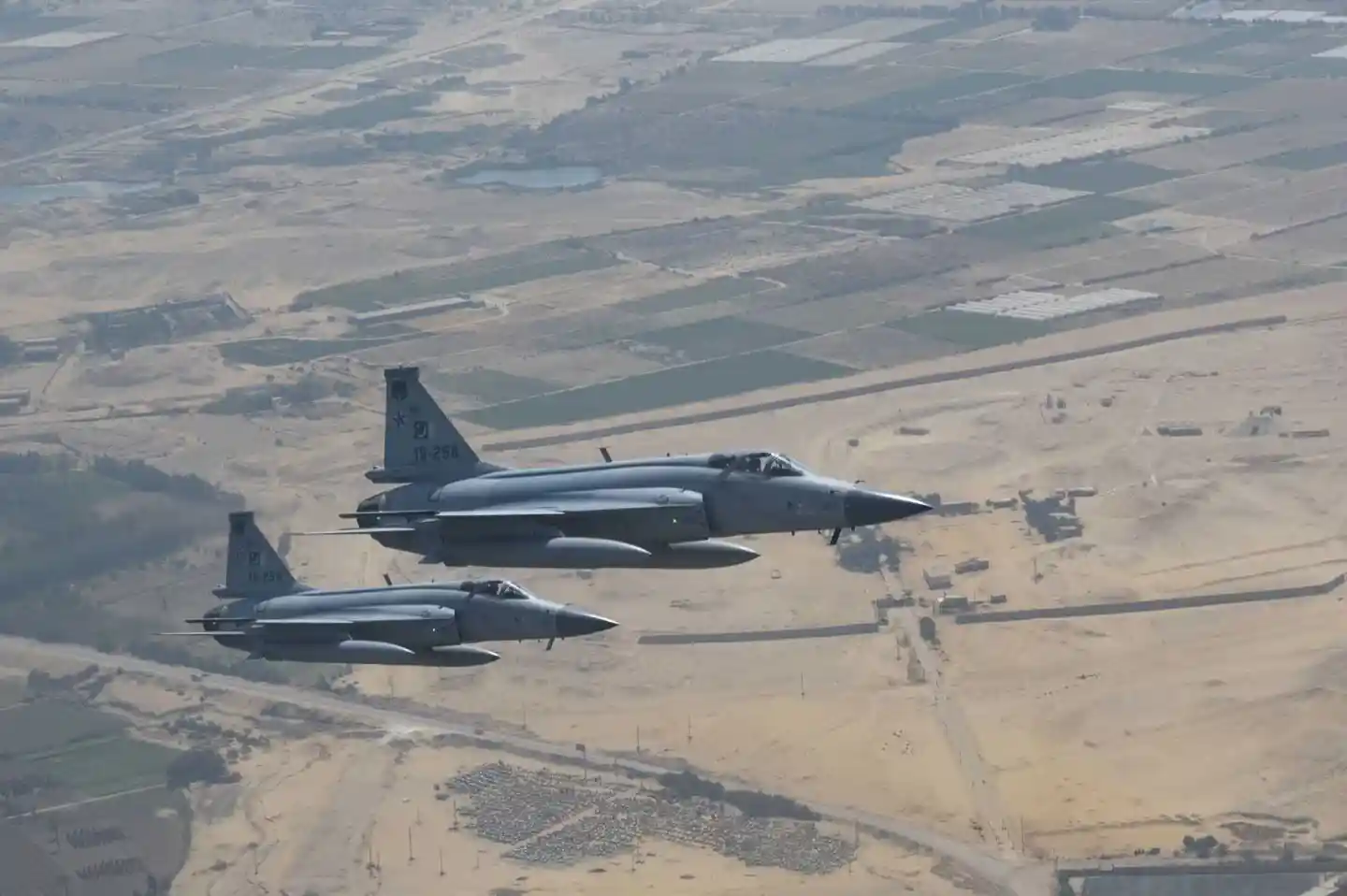
Against this backdrop, the JF-17 Thunder presents itself as a pragmatic alternative rather than a direct performance competitor to heavier Western fighters. Developed jointly by Pakistan and China and assembled at Pakistan Aeronautical Complex Kamra, the aircraft has been positioned as a cost-effective, lightweight multirole fighter capable of fulfilling air defense, ground attack, and maritime strike roles without the political and logistical overhead often associated with Western systems.
The appeal lies not only in acquisition cost but in lifecycle economics. Operating expenses for the JF-17 are consistently assessed as lower than those of the F-16IQ, a decisive factor for Iraq’s defense budget, which must balance airpower modernization with pressing land and internal security priorities. Moreover, Pakistan’s willingness to bundle aircraft delivery with training pipelines, simulator access, and maintenance ecosystems addresses Iraq’s chronic gaps in technical self-sufficiency.
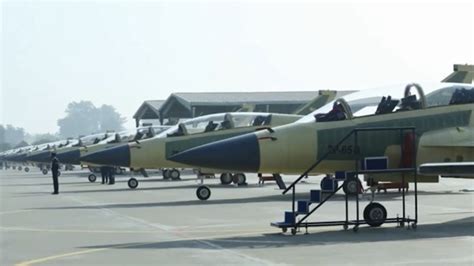
This comprehensive packaging approach has already gained traction across multiple regions. In recent months, Azerbaijan, Libya, Bangladesh, and Saudi Arabia have either confirmed acquisitions or entered advanced discussions centered on the JF-17 as the anchor of broader defense cooperation agreements. These deals often extend beyond fighter jets to include basic trainers such as the Super Mushshak, professional military education, and long-term sustainment frameworks, creating vertically integrated partnerships rather than one-off procurements.
For Iraq, such an arrangement offers a pathway to rebuild its pilot pipeline while avoiding the operational bottlenecks that have limited sortie generation within its existing fleet. Lieutenant General Al-Asadi’s expressed interest in both the JF-17 and the Super Mushshak underscores Baghdad’s recognition that aircraft alone cannot restore airpower without parallel investment in training and institutional capacity.
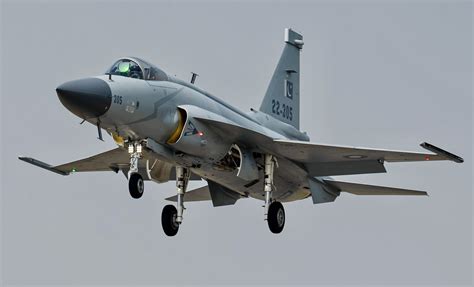
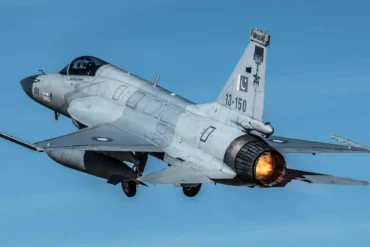
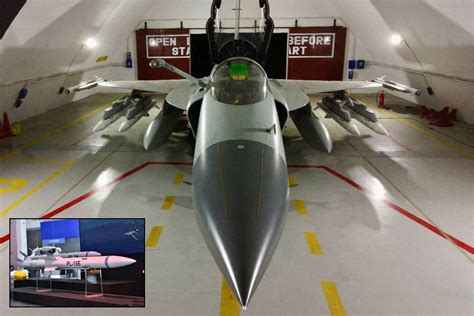
The JF-17 Block III, the most advanced variant currently in production, represents a significant leap over earlier iterations. Entering serial production in late 2020, the Block III integrates a KLJ-7A active electronically scanned array (AESA) radar, an infrared search and track system, a three-axis fly-by-wire flight control system, and modern helmet-mounted displays and sights. Enhanced electronic warfare suites further expand survivability in contested environments, positioning the aircraft as a credible multirole platform within its weight and class.
These upgrades align with Iraq’s evolving mission requirements, which increasingly emphasize situational awareness and precision engagement rather than sheer payload or range. The Block III’s avionics architecture also supports integration with a diverse array of Chinese and non-Western weapons, offering flexibility that contrasts with the more tightly controlled integration environment of the F-16IQ.
From a technical standpoint, the JF-17 Block III remains a single-engine, lightweight fighter powered by the Klimov RD-93MA afterburning turbofan, with potential future configurations featuring the Guizhou WS-13. Producing approximately 19,000 pounds of thrust, the aircraft achieves a top speed near Mach 1.6 and operates at service ceilings approaching 55,000 feet. Its seven external hardpoints enable carriage of air-to-air missiles, precision-guided munitions, anti-ship weapons, and external fuel tanks, supporting a wide mission spectrum.
While these specifications do not place the JF-17 in the same category as heavyweight Western fighters, they align closely with Iraq’s current and near-term operational needs. The emphasis is on availability, affordability, and adaptability, rather than absolute performance metrics that may be underutilized or unsustainable within existing infrastructure.
Strategically, Iraq’s exploration of the JF-17 reflects a broader recalibration of defense relationships. By engaging Pakistan, Baghdad gains access to a supplier willing to operate outside traditional Western approval frameworks while still offering structured training and long-term support. This diversification enhances Iraq’s bargaining position across all procurement discussions, including those with Western manufacturers, by reducing dependency and expanding options.
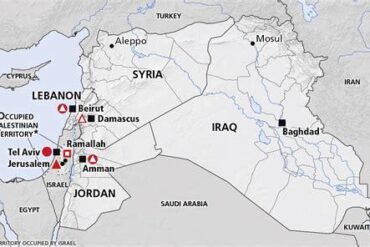
The regional context further amplifies this calculus. Neighboring air forces are rapidly modernizing, and Iraq faces pressure to restore credible air defense and deterrence without repeating past cycles of overreliance and underutilization. A mixed fleet strategy, combining Western platforms like the F-16IQ with cost-effective alternatives such as the JF-17, could provide operational depth while spreading risk across multiple supply chains.
Pakistan’s own experience operating and evolving the JF-17 adds another layer of appeal. Continuous upgrades, export-driven refinements, and an active user community suggest a platform that will remain supported and adaptable rather than stagnating after initial delivery. For Iraq, which has previously struggled with fleet obsolescence and support discontinuities, this continuity is a critical consideration.
Ultimately, Iraq’s interest in the JF-17 Thunder is less about replacing the F-16IQ and more about reshaping its airpower ecosystem. By prioritizing sustainment, training, and institutional resilience alongside aircraft capability, Baghdad is signaling a more mature and strategically grounded approach to defense modernization. Whether this exploration culminates in a formal acquisition will depend on negotiations, financing, and alignment with Iraq’s broader force structure plans, but the direction is clear: Iraq is seeking flexibility, autonomy, and long-term viability in the skies.