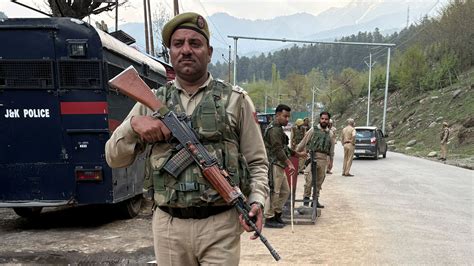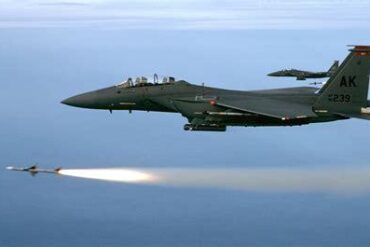
The recent military escalation between India and Pakistan has reignited fears of a prolonged conflict in South Asia, following India’s targeted strikes on what it claimed were terrorist infrastructure sites deep within Pakistani territory. These unprecedented strikes were launched in retaliation for a deadly militant assault on Hindu tourists in Indian-administered Kashmir, marking a dramatic turn in the long-standing hostility between the two nuclear-armed neighbors.
India Executes Precision Strikes in Pakistani Punjab
On May 7, Indian military forces conducted coordinated aerial attacks across six districts in Pakistan’s Punjab province. According to Indian authorities, the strikes targeted nine high-value sites affiliated with Jaish-e-Mohammed and Lashkar-e-Taiba, both designated terrorist organizations with a history of conducting cross-border terrorism.
Indian officials described the targets as multi-functional compounds that doubled as recruitment centers, weapons depots, and militant training camps. These facilities, intelligence reports suggested, were instrumental in orchestrating the attack that killed 26 Hindu tourists last month.
Foreign Secretary Vikram Misri emphasized the preemptive nature of these operations: “Our surveillance and monitoring indicated imminent threats. Therefore, we acted decisively to neutralize them.”
India stated it used “niche technology weapons” with minimal collateral risk. However, no detailed breakdown of the systems or tactics used was released. The operation was code-named Operation Sindoor, symbolizing a red line drawn by India in response to Pakistan’s alleged passive complicity in cross-border terrorism.
Pakistan Denounces Strikes as ‘Blatant Act of War’
In a swift response, Islamabad condemned the Indian offensive as a gross violation of sovereignty. Military spokesperson Lt. Gen. Ahmed Sharif Chaudhry declared the action as a “blatant act of war” and confirmed the death of 26 civilians, with an additional 46 injured. Pakistani officials claimed none of the struck sites were associated with militant activity, asserting instead that civilian infrastructures like mosques and residential buildings were hit.
“We reserve the right to respond at a time and place of our choosing,” Chaudhry warned in a nationally televised address. He underscored that while Pakistan’s retaliatory posture remains defensive, any further escalation would trigger a full-spectrum response.
Cross-Border Shelling Intensifies in Kashmir
Alongside the aerial strikes, intense artillery exchanges erupted across the Line of Control (LoC) in Kashmir. Both nations confirmed the use of heavy munitions, with mortar and sniper fire reported in at least eight sectors. Indian officials reported 10 civilian deaths and 48 injuries in their administered region of Kashmir, while Pakistan claimed six fatalities on its side.
This marks the most intense border conflict since the 1999 Kargil War and exceeds the magnitude of the 2019 Balakot air strikes, which were themselves seen as a critical moment in India-Pakistan military relations.
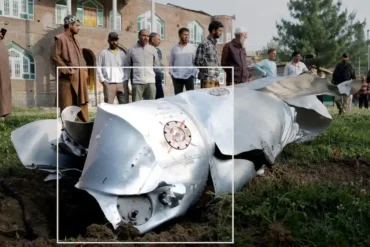
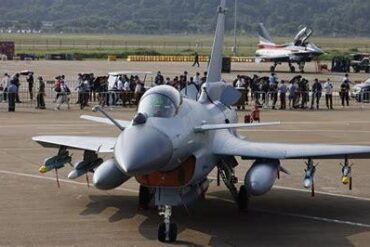
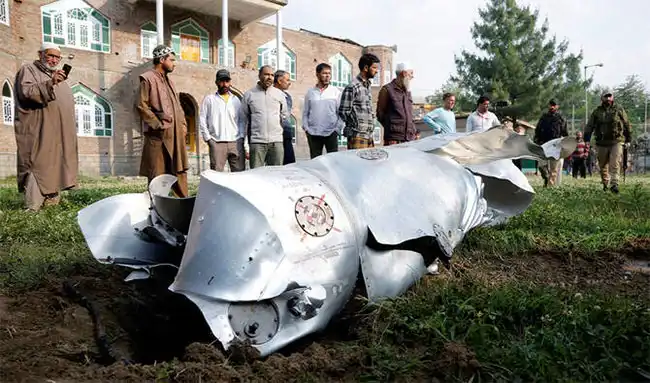
The Indian Defence Ministry did not confirm Pakistan’s claim of shooting down five Indian fighter jets, although local sources in Indian Kashmir acknowledged the crash of three jets in separate areas. Visuals captured at dawn displayed debris of a metallic aircraft body, but authentication of these images remains pending.

Escalation Risk: Analysts Warn of Uncharted Territory
Political analysts caution that the scale and symbolism of India’s actions signal a new doctrinal shift. Previously, Indian operations were confined to Pakistani-controlled Kashmir. This time, however, strikes penetrated mainland Pakistani Punjab, suggesting a willingness to expand the conflict theater.
According to South Asia expert Michael Kugelman, “This is far more severe than previous episodes. What comes next will determine whether this is a crisis or a catastrophe.”
The attack comes just weeks after India accused two Pakistani nationals of orchestrating the Kashmir tourist attack. Yet, India has not presented public evidence, and Pakistan continues to deny involvement.
The strategic implications are severe. Should Pakistan mount a retaliatory strike of similar magnitude, it could precipitate an uncontrollable military spiral in a region already burdened by nuclear arms and fragile diplomacy.
Public Reaction: Nationalist Support in India, Fear in Pakistan
In New Delhi, the strikes were met with strong domestic approval. Citizens celebrated the perceived decisiveness of Prime Minister Narendra Modi’s administration, hailing the response as a turning point in India’s battle against cross-border terrorism.
“Pakistan has been testing our patience. The good thing is India is taking revenge,” said Kumar Ravi Shankar, a lawyer in the capital.
However, across the border in Muzaffarabad, fear replaced pride. Residents awoke to shattered buildings and disrupted lives. “We never thought the war would come to our homes like this,” said a local shopkeeper, as emergency crews cleared rubble from mosque courtyards and schoolyards.
International Response: Global Powers Urge Restraint
The United States, China, and Russia quickly issued calls for de-escalation. President Donald Trump labeled the conflict “a shame” and expressed hope for a rapid resolution. Meanwhile, U.S. Secretary of State Marco Rubio held calls with both nations’ security advisors to maintain open communication channels.
U.N. Secretary-General António Guterres appealed for “maximum restraint” and dispatched a fact-finding team to Pakistani Kashmir. Their mission: to independently verify claims of civilian casualties and infrastructure damage.
Economic Fallout and Civil Aviation Disruptions
The geopolitical tension spilled over into global financial markets. India’s Nifty 50 opened 0.6% lower but recovered slightly, while the Sensex showed similar volatility. The Indian rupee weakened to 84.58 against the U.S. dollar.
In Pakistan, the Karachi Stock Exchange dropped nearly 6% at open, though it stabilized to a 1.6% loss by mid-day. Investor sentiment plummeted amid uncertainty about further retaliatory moves.
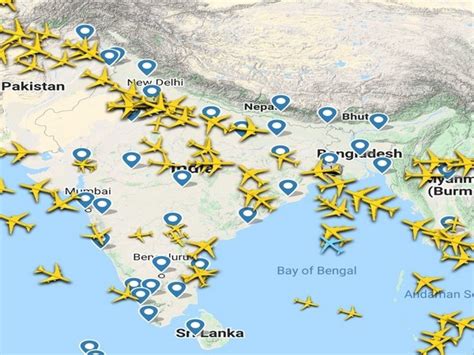
Air travel also took a hit. IndiGo, Air India, and Qatar Airways canceled or rerouted flights due to temporary closure of airspace over northern India and Pakistan.
Historical Context: A Conflict Rooted in Kashmir
Since gaining independence from Britain in 1947, India and Pakistan have fought three wars, two of which were directly over Kashmir. The Muslim-majority region remains a volatile flashpoint, claimed by both nations in full but controlled in parts.
A 2003 ceasefire held tenuously until a recommitment in 2021, but this latest bout of hostilities has all but shattered that fragile peace. For India, the strikes appear to be not just punitive but demonstrative — a bold assertion of new red lines in its counter-terrorism posture.
Meanwhile, Pakistan faces diplomatic balancing between defending its borders and managing international scrutiny over its alleged tolerance of terror groups within its territory.
The Road Ahead: Deterrence or Disaster?
As both militaries maintain high alert, the world watches anxiously. The potential for further escalation remains high, particularly if either side pursues additional retaliatory actions. Strategic miscalculations, false intelligence, or rogue elements could turn this already-tense conflict into an uncontrollable war.
In such an environment, diplomatic initiatives — whether from Washington, Beijing, or multilateral institutions like the U.N. — become not only welcome but urgent. But with nationalist fervor surging in both nations, especially in the lead-up to Indian elections, compromise may prove elusive.
What is evident, however, is that South Asia now stands at a perilous crossroads. The future of peace between India and Pakistan may well hinge on what happens in the next 72 hours.