India is on the brink of a significant leap in aerial surveillance and intelligence gathering as the Ministry of Defence prepares to review and potentially greenlight a ₹10,000 crore project for the development of three indigenously-built ISTAR (Intelligence, Surveillance, Target Acquisition and Reconnaissance) aircraft. These state-of-the-art airborne surveillance systems will be developed under the aegis of the Defence Research and Development Organisation (DRDO) and are poised to transform the way the Indian Air Force (IAF) conducts strategic and tactical operations.
The ambitious project is not merely about fleet expansion—it is a technological affirmation of India’s growing prowess in defence self-reliance, aligning with the broader vision of ‘Aatmanirbhar Bharat’. If approved, the acquisition would mark a paradigm shift in how India monitors and neutralizes threats across multiple domains—land, air, and potentially even maritime.
The Strategic Significance of ISTAR Aircraft
In a rapidly evolving security environment, traditional intelligence platforms are no longer sufficient to meet modern warfare demands. The ISTAR program introduces a multi-sensor, airborne reconnaissance system designed to penetrate enemy territories and generate high-fidelity, real-time intelligence. This capability is critical in an era of network-centric warfare, where the battle is often won not just with firepower but with precision-targeted strikes enabled by superior situational awareness.
The ISTAR aircraft will serve as India’s eyes in the sky, enabling the IAF to track enemy troop movements, missile deployments, armored units, and even subterranean activities like tunnel construction or underground bunkers. By integrating this capability within a sovereign, indigenously developed platform, India ensures its strategic autonomy and reduces reliance on foreign systems, which often come with operational limitations or geopolitical strings attached.
Technological Backbone: What Makes ISTAR Aircraft Unique
At the core of the ISTAR aircraft is a suite of advanced sensors, synthetic aperture radars (SAR), electro-optical/infrared (EO/IR) cameras, and signals intelligence (SIGINT) packages. These are seamlessly fused through onboard AI-powered data processing units to generate actionable intelligence in near real-time.
The aircraft’s radar systems will have the ability to penetrate cloud cover, smoke, and even dense foliage to track ground activity. This is particularly useful in conflict zones such as mountainous terrain in Jammu & Kashmir, Arunachal Pradesh, or jungle environments along India’s eastern borders. The high-altitude, long-endurance (HALE) capability of the platform will allow it to loiter for extended durations over contested areas, feeding continuous surveillance data to ground command centers.
A Homegrown Alternative to Foreign Surveillance Platforms
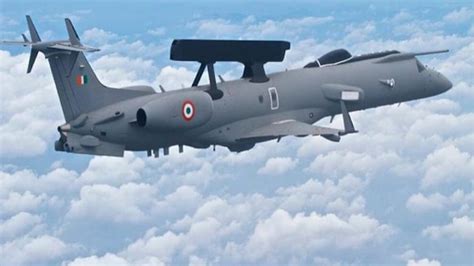
Currently, the IAF operates a limited number of imported surveillance systems, such as the Israeli Phalcon AWACS and Netra AEW&C systems developed on the Embraer ERJ-145 platform. While these systems have proved effective, they come with dependencies on foreign OEMs for upgrades, maintenance, and technical support.
The ISTAR project aims to break this dependency. DRDO, in collaboration with the Bharat Electronics Limited (BEL) and possibly private Indian aerospace firms like Tata Advanced Systems or L&T Defence, will indigenize not only the surveillance systems but also the aircraft platform itself. This would significantly reduce lifecycle costs and increase operational availability.
Moreover, indigenous systems can be tailored to Indian terrain, warfare doctrines, and strategic needs—something off-the-shelf foreign solutions cannot always accommodate. By owning the IP and manufacturing rights, India can also export such platforms to friendly nations in the Global South, potentially opening up a new revenue stream for the domestic defence industry.
Precision Strike Capability: Beyond Surveillance
The most potent attribute of the ISTAR aircraft is its ability to transform passive intelligence into kinetic action. With integrated data links to frontline fighter jets like Rafale, Su-30MKI, and even drones like Heron TP, the system can provide target data that allows for precision-guided munitions (PGMs) to be deployed accurately, reducing collateral damage while maximizing operational impact.
In recent years, conflicts like those in Ukraine and the Middle East have shown the overwhelming strategic advantage held by forces possessing superior ISR (Intelligence, Surveillance, and Reconnaissance) capabilities. India’s own experience during the Balakot airstrikes in 2019 underscores the need for accurate, real-time intelligence in launching preemptive or retaliatory operations.
Projected Timeline and Procurement Structure
According to sources within the defence establishment, the Defence Acquisition Council (DAC) is expected to deliberate on the ISTAR proposal in the coming months. If cleared, the developmental contract will likely be awarded under the Make-I category of the Defence Procurement Procedure (DPP), ensuring significant private sector involvement with government funding support.
The initial prototype could be flight-tested within three to four years, with the full fleet of three aircraft expected to be operational by the end of the decade. Once validated, the platform could see wider production runs, expanding into naval and ground force applications as well.
Challenges in Implementation and Development
Despite its promise, the ISTAR project will face several technical, logistical, and strategic hurdles. Developing a platform of such complexity indigenously is a first for India. Integrating multiple sensor suites, ensuring seamless data fusion, and maintaining stealth or low detectability are significant engineering challenges.
Furthermore, the platform must ensure interoperability with existing IAF and tri-services infrastructure, such as the Integrated Air Command and Control System (IACCS), satellites like GSAT-7A, and various ground-based radar networks. Cybersecurity will also be paramount, given the aircraft’s function as a flying data repository.
Implications for Regional Security and Geopolitics
India’s neighbors—especially China and Pakistan—have made significant investments in ISR technologies. China operates advanced UAVs, electronic warfare aircraft, and satellites, while Pakistan has received ISR support from external partners including Turkey and China. With ISTAR aircraft in its arsenal, India will finally have the indigenous capability to match or exceed these regional assets.
This strategic edge will also allow India to better monitor Chinese infrastructure projects in Tibet, track troop build-ups along the Line of Actual Control (LAC), and keep a watchful eye on cross-border militant activity in the western sector. More importantly, it sends a powerful message that India is no longer content to play catch-up in defence tech but is now a serious player on the global stage.
Conclusion: A Crucial Leap for India’s Defence Ecosystem
The ISTAR project represents more than just an aircraft acquisition—it is a technological renaissance for India’s defence establishment. By investing in this homegrown capability, India stands to gain strategic depth, operational flexibility, and most importantly, sovereign control over its most critical intelligence operations.
In the evolving calculus of national security, where speed, precision, and information dominance dictate outcomes, India’s indigenous ISTAR aircraft will not just observe the battlefield—they will shape it.