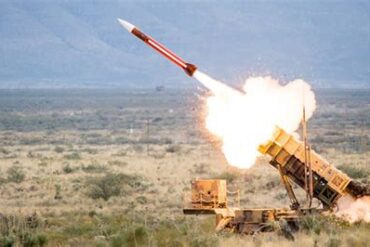
India’s defence preparedness took a major strategic leap as the Ministry of Defence cleared the acquisition of the Quick Reaction Surface-to-Air Missile (QRSAM) weapon system worth ₹30,000 crore for the Indian Army. This move signals a bold commitment to indigenisation, rapid deployment capability, and enhanced tactical responsiveness in the face of modern aerial threats. The high-value procurement aims to significantly bolster India’s short-range air defence (SHORAD) architecture by integrating the advanced QRSAM system into its arsenal, enhancing the Army’s mobility and battlefield dominance.
The Defence Acquisition Council (DAC), chaired by Defence Minister Rajnath Singh, approved the procurement under the ‘Buy (Indian-Indigenously Designed, Developed and Manufactured)’ category. This not only reflects India’s growing self-reliance in defence production but also showcases the maturity of the indigenous missile ecosystem.
The QRSAM system, developed by the Defence Research and Development Organisation (DRDO) in collaboration with Bharat Electronics Limited (BEL) and Bharat Dynamics Limited (BDL), is designed to neutralize aerial threats including fighter aircraft, helicopters, UAVs, and cruise missiles within a 30 km envelope. Its versatility, mobility, and precision strike capabilities are key attributes that will transform frontline air defence operations.
What Is the QRSAM System and Why It Matters
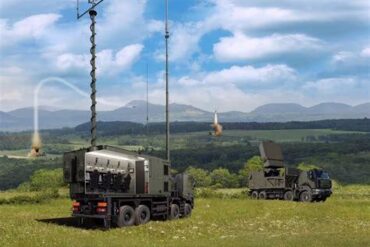
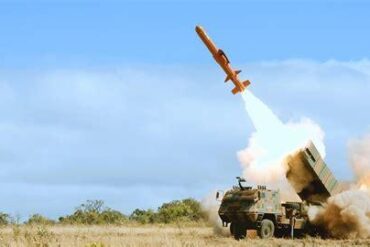
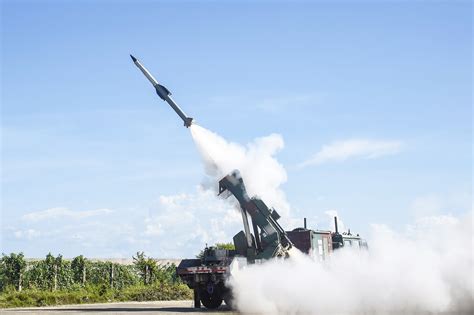
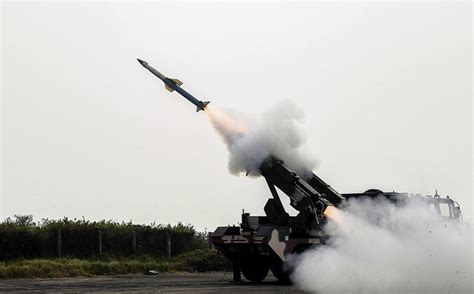
The QRSAM is a canister-based missile system mounted on a high-mobility 8×8 vehicle platform. Its ability to move swiftly across diverse terrains—be it desert, plains, or high-altitude regions—makes it a potent force multiplier for the Indian Army. What sets QRSAM apart is its fully automated Command and Control System, integrated Active Electronically Scanned Array (AESA) radar, and two-stage solid propellant missile with mid-course inertial navigation and terminal active radar homing.
Unlike legacy systems, QRSAM requires no external radar support and can function autonomously, significantly reducing sensor-to-shooter time. It is equipped with a 360-degree engagement capability and can track and intercept multiple targets simultaneously. This marks a critical step forward for India’s indigenous defence capabilities, providing a homegrown alternative to foreign SHORAD systems like Israel’s SPYDER or Russia’s TOR-M2.
Strategic Context: Modernising India’s Air Defence Posture
The approval for the QRSAM procurement is not happening in isolation. It fits into a broader narrative of India’s comprehensive air defence revamp, especially at a time when threat vectors from UAVs, cruise missiles, and tactical aircraft are rapidly evolving. The 2020 Galwan Valley clashes and ongoing border tensions with China have underscored the need for agile, responsive, and indigenous air defence solutions.
The QRSAM system will be deployed in operationally sensitive sectors, primarily in forward areas where reaction time against low-flying threats is critical. It is designed for fast mobility, which means it can relocate and redeploy within minutes, offering high survivability and minimal logistical footprint during combat operations.
DRDO’s Indigenous Breakthrough and System Architecture
DRDO’s successful development of the QRSAM reflects India’s growing R&D competence in missile technology. The system has undergone multiple user trials since 2019 and has consistently demonstrated successful target acquisition, tracking, and neutralisation in real-time threat simulations.
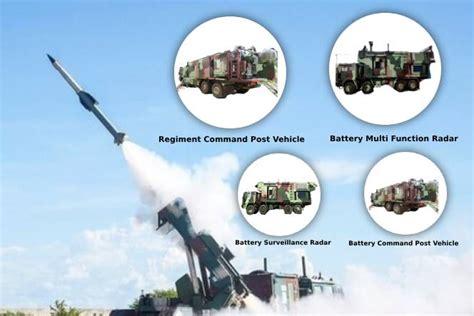
Each QRSAM battery consists of:
- Four mobile launchers, each carrying six canisterised missiles
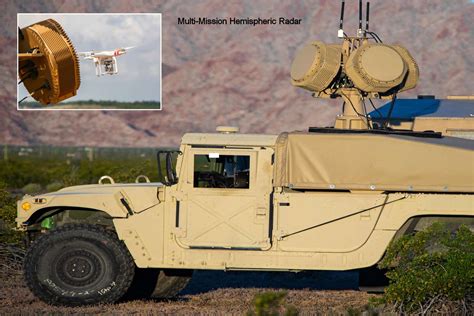
- One multifunction radar (MFR) with AESA capability for surveillance, target detection, and tracking
- One battery-level command post with fully automated C4I (Command, Control, Communications, Computers, and Intelligence) integration
- Auxiliary vehicles including power and maintenance units
The missile itself is 4.3 meters long, with a mass of approximately 270 kg. It features mid-course inertial guidance with two-way data link and a terminal active seeker, ensuring high precision and kill probability even against manoeuvring targets.
Advantages Over Legacy Systems and Tactical Edge
The QRSAM system provides several tactical and operational advantages:
- Canister-based missiles allow quick reload and safer storage
- Full 360-degree coverage, as opposed to sectoral coverage of older systems
- Network-centric capability enabling real-time data sharing across platforms
- Electronic counter-countermeasure (ECCM) capabilities to function in dense electronic warfare environments
- Integrated IFF (Identification Friend or Foe) to prevent friendly fire incidents
Moreover, the system’s architecture allows seamless integration with India’s Integrated Air Command and Control System (IACCS) and interoperability with other air defence assets such as the Akash missile system, SPYDER, and the upcoming S-400 Triumf batteries.
Boost to Atmanirbhar Bharat and Defence Manufacturing
The QRSAM contract is a massive boost to the ‘Atmanirbhar Bharat’ initiative, translating into large-scale job creation, technology transfers, and capacity building within India’s defence industrial base. Public Sector Units (PSUs) such as BEL and BDL will anchor manufacturing, while over 100 MSMEs are expected to participate in component supply chains.
According to officials, the bulk of the ₹30,000 crore procurement value will be absorbed within the Indian economy, accelerating indigenous research and improving self-reliance in missile subsystems such as seekers, warheads, propulsion, and control systems. The project also acts as a technology demonstrator for future missile programmes like VL-SRSAM and Next-Gen Surface-to-Air Missile (NGSAM) systems.
Deployment Plans and Operational Doctrine
The Indian Army plans to equip its Corps of Air Defence with multiple QRSAM regiments, with deployment prioritised along sensitive border sectors including Ladakh, Arunachal Pradesh, and the Western Front. Each regiment will provide point and area defence to critical military infrastructure such as airbases, command posts, ammunition depots, and forward staging areas.
Integration with Army Aviation and Indian Air Force (IAF) command networks will be crucial for ensuring interoperability and seamless threat neutralisation. With real-time situational awareness and quick redeployment capabilities, QRSAM is envisioned as the primary SHORAD backbone of Indian ground forces in high-conflict zones.
Testing Success and Combat-Ready Status
The QRSAM system has cleared all user-assisted trials and validation phases, including critical testing under simulated war-like conditions. Its missiles have successfully intercepted Banshee target drones, low-flying aerial threats, and sea-skimming missiles across various trials conducted from the Integrated Test Range (ITR), Chandipur.
The final operational clearance was granted after back-to-back successful engagements using live warheads, confirming both endo-atmospheric interception ability and low latency fire control loop. With this, QRSAM enters full-scale production with delivery schedules aligned with Army’s induction timelines between 2025 and 2030.
Geopolitical and Defence Implications
In a region witnessing rapid militarisation and drone proliferation, especially by China and Pakistan, QRSAM’s induction will send a clear signal of deterrence and readiness. It provides India with a critical edge in dealing with adversaries deploying swarm drones, precision munitions, and unmanned combat air vehicles (UCAVs).
Additionally, the system’s deployment could significantly reduce dependency on imported quick-reaction air defence systems, ensuring sovereignty over supply chains and reducing strategic vulnerabilities. Given the increasing push for exporting Indian defence systems, QRSAM also holds potential for friendly foreign militaries looking for cost-effective and mobile SHORAD systems.
Conclusion: QRSAM as a Game-Changer for Army Air Defence
The ₹30,000 crore procurement of the QRSAM system marks a paradigm shift in India’s air defence doctrine, blending cutting-edge indigenous innovation with battlefield mobility and autonomous operational capability. As threats evolve beyond traditional boundaries, India’s investment in agile, domestically produced systems like QRSAM is essential not only for tactical dominance but also for strategic deterrence.
This development underscores a future where Made in India missile systems will no longer be aspirational but a defining feature of the nation’s defence narrative.