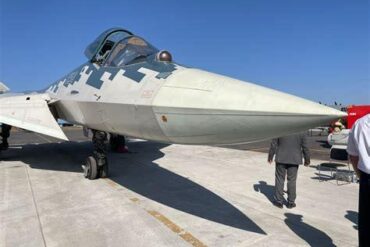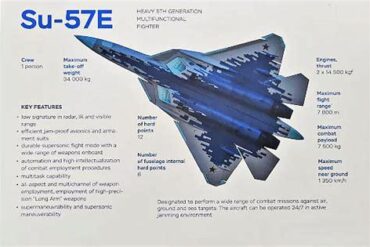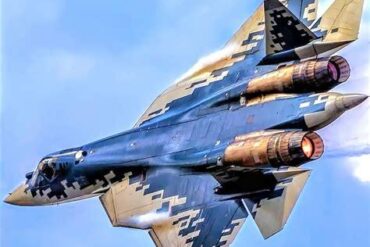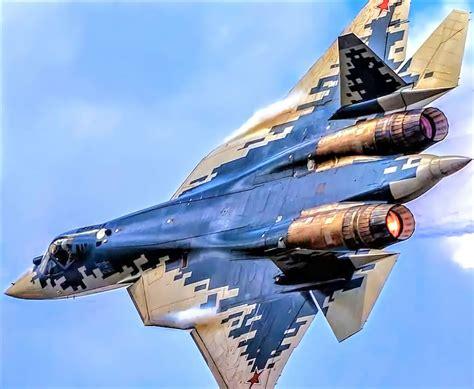
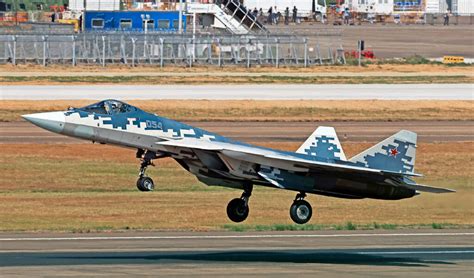
In a groundbreaking development that could significantly bolster India’s military prowess, Russia has proposed a comprehensive deal to produce its fifth-generation stealth fighter, the Su-57, on Indian soil. This deal, which was officially presented at Aero India 2025, offers a unique blend of technology transfer, strategic collaboration, and the potential for India to emerge as a global leader in fifth-generation fighter jet production. The Su-57E, an advanced export variant of the Su-57, presents numerous technological advantages, making this collaboration not just a deal for defense procurement, but a key stepping stone towards India’s self-reliance in defense manufacturing.
Russia’s Strategic Proposal and India’s Technological Leap
Russia’s proposal is multifaceted and goes beyond a traditional purchase agreement. It includes the local production of the Su-57E at Hindustan Aeronautics Limited’s (HAL) Nashik facility, a key site for assembling the Su-30MKI. The deal offers a significant transfer of technology, which includes advanced radar systems, avionics, and stealth technology that can be customized with Indian-made systems such as AESA radars and indigenous weaponry. This customization flexibility is in line with India’s ‘Make in India’ initiative, allowing the country to not only enhance its own defense capabilities but also emerge as a leader in global aerospace manufacturing.
The Su-57E’s impressive technical specifications, such as its low radar signature, advanced internal weapon bays, and supercruise capabilities, provide India with the opportunity to enhance its air force while boosting local production and technology development. With the local assembly of these jets, India can potentially circumvent supply chain issues, especially those related to Western sanctions on Russia, and speed up production timelines.
Strategic Significance Amidst Regional Tensions
India’s strategic need for advanced air combat capabilities has grown considerably in recent years, especially with China and Pakistan both upgrading their air forces. China’s recent advancement in stealth technology, coupled with Pakistan’s growing ties with China, has created an increasingly competitive environment for air superiority in South Asia. The introduction of China’s J-35 stealth fighter, and Pakistan’s reported plans to acquire these jets, may shift the aerial balance in the region. For India, acquiring and manufacturing the Su-57E could provide a necessary technological countermeasure, enabling the country to maintain air superiority in the face of these growing threats.
The Su-57E could be an essential tool in India’s defense strategy, particularly as its own fifth-generation fighter, the Advanced Medium Combat Aircraft (AMCA), is still in its nascent stages of development. With the AMCA expected to enter service only in the mid-2030s, the Su-57E would serve as a critical bridge to maintain India’s military edge in the interim.
Key Advantages of the Su-57E Technology Transfer
One of the most compelling aspects of the Russia-India deal is the transfer of the Su-57E’s source codes to India. This level of transparency is rare in international defense agreements, particularly with countries like the United States and France, who withhold such critical software access. This gives India greater control over the aircraft’s systems, allowing for more comprehensive upgrades and integration of local technologies, which is a significant strategic advantage.
In contrast, India’s experience with France over the Rafale fighter jet contract revealed the limitations of not having access to source codes. Despite the ongoing cooperation between India and France, the inability to fully customize the Rafale with Indian-made weaponry like the Astra missile and Smart Anti-Airfield Weapon (SAAW) has been a stumbling block. The Su-57E deal, on the other hand, offers India the flexibility to adapt the aircraft to its specific needs, both now and in the future.
Geopolitical Implications and the CAATSA Challenge
While the Su-57E deal offers immense potential, it also presents certain challenges, particularly regarding the United States’ Countering America’s Adversaries Through Sanctions Act (CAATSA). India’s past defense deals with Russia, such as the S-400 missile system, have faced delays and complications due to CAATSA sanctions, and there are concerns that the Su-57E deal could encounter similar hurdles. Additionally, the absence of a clear payment mechanism could complicate the financial aspects of such a high-value contract, with multi-billion-dollar transactions potentially exacerbated by international sanctions.
However, as geopolitical dynamics shift, there are indications that the U.S. may adopt a more flexible approach towards India’s defense relations with Russia, particularly under the leadership of President Donald Trump. This potential thaw in U.S.-Russia relations could mitigate the risk of sanctions, but uncertainties remain.
At the same time, the United States is reportedly preparing to offer its own fifth-generation fighter, the F-35A, to India. This puts India in a delicate position, weighing its long-standing defense relationship with Russia against the U.S.’s strategic offer. The decision will significantly impact India’s defense posture in the coming decades, as it strives to balance its security needs with its broader geopolitical ambitions.
A Turning Point in India’s Defence Industry
In conclusion, the Su-57E deal with Russia represents a potential game-changer for India’s defense manufacturing landscape. The deal is not merely about acquiring cutting-edge aircraft; it’s about setting the stage for India to become a self-reliant powerhouse in aerospace manufacturing. By leveraging Russia’s advanced technology and incorporating Indian innovations, India can chart its own path in the world of fifth-generation fighter jets, setting a precedent for other nations seeking to enhance their defense autonomy.
Moreover, the Su-57E’s local production could significantly enhance India’s ability to maintain its military hardware, reducing dependency on foreign suppliers and ensuring that its armed forces are equipped with the most advanced technologies available. This deal could, in many ways, define India’s defense trajectory for the next several decades, marking a critical turning point in the nation’s quest for military self-sufficiency and global strategic influence.