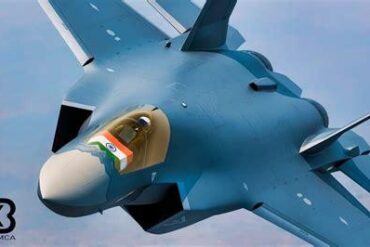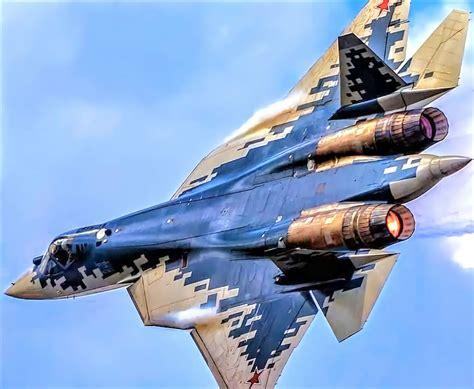
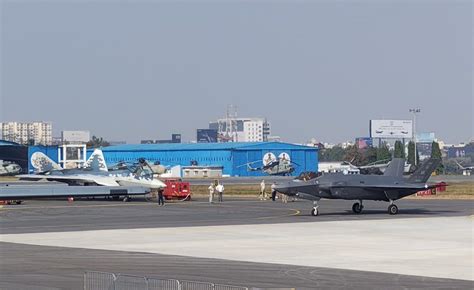
India is facing a historic defense decision as it weighs a Russian offer to jointly manufacture the Sukhoi Su-57 fifth-generation stealth fighter jet, directly competing with the United States’ push to sell its F-35A Lightning II to the Indian Air Force (IAF). This development, disclosed by CNBC TV18 on June 11, 2025, places New Delhi at a strategic inflection point between two rival superpowers, each offering distinct advantages aligned with divergent defense doctrines and industrial outcomes.
The Russian proposal includes full technology transfer, co-development of core systems, and localized production capabilities—an offer rarely extended to foreign nations. This contrasts sharply with the U.S. approach, which limits technology access and retains tight control over production and operational frameworks.
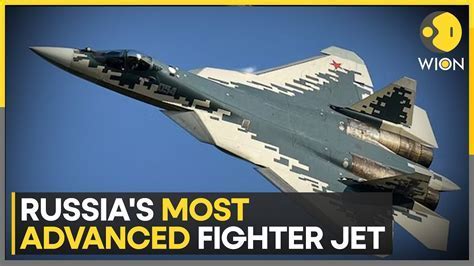
Russia’s Su-57 Offer: Industrial Partnership Over Purchase
At the core of Russia’s offer lies a promise of deep defense-industrial collaboration. India, whose air arsenal is composed of over 70% Russian-origin aircraft, including the Su-30MKI and MiG-29, has long relied on Moscow as a principal defense supplier. The Su-30MKI is already locally produced by Hindustan Aeronautics Limited (HAL) at its Nashik plant, setting the stage for seamless industrial integration if India proceeds with Su-57 production.
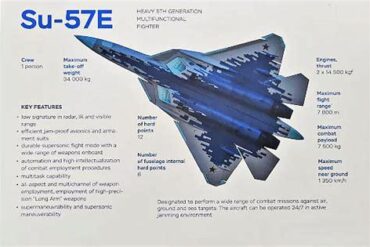
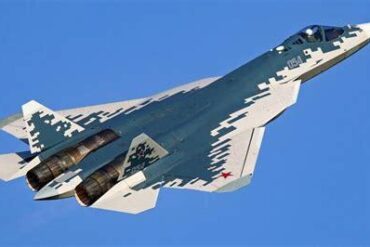
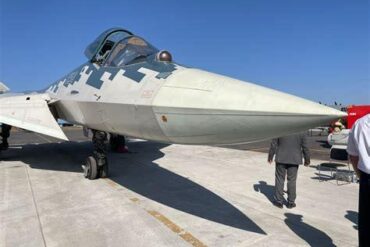
The Su-57, codenamed “Felon” by NATO, is a twin-engine multirole stealth fighter designed to achieve air superiority and execute precision strikes. It features thrust-vectoring engines, supercruise capability, low observability, and an internal weapons bay. While its radar cross-section is larger than that of the F-35A, it compensates with a larger weapons payload, longer range, and superior maneuverability in dogfighting scenarios.
Speaking at the India Today Conclave 2025, Russian Ambassador Denis Alipov called the Su-57 the “most advanced combat aircraft operational today.” He emphasized Russia’s willingness to share critical avionics and stealth technologies, a potential breakthrough for India’s ambitions to become a defense manufacturing hub.
U.S. F-35A Pitch: Proven Stealth and Allied Network Access
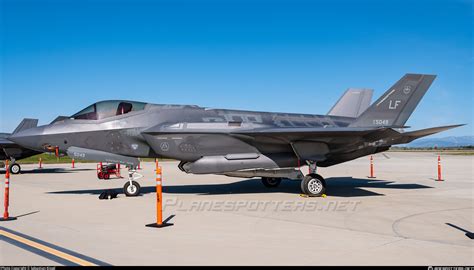
Meanwhile, the U.S. has offered India the F-35A Lightning II, the world’s most widely deployed fifth-generation multirole stealth fighter. The aircraft has seen successful deployment across NATO countries and features AI-enhanced targeting, sensor fusion, and unmatched stealth performance. The F-35A is capable of executing Suppression of Enemy Air Defenses (SEAD) missions and integrates into a real-time, joint-force command network, offering unparalleled situational awareness.
However, the U.S. offer comes with notable limitations. Priced at around $80 million per unit, the F-35A package does not include co-production or technology transfer, and India would need to revamp its maintenance and training systems to accommodate the aircraft. Furthermore, India’s ability to modify or customize the F-35 to meet its specific operational doctrines would be significantly restricted.
Defense Self-Reliance Versus Tactical Edge
India’s broader defense outlook plays a pivotal role in this decision. With the Advanced Medium Combat Aircraft (AMCA) program in development and engine partnerships under negotiation with Safran (France) and Rolls-Royce (UK), India is aggressively pursuing self-reliance in aerospace technology. Partnering with Russia on Su-57 production could provide real-world experience in radar-absorbent material manufacturing, stealth aerodynamics, and avionics engineering—all essential for indigenous fighter development.
By contrast, while adopting the F-35A would instantly upgrade the IAF’s combat capability, it could result in long-term strategic dependency. The aircraft’s black-box architecture limits India’s participation in the platform’s technical evolution. Furthermore, logistical integration with Western systems, while modernizing, would also mean shifting away from decades of Russian-oriented doctrine and infrastructure.
Tactical and Technical Comparison: Su-57 vs F-35A
From a performance lens, the two fighters represent contrasting operational philosophies:
- Su-57
- Supercruise capable with longer range
- Larger weapons payload and more internal space
- Thrust vectoring enables superior dogfighting agility
- Designed for conventional air dominance and high maneuver warfare
- F-35A
- Stealth-optimized for high-threat penetration missions
- Advanced electronic warfare and sensor fusion
- Global interoperability and real-time battlefield data sharing
- Optimized for strike, reconnaissance, and SEAD roles
In terms of training and sustainment, the Su-57 presents a more economical transition for the IAF, which already has substantial operational experience with Russian platforms. HAL’s infrastructure, logistics base, and workforce are well-positioned to absorb Su-57 production with minimal disruption.
Geopolitical Implications: West or East?
The choice also signals India’s strategic alignment in the evolving global security architecture. Opting for the Su-57 would reaffirm India’s long-standing defense ties with Russia, especially at a time when Moscow is increasingly isolated in the West. It would send a message of non-alignment and independent strategic autonomy.
Conversely, choosing the F-35A could accelerate India’s integration with U.S.-led security frameworks, including deeper cooperation under the Quad, Indo-Pacific Command, and joint exercises with NATO forces. This could bolster India’s influence in deterring China’s military assertiveness, but at the risk of becoming entangled in broader geopolitical frictions.
Industrial Gains and Technology Sovereignty
Russia’s proposal is closely aligned with India’s Make in India and Atmanirbhar Bharat (Self-Reliant India) initiatives. Establishing a Su-57 production line within Indian territory would not only reduce dependency on imports but also generate high-skilled employment, boost local R&D, and upskill HAL’s capabilities to support fifth-generation aircraft.
This deal could include Indian participation in developing future Su-57 variants, including unmanned wingman systems, stealth drones, and potentially even India’s entry into export markets for select components. Russia’s willingness to localize parts manufacturing and even source raw materials from India further enhances the offer’s economic viability.
The U.S. offer lacks such industrial depth. Although Lockheed Martin has offered to shift F-16 production to India in past deals, no such commitments exist under the F-35A arrangement. India would likely remain a buyer and operator, not a co-creator, limiting the developmental spillovers to domestic industry.
Long-Term Strategic Vision: Beyond Fighter Jets
India’s decision will ripple far beyond the purchase of fighter jets. It will impact how the country approaches future joint defense projects, whether it will seek sovereign capability or tactical advantage through alliances, and how it shapes its aerospace ecosystem in the coming decades.
The Su-57 offer aligns with India’s multi-decade vision of becoming a global aerospace player. With programs like AMCA, the LCA Tejas Mk2, and DRDO’s stealth drone initiatives, India is inching closer to becoming not just a consumer but a global contributor to military aviation.
Meanwhile, the F-35A path promises immediate battlefield superiority, but at the cost of limited autonomy and industrial subordination.
The Verdict Awaits: Strategy Over Symbolism
As deliberations continue within the Indian defense establishment, the decision will likely hinge not on ideological allegiance, but on realpolitik, cost-efficiency, technological gain, and future-proofing India’s aerospace defense.
A co-production deal for the Su-57 could become a launchpad for India’s long-term aerospace independence, catalyzing innovation, exports, and global recognition. On the other hand, a shift toward the F-35A would reinforce India’s ties with the West and strengthen its deterrence posture in volatile regions like Ladakh, the South China Sea, and Indian Ocean Rim.
India’s final call—expected in the coming months—will be a watershed moment, potentially redefining its global defense partnerships, military doctrine, and industrial future. As the world watches, New Delhi’s choice will echo not just through its skies, but across strategic boardrooms from Washington to Moscow.